New Delhi, INDIA: In a damning indictment of India’s commitment to free speech, the Central Board of Film Certification (CBFC) has blocked the release of the Oscar-nominated docudrama The Voice of Hind Rajab, not because the film is false or inflammatory, but because telling the truth about a murdered five-year-old Palestinian girl might ‘damage’ India’s cozy relationship with Israel.
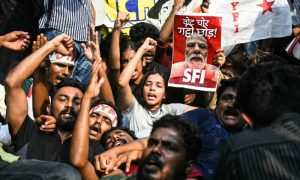
The Modi government has extended its support to mass murder of Palestinians in Gaza. It has unleashed police violence against every peaceful protest – India’s film certification board censors The Voice of Hind Rajab, citing “harm” to India-Israel relationshttps://t.co/yUMdShLdu2
— David Walsh (@DavidWSWSarts) May 19, 2026
The CBFC informed the film’s India-based distributor, Manoj Nandwana, that releasing the documentary “would break up the India-Israel relationship”, according to a report by Variety. Let that sink in: the brutal killing of a child, confirmed by 335 bullet holes in a car, is considered less threatening to diplomacy than screening a film about it.
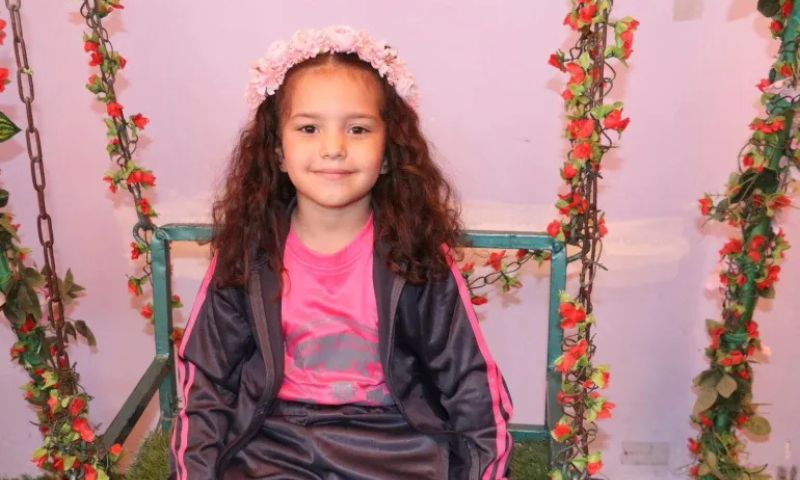
The documentary, directed by Kaouther Ben Hania, tells the story of Hind Rajab, a five-year-old Palestinian girl in Gaza who was deliberately killed by Israeli soldiers while waiting to be rescued.
The film received a 23-minute standing ovation at the Venice Film Festival. But in India, it received a censorship stamp, not because of artistic failure, but because of political convenience.
Nandwana submitted the film for approval in February, just one day after Prime Minister Narendra Modi’s state visit to Israel. The timing, he admitted, was ‘bad.’ But the real tragedy is not timing, it is the board’s willingness to silence a child’s story to protect a strategic alliance built on weapons deals. India is the world’s largest purchaser of Israeli arms, many of which are used to suppress Palestinians in Gaza and IIOJ&K alike.
Very proud to have been even a tiny part in the making of this incredibly powerful & important film The Voice Of Hind Rajab, which premiered at Venice, receiving a record 23 minute standing ovation & the Silver Lion Grand Jury prize. Congratulations to the brilliant Kaouther Ben… pic.twitter.com/eNRjWIVhGC
— Jemima Goldsmith (@Jemima_Khan) September 11, 2025
Badie Ali, co-founder of Watermelon Pictures, which supported the film, rightly asked: “Since when is a five-year-old girl’s cry for help a diplomatic threat?” He added, “Censoring this film doesn’t serve India’s interests. It only tells the world that Hind’s story still frightens those in power.”
Director Ben Hania responded on Instagram with a stinging question: “Is the honeymoon between the ‘world’s largest democracy’ and the ‘only democracy in the Middle East’ so fragile that a film could break it?”
TOP 30 MUST-WATCH MOVIES OF 2026! 🎬
(The Best of the Best!)🍿🔥
1- Project Hail Mary (2026) 🇺🇸
2- The Voice of Hind Rajab (2026) 🇹🇳
3- 28 Years Later (2026) 🇬🇧
4- Sirât (2026) 🇲🇦
5- Crime 101 (2026) 🇺🇸
6- Sound of Falling (2026) 🇩🇪
7- The Testament of Ann Lee (2026) 🇺🇸… pic.twitter.com/nGX02R7ll6
— Movie Plug🎬 (@MoviePlugHQ) April 22, 2026
The question is rhetorical, but the answer is painfully clear: yes. Because what India and Israel share is not a friendship of values, but a friendship of convenience, one that cannot withstand the weight of a dead child’s truth.
“This is not a story. This is history. We can’t afford to look away.”
Filmmaker Kaouther Ben Hania tells me why it’s essential people watch her heart-shattering film, ‘The Voice of Hind Rajab’, featuring the real voice of five-year-old Hind, who was killed by Israeli forces in… pic.twitter.com/k1CImTzfdW
— Christiane Amanpour (@amanpour) January 14, 2026
Indian activists Shrishti Khanna and Prashant Pundir, who held an independent screening before the ban, said the film was “deeply emotional.” They noted, “There are many Hinds in Gaza right now that we need to show up for.” The censorship, they argued, “is part of the larger pattern of suppressing the genocide of Gaza and the reality of Palestine.”
The film has already been banned from film festivals in Goa, Bangalore, Pune, and Kerala, a clean sweep of silence across the country. Nandwana’s team has applied for a revision, hoping for “some miracle.” But miracles are unlikely when power, not principle, dictates policy.