
Key Points
- Hospitals in Kabul and Jalalabad have stopped sight-restoring operations following a Taliban ban
- A Pakistani-American charity had expanded its free transplant programme to Afghanistan earlier this year
- Doctors say hundreds of patients, many suffering blindness from explosions and injuries, are awaiting treatment
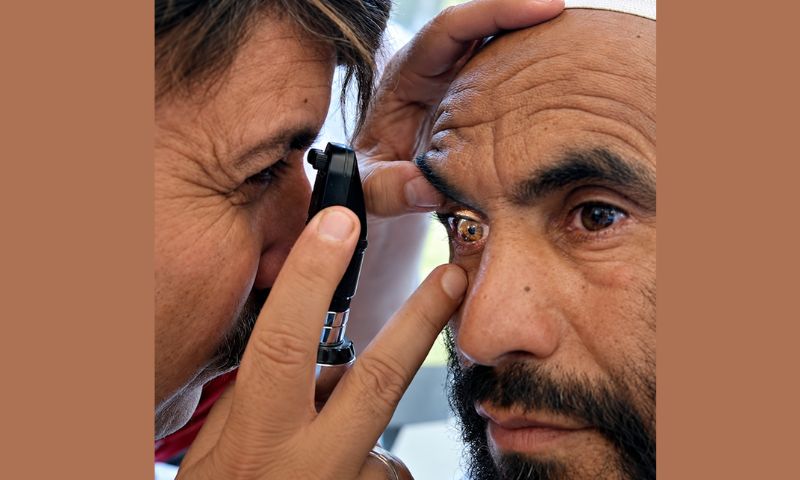
ISLAMABAD: Hospitals in Afghanistan have suspended corneal transplant operations after the Taliban declared the sight-restoring procedure as ‘not permitted under Islamic teachings.’
The orders, conveyed verbally to medical facilities and doctors, disrupted treatment for hundreds of patients.
The restrictions have halted a recently expanded medical charity programme that provided donated corneas and free surgery to Afghan patients.
The ban has raised concerns about access to specialised eye care in a country whose healthcare infrastructure has been weakened by decades of conflict.
Dr Noor Zaman Hashim of Noor Eye Hospital in Kabul said his team had performed around 90 corneal transplants in recent months before receiving verbal instructions from Taliban officials to stop the operations.
He said the hospital had a long waiting list, consisting mainly of young people who had lost their eyesight in explosions, accidents and workplace injuries, including welding-related incidents.
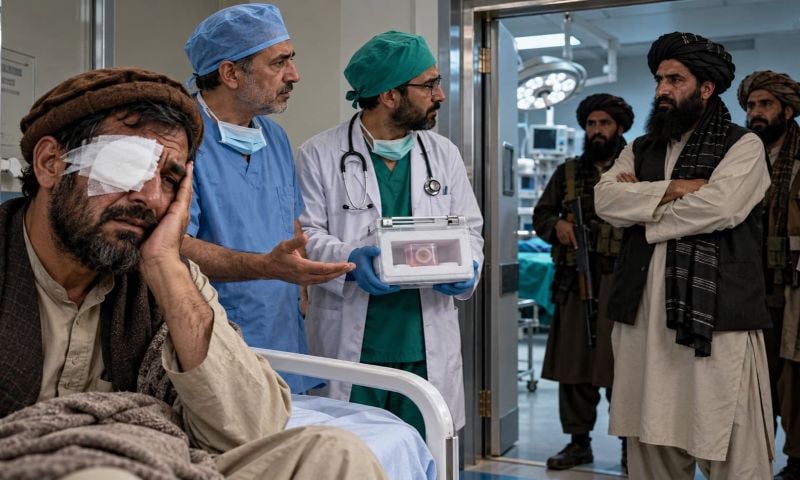
“Decades of violence have devastated Afghanistan’s healthcare infrastructure. We neither have sufficient ophthalmologists nor locally available corneas to meet the demand for transplants,” Hashim said.
Doctors reluctant to defy Taliban ban
He added that doctors were reluctant to defy the instructions because of the risk of severe punishment.
The suspension has also affected patients registered at Jalalabad Eye Hospital, where a similar programme had been introduced.
The Association of Physicians of Pakistani Descent of North America (APPNA), a US-based charitable organisation that has provided free corneas for transplant operations in Pakistan since 2017, is supporting the initiative among others.
Earlier this year, APPNA expanded its programme to Afghanistan, enabling more than 150 patients to undergo corneal transplant operations.
The Association also trained three Afghan ophthalmologists in Peshawar, Pakistan, to perform the procedures.
Dr Fawad Zaffar, who leads APPNA’s cornea programme and heads the US-based Zaffar Meer Foundation, said the organisation had helped around 10,000 patients in Pakistan since 2017.
He said the expansion into Afghanistan had been intended to address the needs of hundreds of people requiring corneal transplants. However, the Taliban’s ban had severely disrupted the programme.
READ ALSO: Afghan Musicians Defy Taliban Ban to Preserve Country’s Musical Heritage
Patients scheduled for operations have also been left uncertain about when treatment might resume.
Salamat Khan, a Kabul sugarcane juice seller, lost his eyesight in a gas cylinder explosion in 2023.
He said he had been scheduled for surgery after learning about the free treatment programme but was subsequently informed that it had been suspended.
Khadija Begum, 40, who suffered an eye injury in an explosion in Jalalabad, said she had registered for treatment at the city’s eye hospital two months earlier.
She was informed last month that the programme had been closed following a Taliban directive citing Islamic teachings.
However, the restrictions have prompted questions about the distinction between commercial organ trading and medically supervised transplantation using donated tissue.
A report by The Telegraph on October 27 quoted doctors familiar with the directive as saying Taliban officials had instructed hospitals to stop the operations.
Spain’s EFE news agency subsequently reported on October 28 that Taliban spokesman Saif ur Rahman Khaiber had denied that his ministry had recently announced a ban specifically on corneal transplants.
He said the buying and selling of human body parts was prohibited under Afghan law but maintained that his ministry had made no recent announcement banning corneal operations.
The distinction is significant because the corneas supplied through APPNA’s programme were donated rather than commercially traded, and the operations were provided free of charge.
APPNA has urged the Taliban authorities to allow the transplant programme to resume, saying Afghanistan remains in urgent need of specialised medical services after decades of violence and damage to its healthcare system.