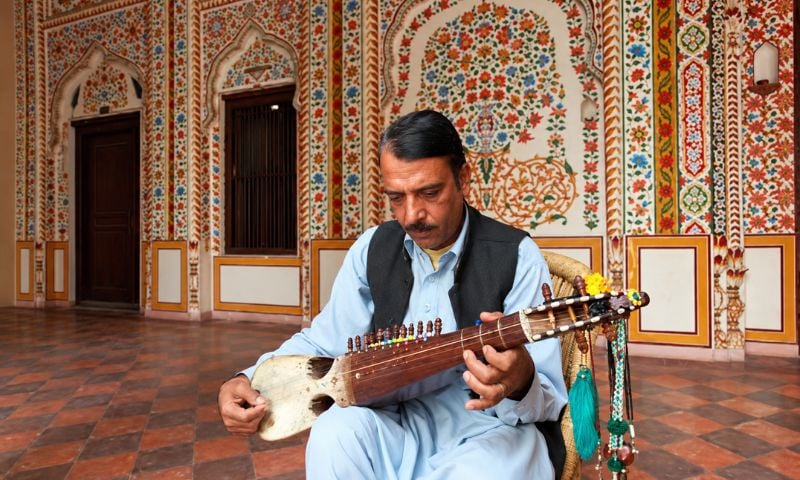
KABUL: Afghan musicians are secretly keeping their country’s centuries-old musical traditions alive despite a Taliban-imposed ban on music, which has forced performers out of work, driven many into poverty and put the country’s rich musical heritage at risk of extinction.
Since 2022, the Taliban authorities have prohibited playing and listening to music across Afghanistan, allowing only religious vocal chanting without musical instruments.
The restrictions are enforced by the Ministry for the Propagation of Virtue and Prevention of Vice, whose morality police monitor compliance.
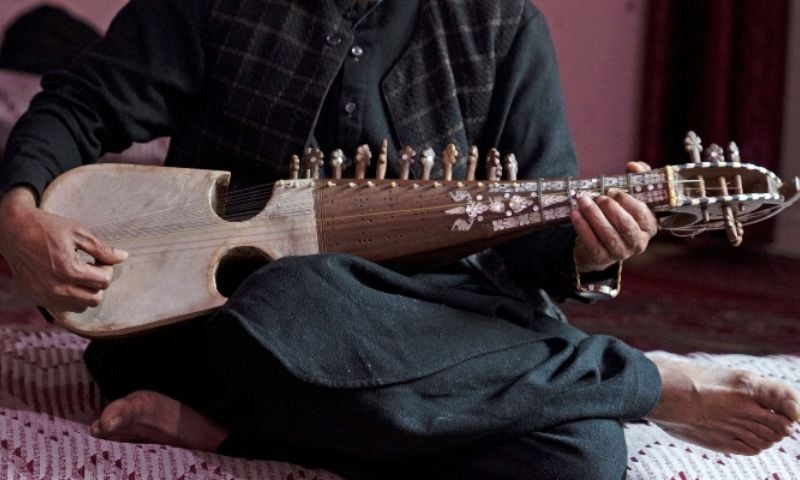
Many musicians and performers fled Afghanistan following the Taliban takeover in 2021, while those who remained hid their instruments or sent them abroad to prevent them from being confiscated or destroyed.
Once known for its vibrant musical culture, Kabul’s historic Kucha-e-Kharabat neighbourhood, traditionally home to generations of musicians, has witnessed a dramatic transformation.
Former music shops have been converted into grocery stores, clothing outlets and other businesses, with musical instruments disappearing from their shelves.
Despite the restrictions, some musicians continue to play in private, risking arrest to preserve a cultural tradition passed down through generations.
In a small house in Kabul, a musician recently brought out three hand-carved rubabs, traditional Afghan string instruments, and played them in a quiet room.
“As long as I am alive, I will continue to play,” he said, insisting that Afghanistan’s musical traditions must not be allowed to disappear.

A singer in another part of the capital expressed similar determination, saying that although music could no longer be performed openly, it remained alive in people’s hearts.
Both musicians spoke anonymously, fearing arrest by the Taliban authorities.
The singer, who previously performed at concerts and celebrations, has hidden his rubab, harmonium, flute, traditional drums and keyboard under a covering at home.
He described the moment he concealed his instruments as one of the most painful experiences of his life, saying music had given him recognition and a sense of purpose. The Taliban restrictions have also devastated musicians’ livelihoods.
The rubab player, who previously taught music and operated a traditional instrument shop, said he used to earn around 10,000 Afghanis ($150) a day from his business and teaching.
After the ban, he was forced to close his shop and turn to manual labour, earning barely 100 Afghanis ($1.50) a day to support his wife and children.
The closure of the family business was also a severe emotional blow to his father, who died of a heart attack shortly afterwards. The singer, meanwhile, remained unemployed for two years before friends helped him establish a small business.
Initially, some musicians continued organising secret performances despite the ban. However, increasing surveillance and the threat of arrest have made such gatherings increasingly dangerous.
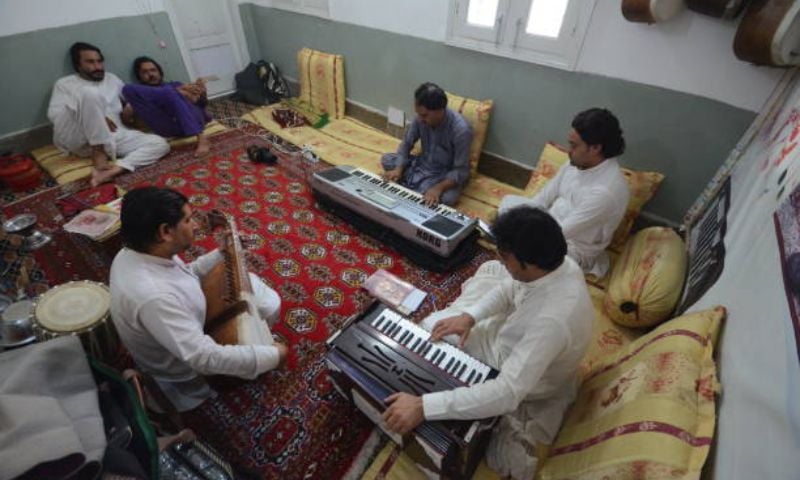
The singer said he had not performed at a private gathering for four years because government agents were actively searching for people involved in musical activities.
READ ALSO: Afghan Taxi Drivers Defy Taliban Music Ban despite Fear of Morality Police
The rubab player also stopped performing after a private gathering was raided by morality police following the circulation of photographs from the event. Several participants were arrested, although he managed to escape.
With public performances prohibited and private gatherings carrying the risk of imprisonment, Afghanistan’s musical traditions face an uncertain future.
The rubab player, who learnt the instrument from his father, now hopes to pass the art on to his eldest son. He said preserving the tradition was a responsibility inherited from his grandfather and father, and one he wanted to pass on to future generations.
The singer, however, believes that despite the Taliban restrictions, music cannot be separated from Afghan society and its cultural identity.
“No one can ever truly separate music from Afghan society,” he said, comparing the bond between music and the people to that between a fingernail and the flesh.