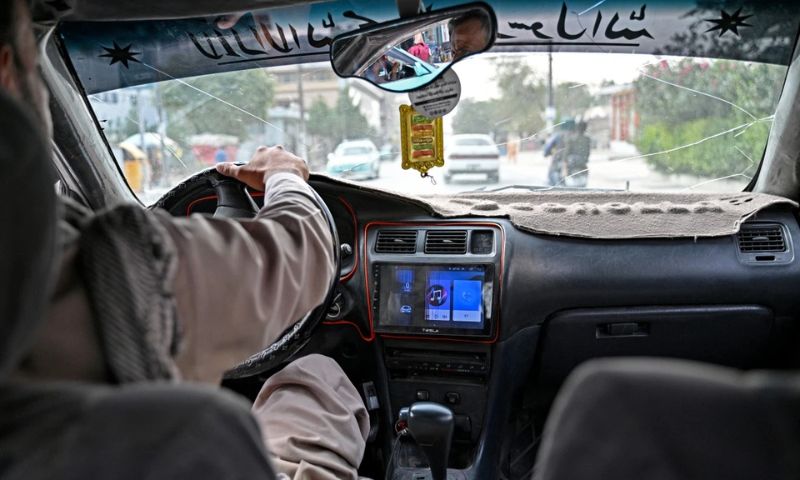
KABUL: Afghan taxi drivers are quietly defying the Taliban’s restrictions on music by playing Afghan and regional songs in their cars, despite the risk of being stopped by the authorities’ morality police.
Music that once filled restaurants, cafes and shops in Kabul has largely disappeared since the Taliban returned to power in 2021, with religious and patriotic songs supported by the authorities replacing much of the music previously heard in public places.
Some taxi drivers, however, have begun playing folk and pop music at low volume, switching it off or turning it down whenever they approach checkpoints.
بە گوێگرتن لە مۆسیقا و گۆرانی، ژیانی خۆیان دەخەنە مەترسییەوە
شۆفێرانی تەکسی لە ئەفغانستان، سەرەڕای ئەگەری دەستگیرکرانیان لەلایەن پۆلیسی رەوشتی وڵاتەک، مۆسیقا لەناو ئۆتۆمبێلەکانیاندا لێدەدەن و بەمەش سەرپێچی لە یاسای قەدەغەکردنی مۆسیقا دەکەن. pic.twitter.com/5HrZeXUOrb
— Kurdsat News (@KurdsatNews) September 25, 2026
“At every checkpoint we pass, we lower the volume of the music or even turn it off completely …. so I don’t get into trouble with them,” a 30-year-old taxi driver, who did not give his name for security reasons, said.
The Taliban’s Ministry for the Promotion of Virtue and Prevention of Vice (PVPV) enforces restrictions on music. Its regulations instruct commercial drivers not to play or listen to music, while morality officials patrol Kabul and other areas to enforce the authorities’ rules.
It is not known what penalties are imposed for listening to music. Earlier this month, the ministry said its officials in seven provinces had conducted awareness campaigns urging people to refrain from listening to music.
According to taxi drivers, the restrictions had made them more interested in music. “We have to make sure that even if we can’t listen in the early morning, by eight o’clock our music is on,” one of the drivers said.
For him, listening to music has become a quiet act of defiance in a country where the Taliban have imposed sweeping restrictions on cultural and public life.
Afghan culture should not vanish, and music is one of the cultures of our people,” another taxi driver, who asked not to be identified, said.
The driver said he had twice been stopped at checkpoints after authorities found a USB stick and a memory card containing music. “I didn’t lie – I said it has music, and they broke it,” he said.
The Taliban’s restrictions on music have also extended beyond taxis. Rights and monitoring organisations have documented the closure of music schools, arrests and mistreatment of musicians, and the destruction or burning of musical instruments.
The European Union Agency for Asylum reported that the Taliban’s 2024 morality law formally prohibited drivers of commercial vehicles from playing music.
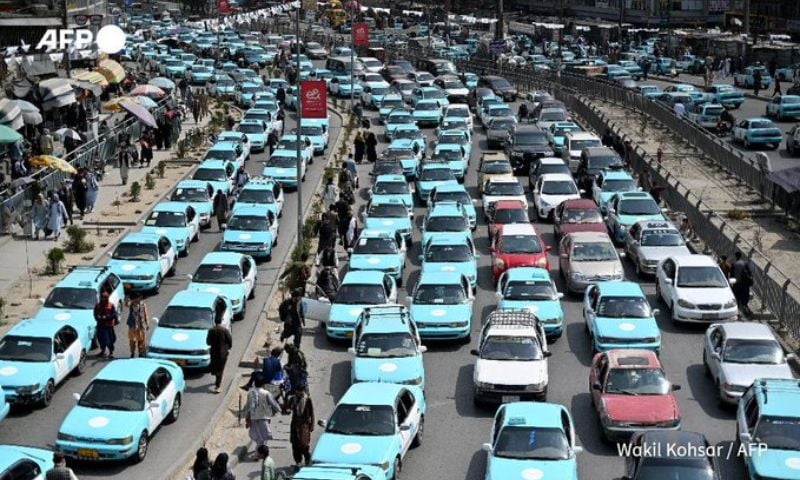
In Kabul, shared taxis are an important means of transport in a city without a comprehensive public transport system. Passengers often sit alongside the driver in the front, while others occupy the rear seats.
For some passengers, the taxi has become one of the few places where they can still hear music. “I prefer to listen to music every day; whenever I go to any destination, I try to check if the taxi has a music player,” said Shams, a 23-year-old master’s student.
READ ALSO: Afghan Artists Struggle to Fulfil Their Dreams in Pakistan as Music has no Space Under Taliban Rule
He said listening through a car stereo was preferable to wearing headphones because morality officials have been known to check whether people are listening to music through headphones.
He said he misses the period before the Taliban’s restrictions, when people could listen to songs, dance and celebrate without fear of being stopped. Now, he said, Kabul is “shrouded in darkness – a darkness devoid of any light”.
The music ban is part of a much wider system of restrictions imposed by the Taliban since their return to power in 2021. Girls have been barred from education beyond the sixth grade, while women remain excluded from universities and large parts of the workforce.
Women and girls also face restrictions on movement and access to public spaces, including requirements involving male guardians, while women have been barred from parks, gyms and beauty salons.
The Taliban have also tightened controls over the media, with journalists facing restrictions and pressure over content critical of the authorities.
The United Nations says the restrictions on women and girls have intensified and continue to impede Afghanistan’s recovery and integration with the international community.