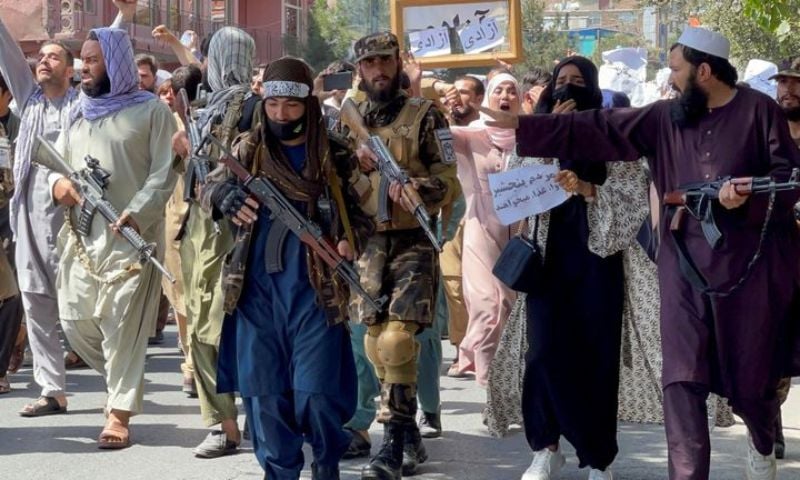
KABUL, Afghanistan: Human Rights Watch slammed on Thursday the “ruthless effort to suppress all dissent” by the Taliban regime, after a new law banned demonstrations across Afghanistan.
The 84-page legislation published by the Taliban regime’s justice ministry outlines a series of changes to law enforcement nationwide, including the rule that “all types of protests are banned”.
Elaine Pearson, Asia director for Human Rights Watch, said the measure is “another step in the Taliban’s ruthless effort to suppress all dissent”.
“The Taliban authorities fear any dissent and so they are escalating their repression,” she said in a statement to AFP.
The Taliban regime did not respond to AFP’s requests for comment on protests being outlawed through the legislation, which was made public this month.
Also Read: Taliban Bans Demonstrations Across Afghanistan in Bid to Suppress Public Dissent
Demonstrations have been rare during the Taliban regime’s five years in power. At least two people were killed in June when Taliban forces allegedly opened fire at a women’s rights protest in the western city of Herat, a group of UN experts said.
Amnesty International described the police law as “another sweeping assault on human rights in Afghanistan”, with the protest ban “among its most egregious provisions”.
The new law also extends detention without charge from three days to 10, or even longer by court order.
Also Read: Taliban Detain Afghan Women and Girls in Herat Amid Growing Restrictions
This month, the intelligence agency detained two UN employees for 11 days without giving a reason.
In a country where corporal punishment is used for a range of crimes, the police legislation tells officers they cannot hit prisoners with weapons such as sticks or wires without a court order.
They can, however, use force to get a suspect to repent, and are also allowed to use anger, according to the legislation.