KABUL, Afghanistan: Afghanistan’s Taliban regime on Saturday banned all demonstrations across the country under a new law governing the group’s police force, outlawing public protests as the regime tightens restrictions on dissent and political activity amid growing public frustration.
The Taliban regime’s Ministry of Justice published the law on Saturday, August 22, in its gazette. It said the legislation had been approved and signed by Taliban supreme leader Hibatullah Akhundzada.
Article 50 of the 53-article law states: “All demonstrations throughout Afghanistan are prohibited.”
The move further restricts public dissent under the Taliban regime, which has sharply curtailed political activity and civil liberties since returning to power in August 2021.
The legislation, referred to by the Taliban regime as the “Shurta Law”, consists of a preamble, two chapters, five sections and 53 articles, according to the Justice Ministry.
The ministry said the law sets out the duties and responsibilities of the Taliban regime’s police force in various areas.
Also Read: Taliban Rule Leaves Afghan Women Deprived of Education and Employment: UN
The Taliban regime recently changed the name of its police force to “Shurta”.
Its Article 50 specifically prohibits demonstrations anywhere in Afghanistan, making the ban nationwide.
The legislation formalises restrictions that the Taliban regime has imposed on public protests since seizing power.
Also Read: Now Is Not the Time to Recognise Taliban: Former Afghan President
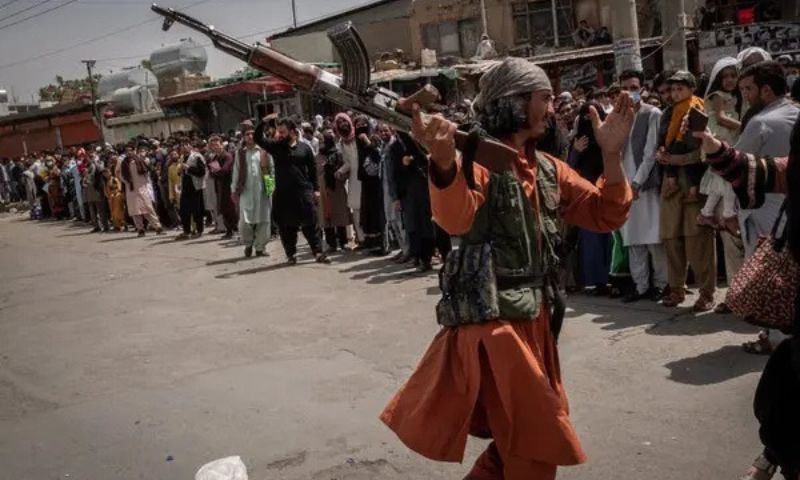
The Taliban regime has repeatedly prevented demonstrations and other forms of public dissent over the past five years. Rights groups and other observers have documented crackdowns on protesters, including arrests and torture and other abuses.
In several instances, Taliban regime forces have used force against demonstrators.
Since returning to power, the Taliban has dismantled much of Afghanistan’s previous political system and imposed restrictions on civic and political activity.
The prohibition on demonstrations removes another avenue for Afghans to publicly challenge government policies or express grievances.