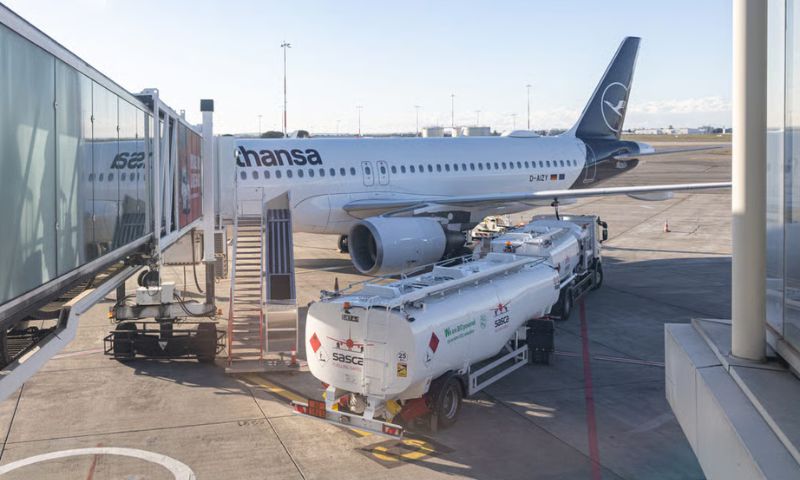
LONDON: Airports across EU countries could face aviation fuel shortages within three weeks if the Strait of Hormuz remains blocked, the Financial Times (FT) reported, citing a letter from the ACI Europe trade association.
“If the passage through the Strait of Hormuz does not resume in any significant and stable way within the next three weeks, systemic jet fuel shortage is set to become a reality for the EU,” the association said in the letter addressed to Apostolos Tzitzikostas, the EU Commissioner for Sustainable Transport and Tourism.
“There is for now, no EU-wide mapping/assessment and monitoring of jet fuel production and availability,” the association noted.
“A supply crunch would severely disrupt airport operations and air connectivity, with the risk of harsh economic impacts for the communities affected and for Europe in case of a systemic shortage of jet fuel,” it added.
The Strait of Hormuz, located between Iran and Oman, is a vital chokepoint through which approximately 20–30% of the world’s seaborne oil passes, including significant volumes of refined products such as jet kerosene.
Any prolonged closure—whether due to military escalation, geopolitical tensions, or sabotage—would directly impact refineries and supply chains feeding into European airports, which rely heavily on just-in-time deliveries.
The consequences of such a shortage would extend far beyond airport tarmacs, the association warned.
“A supply crunch would severely disrupt airport operations and air connectivity, with the risk of harsh economic impacts for the communities affected and for Europe in case of a systemic shortage of jet fuel.”
Cargo flights carrying pharmaceuticals, fresh produce, and high-value manufacturing components would be grounded, passenger travel would face sudden cancellations, and tourism-dependent economies in southern Europe could suffer billions in losses during the peak summer season.
While some EU member states maintain strategic fuel reserves, these are typically designed for military or emergency services use, not for sustaining commercial aviation at scale. Moreover, alternative overland supply routes from Mediterranean or North Sea refineries would require significant logistical reconfiguration, which could take months to implement.
The ACI Europe letter urged the Commissioner to push for immediate diplomatic engagement to de-escalate tensions in the Gulf region and, in parallel, to trigger emergency contingency planning under the EU’s Internal Security and Transport frameworks.
Diplomatic sources in Brussels indicate that EU energy and transport officials are scheduled to hold an emergency meeting later this week to assess the vulnerability of aviation fuel supply chains. With the three-week window already ticking, the aviation industry is bracing for what could become one of the most severe operational shocks since the COVID-19 pandemic.