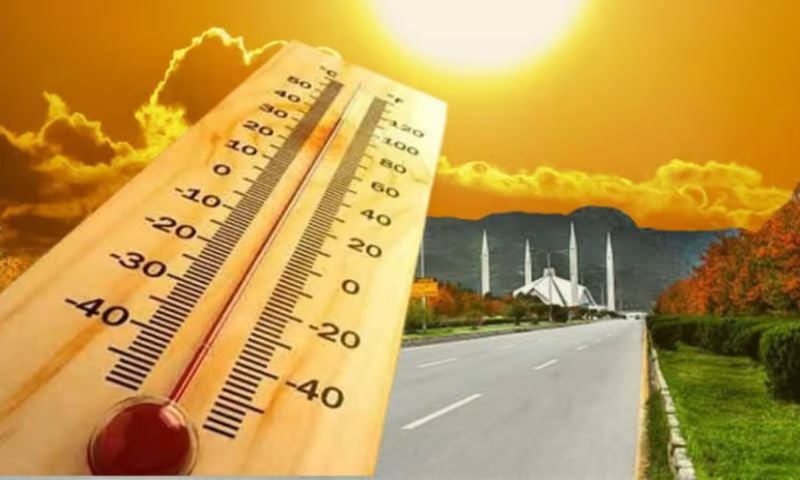
ISLAMABAD: Pakistan is bracing for a mild heatwave expected to affect its southern regions from April 29 to May 3, the Pakistan Meteorological Department (PMD) said in a weather update, as officials report existing temperatures already soaring above 45°C in several districts.
According to the PMD, temperatures in southern Punjab, upper Sindh, and southern and eastern Balochistan are currently 2 to 4°C above normal and may rise further during the forecast period.
These regions are typically heat-prone, with May and June averages ranging between 43°C and 45°C, occasionally hitting 52°C during extreme events.
Met Office noted that global climate indicators, including ENSO and the Indian Ocean Dipole, remain neutral, though there is a 61% likelihood of El Niño conditions developing between May and July.
Scorching current conditions
Temperatures are already soaring across most areas, with the mercury hitting above 40°C in several parts of Sindh, Balochistan, and Punjab.
Talking to WE News English, a PMD official said the maximum temperature in Sindh’s Dadu, Sukkur, and Jacobabad districts was recorded above 45°C, while Larkana reached 44°C.
In Punjab, Lahore, Faisalabad, Rahim Yar Khan, and Sahiwal recorded 41°C, while Islamabad and Peshawar saw 36°C. Karachi’s maximum temperature was recorded at 35°C today.
Tourist Weather Update Pakistan, 27 April 2026.
Light snowfall on high mountains
Thu–Sat: Partly cloudy #TouristWeather #PakistanTravel #PMD pic.twitter.com/7yIwGjie1S— Pak Met Department محکمہ موسمیات (@pmdgov) April 27, 2026
Northern Areas to see relief
Meanwhile, the upper parts of the country are likely to experience westerly weather systems from April 27 (night) to April 29 and again from May 3 to 5, which may bring a drop of 2 to 4°C in temperatures.
PMD said it is closely monitoring the situation and will issue further updates if heatwave conditions intensify.
Super El Niño Alarms
The Super El Niño forecast has sounded alarm bells globally, with experts warning that Pakistan could face the brunt of this phenomenon during the current year.
Extraordinarily warm waters in the Pacific Ocean are disrupting global weather systems.
These shifting patterns are expected to significantly impact Karachi, leading to erratic monsoon seasons, rising temperatures, and altered storm patterns.
Weather experts warned that the city’s “real feel” temperature is likely to increase due to the Super El Niño effect.
FFD Discharge Report: River Flows Across Major Rivers Remain Within Normal Range in Pakistan (27 April 2026)#FFD #DischargeReport #RiverFlow #IndusRiver #WaterLevel #FloodMonitoring #PMD #PakistanWeather #Hydrology #Tarbela #Mangla #FloodForecasting #Pakistan pic.twitter.com/HZ0DzRhnBM
— Pak Met Department محکمہ موسمیات (@pmdgov) April 27, 2026
Synoptic situation
A continental air mass is prevailing over most parts of the country. A shallow westerly trough is expected to affect the western/central part from today (evening/night).
Monday (April 27, 2026): Mainly hot and dry weather is expected over most parts of the country.
However, partly cloudy weather with light rain-wind/thunderstorms is expected at isolated places in northern Balochistan and western/lower Khyber Pakhtunkhwa during the afternoon.
Dust storms, windstorms, and light rain-thunderstorms may occur at isolated places in Kashmir, the Potohar region, south/central Punjab, and upper Sindh during evening/night.
Tuesday (April 28, 2026): Mainly hot and dry weather is expected over most parts of the country.
However, rain-wind/thunderstorms are expected at scattered places in Islamabad, Khyber Pakhtunkhwa, the Potohar region, south/east Punjab, Gilgit Baltistan, and Kashmir.
🌾 Farmers Alert Pakistan 27 April 2026
⛈️ Pothohar: Storms Tue–Wed
🌧️ NE Punjab: Isolated rain
🔥 Punjab & KP: Hot & dry
☁️ GB: Rain chances
⚠️ Protect crops from wind & heat#FarmersAlert #AgriWeather #PMD pic.twitter.com/QW6VOEn5FY— Pak Met Department محکمہ موسمیات (@pmdgov) April 27, 2026
Past 24-Hour Weather
Weather remained hot and dry in most plain areas of the country. However, rain was recorded in Mohenjo Daro (1 mm).
Yesterday’s recorded highest maximum temperatures (°C): Shaheed Benazirabad and Sakrand 47, Dadu and Mithi 46.
Monday Outlook for Islamabad: Mainly hot and dry weather is expected during daytime, while partly cloudy weather with isolated light rain-windstorms/thunderstorms may occur during evening/night. Probability: 40%.
What is El Niño?
El Niño is a natural climate pattern that begins with unusually warm ocean surface temperatures in the central and eastern Pacific Ocean.
This warming disrupts normal wind and rainfall patterns across the globe, leading to extreme weather events such as droughts, floods, heatwaves, and altered storm systems in many regions, including South Asia.
How could it affect Pakistan?
As a mild heatwave is expected in southern Pakistan from April 29 to May 3, PMD has noted a 61% likelihood of El Niño conditions developing between May and July. This raises serious concerns for the country.
As parts of Sindh, Punjab, and Balochistan are already experiencing temperatures above 45°C, an emerging El Niño could:
- Further intensify heatwave conditions, making them more severe and prolonged.
- Delay or weaken the upcoming monsoon rains, potentially leading to drought and water shortages.
- Increase the “real feel” temperature in cities like Karachi due to higher humidity and heat.
- Raise the risk of heat-related health issues, especially in already heat-prone districts like Dadu, Sukkur, and Jacobabad.
Weather experts specifically warned that a Super El Niño could bring erratic monsoon seasons, rising temperatures, and altered storm patterns, all of which could significantly impact Pakistan in the coming months.