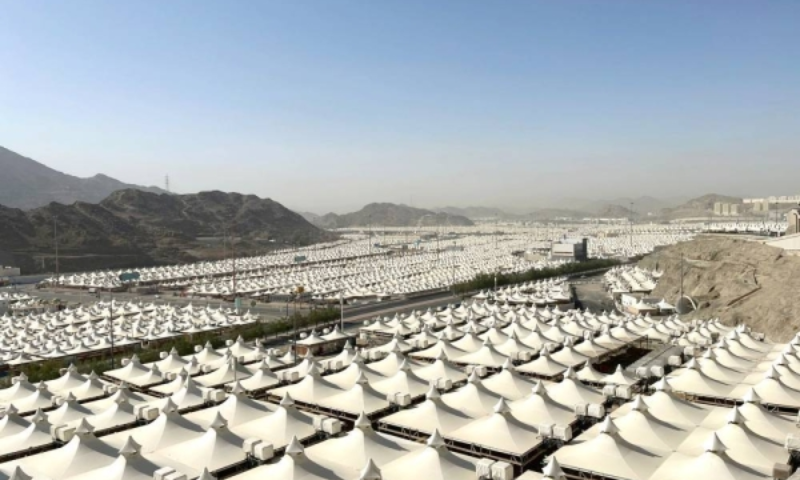
MAKKAH — The enormous tent city of Mina is well ready to greet Hajj pilgrims, who began pouring into the valley 5 kilometers east of the Makkah Grand Mosque on Sunday evening.
Mina’s City of Tents is one of the Saudi government’s largest initiatives, serving pilgrims throughout the Hajj season to assure their comfort and security.
The tents are shaped according to Islamic standards and are designed for easy storage and installation.
Mina is the world’s largest tent city, spanning over 2.5 million square meters and accommodating around 2.6 million pilgrims.
The tents are either eight square meters, six by eight meters, or twelve by eight meters in size. Every 100 meters or so, fire extinguishers and hoses can be located.
The tents are connected by paved, lit, and designated hallways. Metal fences encircle each set of tents for security, with major gates and emergency exits.
All of the amenities and services are in place in these tents to provide pilgrims with a more comfortable and elegant stay.
God’s visitors might enjoy completing the rituals in a serene and spiritual environment.
The government and business sectors involved in serving pilgrims continue to work in accordance with operational plans, taking into account administrative and technical concerns on the ground.
This is in order to provide everything that the pilgrim need and to fulfill the wise leadership’s directives to improve the level of services supplied to pilgrims.
The Makkah Mayoralty has donated equipment, mechanisms, and staff to 28 service facilities throughout the Holy Sites based on geographical distribution.
The Tawafa organizations have concluded their preparations by outfitting their field service centers in preparation for transporting God’s guests and providing them with the best and finest services, as well as contemporary camps outfitted to international standards.
Light and heat insulation, fire resistance, and UV radiation protection are all features of the tents. Each tent is linked to a unique cooling system.
It also features security and safety measures for electrical installations and support services, in addition to providing health services, food quality, and presentation to pilgrims, in order to strengthen the system of services supplied to God’s guests.