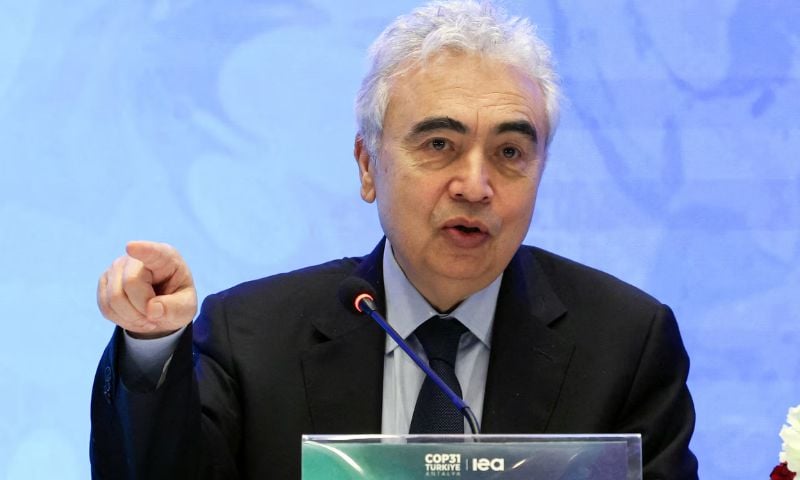



LONDON: Global oil markets could enter a “red zone” in July or August amid peak summer demand and supply disruptions from the Middle East, the head of the International Energy Agency (IEA) said on Thursday.
IEA Executive Director Fatih Birol said the combination of rising seasonal fuel consumption, reduced exports from the Middle East and falling inventories could tighten global supply significantly in the coming months.
“We may be entering the red zone in July or August if we don’t see that there are some improvements in the situation,” Birol said in a speech at Chatham House in London, referring to the ongoing oil supply crisis linked to the Iran war.
Birol said attacks on energy infrastructure and the effective closure of the Strait of Hormuz had removed more than 14 million barrels per day of supply from the Middle East, describing it as the largest oil supply disruption in history.
He said the single most important solution would be the “fully and unconditional opening of the Strait of Hormuz”.
According to Birol, the IEA’s coordinated strategic oil reserve release, alongside commercial stockdraws and previous market surpluses, is insufficient to offset the disruption.
Release of strategic reserves
The IEA, which represents 32 member countries, launched what Birol described as the largest-ever coordinated release of strategic oil reserves earlier this year, totalling around 400 million barrels.
He said about 2.5 to 3 million barrels per day from these reserves are currently entering the market.
At that rate, the remaining volumes from the initial release are expected to be exhausted by early August, according to Reuters calculations, coinciding with the period Birol warned could mark the start of the “red zone”.
Birol added that the agency stands ready to coordinate further releases if required.
The IEA chief warned that restoring oil production and refining capacity in the Middle East to pre-war levels would take considerable time and vary across countries.
“My biggest fear is Iraq,” Birol said, citing financial damage from reduced oil revenues and storage constraints that have forced shutdowns of oil fields, complicating any restart.
Oil prices remain high
Birol’s comments came as Brent crude futures traded at around $108 per barrel on Thursday.
Oil prices remain below wartime highs of $126 per barrel but are still significantly above pre-conflict levels of about $70 per barrel.
Birol said global markets were already under strain due to geopolitical instability and the drawdown of reserves.
He warned that without stabilisation of supply routes, particularly through the Strait of Hormuz, markets could face further volatility as seasonal demand peaks in the Northern Hemisphere.
The IEA chief said the coming weeks would be critical in determining whether supply conditions stabilise or tighten further.