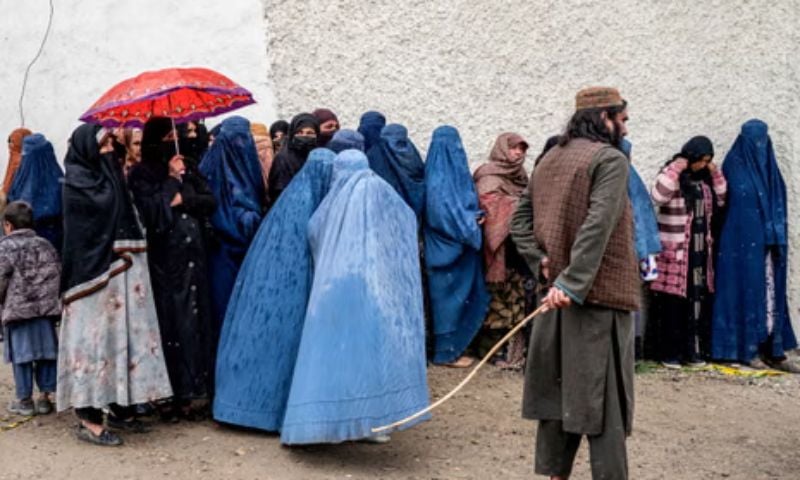
KABUL, Afghanistan: The Afghan Taliban regime’s new decree regulating the separation of spouses has drawn strong criticism from the United Nations, which warned on Thursday that the law further entrenches discrimination against women and raises concerns about child marriage in Afghanistan.
The 31-article decree, published in Afghanistan’s Official Gazette in mid-May and approved by Taliban Supreme Leader Hibatullah Akhundzada, outlines various grounds for marital separation, including a husband’s prolonged disappearance, incompatibility between spouses, renunciation of Islam and “failure on the part of the husband”.
The United Nations Assistance Mission in Afghanistan (UNAMA) said the decree reinforces systemic discrimination and erodes protections previously recognised for Afghan women.
“The decree is part of a broader and deeply concerning trajectory in which the rights of Afghan women and girls are being eroded,” Georgette Gagnon, deputy special representative of the UN secretary-general, said in a statement.
She said the decree “further entrenches systemic discrimination in law and practice” and deprives women and girls of “autonomy, opportunities and access to justice”.
Child marriage concerns
One of the most criticised provisions is Article 5, which outlines procedures for marriage contracts arranged on behalf of minors by relatives.
According to the decree, if a relative other than the father or grandfather arranges a marriage contract for a minor boy or girl “with a compatible spouse and for a customary dower”, the contract remains valid, although the child may later seek annulment through a court upon reaching puberty.
UNAMA said the provision implies that child marriage is permitted under the Taliban regime rule.
Under the Afghan regime law before the Taliban returned to power in 2021, marriage was legally permitted from the age of 16 for girls.
The decree also differentiates between boys and girls seeking annulment upon puberty.
It states that if a “virgin girl” remains silent after reaching puberty, her right to separation becomes invalid.
However, a boy’s right to annul the marriage “is not invalidated by silence”.
Women’s rights under Taliban regime
The latest decree comes amid mounting international criticism of the Taliban’s treatment of women and girls since the group returned to power in August 2021 following the withdrawal of US-led foreign forces from Afghanistan.
Since then, the Taliban regime has barred girls from education, restricted women from most employment, prohibited access to parks, gyms, swimming pools and beauty salons, and imposed strict dress requirements.
Women are required to cover themselves fully in public, while violations of Taliban regime regulations can result in arrest, detention and corporal punishment.
According to UNESCO, more than 2.2 million Afghan girls and women have been denied access to secondary and higher education since 2021, with the education ban entering its fifth consecutive year in 2026.
UN agencies and rights groups say the Taliban regime has systematically removed women from public life and dismantled legal protections previously available under Afghanistan’s former republic system.
The Taliban authorities have also banned Afghan women, including female UN staff, contractors and visitors, from entering UN premises nationwide for more than 205 consecutive days by March 2026.
Restrictions and enforcement
Inspectors from the Taliban’s Ministry for the Propagation of Virtue and the Prevention of Vice continue enforcing restrictions across Afghanistan through surveillance, intimidation and public punishment, according to UN reporting and rights monitors.
Women in provinces including Herat, Kandahar, Paktya and Uruzgan have reportedly been removed from public transport or denied healthcare access unless accompanied by a male guardian, or mahram.
Taliban authorities in some provinces have instructed shopkeepers not to sell goods to women unless accompanied by a mahram and wearing the Taliban-approved hijab.
The ministry has also intensified monitoring of religious observance and social behaviour.
Female journalists have largely disappeared from Afghanistan’s media sector, while hundreds of journalists have fled the country, fearing detention and persecution.