


UNITED NATIONS: People in Gaza deserve to regain their dignity rather than merely survive, United Nations aid chief Tom Fletcher told the Security Council on Thursday, urging Israel to remove restrictions that continue to hamper the delivery of humanitarian assistance to the war-ravaged Palestinian territory.
Addressing the council, Fletcher acknowledged that aid deliveries had improved since a ceasefire between Israel and Hamas took effect on October 10, with around 100 aid shipments entering Gaza each day.
We have made progress since ceasefire, but from catastrophic base.
Fragile humanitarian gains are bare minimum of what Palestinians need, what we can provide, and what international law demands.
World must return patient, sustained and principled attention to Gaza. pic.twitter.com/tSLii7oLoj
— Tom Fletcher (@UNReliefChief) June 18, 2026
However, he warned that the current flow of assistance falls far short of what is needed to address the territory’s deepening humanitarian crisis.
“These fragile gains are the bare minimum of what Palestinians need and what we can provide — and what international law demands,” Fletcher said.
“We cannot allow the summit of our ambition and our will to be a world where children have sufficient calories to survive and are spared constant bombing, yet remain hungry, bitten by rats, homeless and out of school,” he added.
“It is not enough to silence the weapons — we must restore dignity.”
Fletcher called for the reopening of all crossing points into Gaza and the immediate lifting of Israeli restrictions on the entry of essential supplies, including medical equipment and fuel.
The appeal comes as humanitarian agencies continue to warn that large sections of Gaza’s population remain dependent on aid despite the ceasefire, with shortages of food, shelter, healthcare and basic services persisting across the enclave.
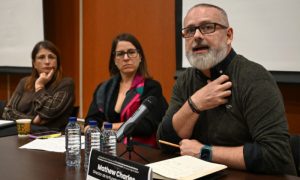
Bushra Khalidi, a humanitarian officer with Oxfam who was invited to brief the Security Council, urged member states to take stronger action to address the crisis.
She called on governments to respond with “urgency, with courage, with humanity” to alleviate the suffering of civilians in Gaza.
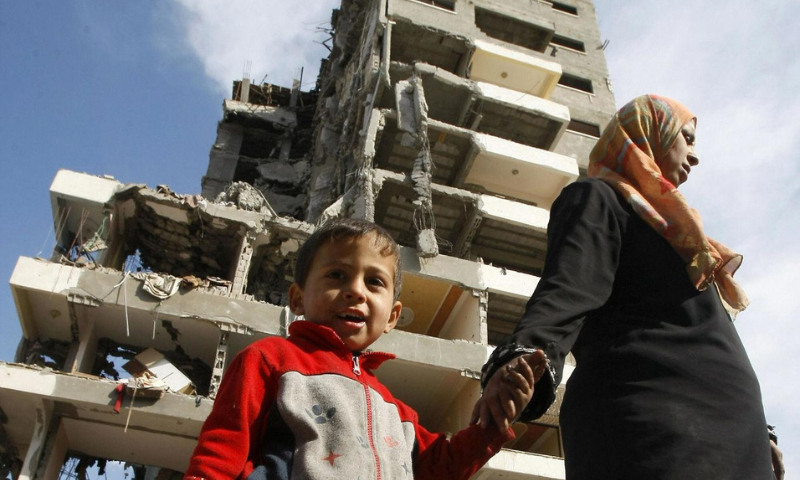
The humanitarian situation in Gaza remains particularly dire for children.
According to UNICEF, tens of thousands of children have been killed or injured during the conflict, while more than 56,000 have lost one or both parents.
The agency estimates that around one million children require urgent mental health and psychosocial support, and hundreds of thousands remain out of school due to widespread destruction.
Humanitarian organisations have also warned of a growing health and nutrition crisis, with acute malnutrition and disease threatening hundreds of thousands of children under the age of five.
Much of Gaza’s infrastructure has been devastated, including hospitals, water networks and sanitation systems, contributing to outbreaks of respiratory infections, acute watery diarrhoea and skin diseases amid severe shortages of clean water and medical supplies.
Repeated displacement has forced many families into overcrowded and unsanitary shelters.
At the same time, children who have survived the conflict are increasingly being compelled to take on adult responsibilities, including caring for younger siblings and injured relatives as they struggle to secure food, water and other necessities.
Women have been among the hardest hit by the conflict, with aid agencies warning that many face heightened risks due to displacement, inadequate healthcare, food insecurity and the loss of family members, while thousands of mothers are struggling to care for their children under increasingly desperate conditions.
The conflict has also exacted a devastating human toll on Gaza’s population. According to Palestinian health authorities, tens of thousands of people have been killed since the war began, with women and children accounting for a significant proportion of the casualties.
Humanitarian agencies have repeatedly warned that continued hostilities, displacement, shortages of food and medicine, and the collapse of essential services have deepened the suffering of civilians across the territory.