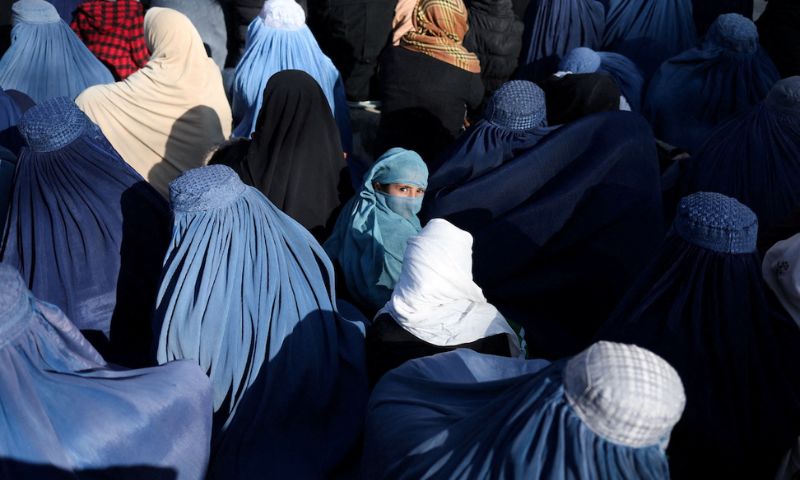
KABUL: Afghanistan has endured five years of sweeping repression and deteriorating human rights since the Taliban returned to power in August 2021, with women and girls bearing the brunt of increasingly restrictive policies that have drawn widespread international condemnation, according to a comprehensive assessment released by Human Rights Watch (HRW).
Ahead of the fifth anniversary of the Taliban’s return to power on August 15, HRW said Afghanistan has become one of the world’s gravest human rights crises as authorities continue to dismantle civil liberties, silence dissent and institutionalize discrimination against women.
Soon after seizing power, the Taliban barred girls from attending secondary schools before later extending the ban to universities, effectively denying millions of Afghan girls access to education.
Women have also been prohibited from working in most sectors, subjected to strict limitations on movement without a male guardian, and excluded from many aspects of public life.
The report says the Taliban’s policies have systematically stripped women of their rights to education, employment, freedom of expression and participation in public affairs, leaving Afghanistan as the only country where girls are officially banned from education beyond the sixth grade.
Independent journalism has also come under sustained pressure over the past five years. According to HRW, Taliban authorities have detained, beaten and intimidated journalists while imposing sweeping restrictions on media organizations.
Hundreds of media outlets have shut down, forcing many reporters into exile or out of the profession, with women journalists disproportionately affected.
Human rights defenders, civil society activists and individuals perceived as critics of the Taliban have likewise faced arbitrary arrests, detention, torture and intimidation.
READ ALSO: Afghan People Suffering for Five Years under Taliban Rule: Human Rights Watch
HRW also documented revenge killings and enforced disappearances of former members of Afghanistan’s security forces despite the Taliban’s public declaration of a general amnesty after taking power.
The report highlights the crackdown on women-led protests that emerged in the months following the Taliban takeover.
Demonstrators demanding equal rights under the slogan “Bread, Work, Freedom” were met with violence, arbitrary detention and threats, while several activists were allegedly held incommunicado and pressured into making forced confessions.
HRW concluded that the Taliban’s network of decrees and laws intentionally depriving women and girls of fundamental rights amounts to the crime against humanity of gender persecution.
It cited the Taliban’s Law on the Propagation of Virtue and Prevention of Vice, enacted in 2024, as further entrenching restrictions on women’s dress, movement, speech and participation in public life.
The rights organization said Afghanistan’s worsening human rights situation continues to raise alarm internationally, with governments and rights advocates calling on the Taliban to reverse restrictions on women and uphold fundamental freedoms guaranteed under international law.