KABUL: Afghanistan has endured five years of worsening human rights violations, deepening humanitarian hardship and growing international concern since the Taliban returned to power in August 2021, according to a comprehensive assessment released by Human Rights Watch (HRW) ahead of the fifth anniversary of their takeover.
August 15, 2026 will mark five years since the Taliban returned to power in Afghanistan. Over the last five years, the Taliban’s increasingly draconian policies have made Afghanistan one of the world’s gravest human rights crises, particularly for women and girls.
The rights organisation said the Taliban’s governance has transformed Afghanistan into one of the world’s most severe human rights crises, particularly for women and girls, while millions of Afghans continue to struggle with hunger, collapsing public services and limited access to healthcare.
The report also highlights increasing restrictions on civil liberties, arbitrary detentions, enforced disappearances and the absence of accountability for serious abuses.
Women and girls face systematic restrictions
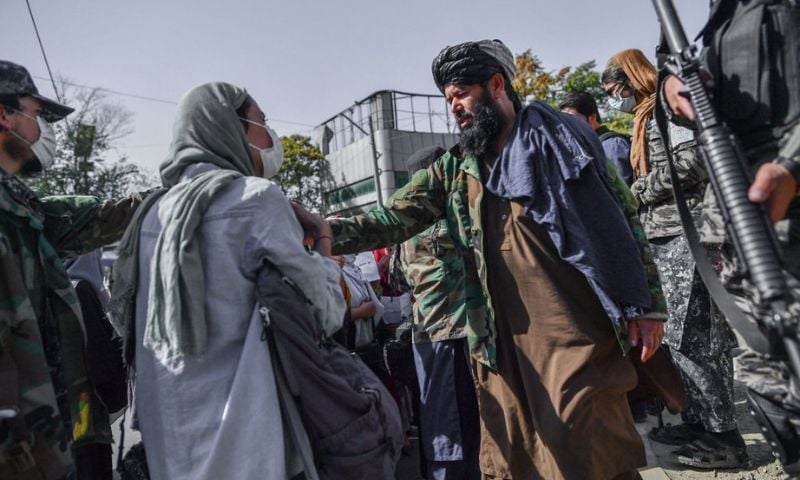
According to HRW, the Taliban moved swiftly after assuming power to impose sweeping restrictions on women and girls. Secondary and higher education for girls was suspended, while women were progressively excluded from many forms of employment and public life.
The report states that women now face strict limitations on their freedom of movement, expression and participation in society. It argues that these measures have deprived Afghan women and girls of fundamental rights and opportunities, leaving an entire generation without access to education and professional careers.
HRW further contends that the Taliban’s legal framework, including legislation introduced in recent years governing public morality and social conduct, has institutionalised discrimination and entrenched gender-based restrictions across virtually every aspect of daily life.
Journalists, activists and critics under pressure
The organisation says independent media has been significantly weakened over the past five years. Many journalists have been subjected to intimidation, arbitrary detention and physical abuse, while numerous media organisations have ceased operations because of financial constraints and increasing restrictions. Female journalists have been particularly affected, with many forced to abandon their professions.
Human Rights Watch states that shrinking civic space has made independent reporting increasingly difficult, thereby limiting public access to impartial information.
Former security personnel targeted
The report added that despite public assurances of amnesty following the Taliban takeover, hundreds of former members of Afghanistan’s security forces have become victims of enforced disappearances and extrajudicial killings.
It also documents allegations of revenge attacks against individuals associated with the previous Afghan government.
In addition, HRW says Taliban authorities have carried out operations against people accused of links to the militant Islamic State group, with reports of executions, disappearances and detentions conducted without access to legal representation or family members.
Humanitarian crisis continues to deepen
Human Rights Watch says Afghanistan’s humanitarian emergency remains one of the most serious consequences of the country’s political transition.
The report notes that the suspension of much international financial assistance following the Taliban’s return accelerated economic decline, leaving millions dependent on humanitarian aid.
According to the organisation, around half of Afghanistan’s population requires food and medical assistance, while more than 3.7 million children are suffering from acute malnutrition.
Healthcare services have also deteriorated because of reduced funding, shortages of medicines and equipment, and restrictions affecting female healthcare professionals.
The report warns that future access to medical care for women could worsen as fewer women are permitted to receive medical education.
Women protesters and minorities among vulnerable groups
HRW says Afghan women who publicly demonstrated in support of their rights have faced arrests, intimidation, violence and prolonged detention.
Religious minorities, journalists, human rights defenders and individuals perceived as critics of the Taliban are also identified as groups facing heightened risks.
Refugee returns intensify pressure
The organisation says the forced return of millions of Afghan refugees from neighbouring countries, particularly Pakistan and Iran, has placed additional strain on Afghanistan’s already fragile economy.
According to HRW, many returnees lack housing, employment opportunities and access to basic services upon arrival. The report argues that deportations to Afghanistan expose vulnerable individuals—including women, journalists, former government employees and rights activists—to potential persecution and serious harm.
READ ALSO: Afghanistan Under Taliban Rule: Repression, Fear and Systematic Erosion of Human Rights
Security concerns remain
Although nationwide conflict has declined compared with previous years, HRW notes that Afghanistan continues to face instability. The report points to periodic attacks carried out by the Islamic State group and also expresses its concern over the clashes at the border, resulting in civilian casualties.
International accountability efforts gain momentum
Human Rights Watch says meaningful accountability for abuses committed during decades of conflict in Afghanistan has remained limited.
However, it notes that international efforts gathered pace in 2025 following the issuance of arrest warrants by the International Criminal Court (ICC) for two senior Taliban leaders over alleged gender persecution.
The report also highlights the establishment of the United Nations Independent Investigative Mechanism for Afghanistan, which is tasked with collecting and preserving evidence related to serious violations committed by all parties to the conflict.
HRW maintains that accountability efforts should encompass alleged crimes committed by the Taliban, the former Afghan government and international military forces.
Human Rights Watch urges global action
The organisation has called on governments and international institutions to intensify pressure on the Taliban to reverse restrictions imposed on women and girls and restore access to education, employment and public life.
It also urged continued support for international accountability mechanisms, renewed backing for the UN Special Rapporteur on human rights in Afghanistan, increased humanitarian funding and an end to the forced return of Afghan refugees.
Human Rights Watch concluded that while the visible effects of Afghanistan’s crisis are severe, the lasting damage extends far beyond what can easily be documented, warning that years of lost education, persistent injustice and widespread deprivation will continue to affect millions of Afghans for generations unless meaningful action is taken.