Key Points
- Inflation eased to 9.2 per cent in July 2026.
- Remittances rose 13 per cent to $3.6 billion.
- Large-scale manufacturing grew five per cent during FY2025-26.
- Goods exports increased 9.4 per cent in July.
- ICT exports reached $417 million during July.
- Fiscal deficit fell to 2.6 per cent of GDP.
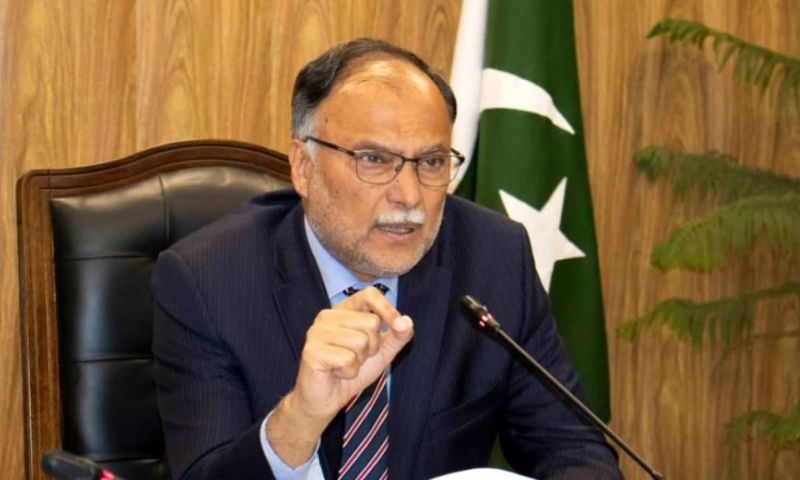
ISLAMABAD: Pakistan’s economy has entered a phase of greater stability, but the government must now convert that stability into sustainable economic transformation, Federal Minister for Planning, Development and Special Initiatives Ahsan Iqbal said on Saturday.
Presenting the August Monthly Development Update, Iqbal said the government’s focus under URAAN Pakistan was shifting towards export-led growth, productive investment, job creation and improved living standards.
He said the monthly update reflected the government’s commitment to presenting a transparent account of the country’s economic performance, progress and challenges.
“Through URAAN Pakistan, our focus is now to translate this stability into sustainable economic transformation, with exports as a key driver, leading to more jobs, better incomes, greater opportunities for our youth and an improved quality of life for the people of Pakistan,” he said.
According to the minister, the opening month of FY2026-27 produced encouraging economic indicators, although sustaining the gains would require continued reforms and fiscal discipline.
Inflation shows moderation
Consumer Price Index inflation eased to 9.2 per cent in July 2026, compared with 11.7 per cent in May, indicating moderation in price pressures.
Iqbal said the year-on-year increase from 4.1 per cent was largely linked to the base effect and the pass-through of global food and energy prices.
He said the government was continuing to monitor markets and prices through regular meetings of the National Price Monitoring Committee, with particular attention to supply chains, the quality of essential commodities and timely administrative measures to keep necessities affordable.
Workers’ remittances also provided significant support to the external sector, which reached $3.6 billion in July, up 13 per cent from $3.2 billion during the same month last year. The increase followed record remittances of $41.6 billion during the previous fiscal year.
The minister said these inflows strengthened Pakistan’s foreign exchange position while directly supporting millions of households and reflecting the contribution of overseas Pakistanis to the economy.
Industry and exports recover
Large-Scale Manufacturing recorded average growth of 5 per cent in FY2025-26, compared with a contraction of 0.7 per cent in the preceding year.
The recovery was broad-based, with 16 of 22 sectors recording positive growth.
Automobiles posted the strongest growth at 57.8 per cent, followed by transport equipment at 42.4 per cent, electrical equipment at 14.3 per cent, tobacco at 12.6 per cent and food at 7 per cent.
Iqbal said the revival in industrial production was important for increasing domestic output, creating employment and generating exportable surplus.
The external sector also showed stronger performance at the beginning of FY2026-27.
Goods exports rose 9.4 per cent to $3 billion in July from $2.8 billion a year earlier. Total exports of goods and services increased 13 per cent to $3.9 billion from $3.5 billion.
Growth was recorded in surgical goods, which rose 16.3 per cent, food exports by 8 per cent, leather goods by 7.8 per cent and textiles by 3.9 per cent.
ICT exports also strengthened, reaching $417 million in July and highlighting the growing role of technology and digital services in Pakistan’s export earnings.
Imports of goods and services, meanwhile, increased 13 per cent to $7.3 billion from $6.5 billion, which the minister attributed to stronger domestic economic activity and higher demand for productive and capital goods. Despite higher imports, the current account deficit narrowed to $328 million in July from $529 million a year earlier.
Fiscal discipline strengthens
Fiscal consolidation remained a central part of the government’s economic reform agenda.
Federal Board of Revenue tax collection increased 8.4 per cent to Rs820.9 billion in July FY2026-27, compared with Rs757.4 billion during the corresponding period last year. Iqbal said stronger fiscal discipline had helped improve the country’s overall fiscal position.
The fiscal deficit narrowed to 2.6 per cent of GDP in FY2025-26 from 5.4 per cent in FY2024-25, which he described as the lowest level recorded in two decades.
On development spending, the government said resources were being increasingly directed towards high-impact projects aligned with URAAN Pakistan.
Under the Finance Division’s release strategy, which allocates 15 per cent in the first quarter, 20 per cent in the second, 25 per cent in the third and 40 per cent in the fourth, the Planning Ministry authorised Rs211.327 billion in July, equivalent to 21.1 per cent.
Investment targets jobs
The Central Development Working Party considered 27 agenda items during July FY2026-27, including 22 projects, four position papers and one concept clearance proposal.
Nine projects, three position papers and one concept clearance proposal were approved, while nine projects were recommended to the Executive Committee of the National Economic Council.
Three projects were deferred, while one project and one position paper were returned to their sponsors for further consideration.
Projects approved during the month are expected to create around 7,851 direct and 14,053 indirect jobs across key sectors.
A review of CDWP projects also led to the removal of non-essential components, generating savings of Rs1.02 billion during July and allowing resources to be redirected towards higher-impact priorities.
Five Public Sector Development Programme projects were monitored during the month, while two projects were evaluated for implementation progress, efficiency, impact and sustainability.