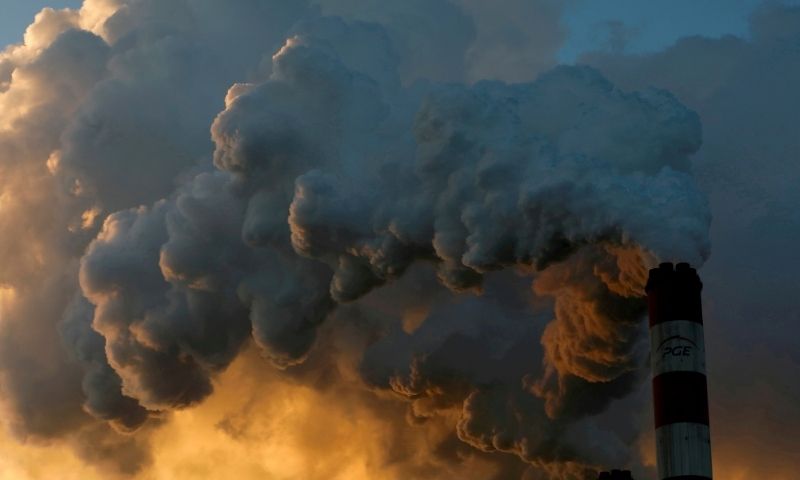
LUXEMBOURG: The European Union (EU) has taken a unified stance to pursue a global phase-out of fossil fuels, with a particular focus on reaching a peak in their consumption within this decade. The agreement was adopted unanimously among EU member states late on Monday, marking a significant step in the region’s commitment to combating climate change.
At the upcoming COP28 UN climate talks scheduled for November, the EU will advocate for the elimination of subsidies for fossil fuels that do not serve to alleviate energy poverty or support a “just transition.” However, the statement refrains from setting a specific deadline for this action, a point of contention among various stakeholders.
The EU’s position was articulated through a statement from the European Council, emphasizing the necessity of transitioning to a climate-neutral economy, requiring a global phase-out of unabated fossil fuels and a reduction in their consumption within this decade. The statement also underscores the importance of predominantly removing fossil fuels from the energy sector before 2050.
The issue of whether to include the term “unabated” led to heated debates among EU ministers. While some advocated for its withdrawal or stringent conditions regarding carbon capture technology, it was ultimately retained in the agreed text. However, the formulation of the long-term objective concerning an energy sector predominantly free of fossil fuels “well before 2050” no longer mentions the term “unabated.”
The EU’s focus on carbon capture technologies is to apply them to sectors where decarbonization is exceptionally challenging and where complete weaning from fossil fuels is difficult, as highlighted by Spain’s ecological transition minister, Teresa Ribera.
The EU aims to secure an unprecedented commitment to move away from “unabated” fossil fuels at COP28, but the global consensus on eliminating fossil fuels entirely remains complex and multifaceted. The EU also calls for a fully or predominantly decarbonized global power system in the 2030s and endeavours to triple installed renewable energy capacity and double energy efficiency by 2030.
EU member countries debated whether to maintain their legally established objective of a 55 percent reduction in greenhouse gases by 2030 or to commit to the 57 percent reduction that would result from policies already adopted. They ultimately updated their submission, indicating their aim to reduce emissions “by at least 55 percent by 2030 compared to 1990 levels.” European officials stressed that the EU’s ambition is to lead on the global stage in the fight against climate change.
The EU also calls for the reinforcement of funding arrangements established during COP27 to support developing countries as they transition to greener energy production and usage. This united front from the EU underscores its commitment to taking a proactive role in combating climate change and promoting global cooperation.