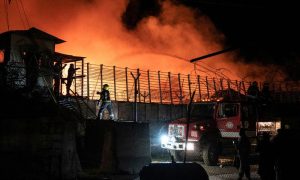
KUWAIT CITY: A drone strike on a passenger terminal in Kuwait’s international airport wounded several people on Wednesday and forced air traffic to be suspended, as Iranian and US forces traded attacks in the Gulf.
The attacks marked one of the more severe tests yet of a fragile April 8 ceasefire, which has largely held despite sporadic strikes after more than a month of war sparked by the US and Israeli attack on Iran.
Kuwaiti officials blamed the attack on the airport on Iran, whose Revolutionary Guards accused US forces of triggering the night’s sequence of attacks by targeting a communications tower on the country’s Qeshm Island, forcing it to respond.
Kuwait’s state news agency said civil aviation authorities had suspended traffic and transferred arriving flights to alternative airports after “Terminal One came under Iranian attacks, causing casualties and damage”.
«الطيران المدني»: تعليق الرحلات الجوية وتحويلها إلى مطارات بديلة إلى حين استكمال الإجراءات اللازمة والتأكد من جاهزية مطار الكويت الدولي لاستئناف عملياته التشغيلية
– الفرق الفنية باشرت معاينة وتقييم الأضرار التي لحقت بالمرافق والمنظومات التشغيلية تمهيدًا لإصلاحها وإعادة تأهيلها… pic.twitter.com/MYFRwpWuOJ
— كونا KUNA (@kuna_ar) June 3, 2026
The oil-rich Gulf nation, a US ally, has been on the receiving end of Iranian attacks since the United States and Israel attacked Iran and killed its senior leadership in late February.
Tehran has accused Kuwait of allowing US forces to launch strikes from its soil.
Iran’s Islamic Revolutionary Guard Corps (IRGC) said the attacks targeting US bases in Kuwait were launched in response to what it described as an American strike on Qeshm Island in southern Iran.
In a statement, the IRGC said its Aerospace Force carried out missile attacks against US military facilities in Kuwait following what it called a violation of Iranian sovereignty.
The force warned that any further attack against Iran would be met with a “decisive” response, adding that those involved in actions against the country would face consequences.
US Central Command (CENTCOM) confirmed carrying out strikes on Qeshm Island.
— U.S. Central Command (@CENTCOM) June 2, 2026
The Official Spokesman for the Ministry of Defence, Brigadier General Saud Abdulaziz Al-Otaibi, said the armed forces were monitoring the situation in coordination with relevant authorities and remained in a state of full readiness to deal with any developments and take all necessary measures to preserve the country’s security and stability.”
Kuwait News Agency (KUNA) reported that airport traffic was temporarily suspended following the attack.
بيان رقم (63)
صرّح المتحدث الرسمي لوزارة الدفاع، العقيد الركن سعود عبدالعزيز العطوان، بأن عدداً من الطائرات المسيّرة المعادية استهدفت اليوم مبنى الركاب (T1) بمطار الكويت الدولي نتيجة العدوان الإيراني الآثم، ما أسفر عن أضرار مادية جسيمة في المبنى وإصابة عدد من الأشخاص، حيث تلقوا… pic.twitter.com/HMSd0TX7sG
— KUWAIT ARMY – الجيش الكويتي (@KuwaitArmyGHQ) June 3, 2026
Earlier, Kuwait’s military said its air defences were intercepting “hostile” missile and drone attacks.
The oil-rich Gulf nation, a US ally, has been on the receiving end of Iranian attacks since the United States and Israel attacked Iran and killed its senior leadership in late February.
“Any sounds of explosions heard are the result of air defense systems intercepting these hostile attacks,” the military said on X, without specifying their origin.
تتصدى حالياً الدفاعات الجوية الكويتية لهجمات صاروخية وطائرات مسيرة معادية.
تنوه رئاسة الأركان العامة للجيش أن أصوات الانفجارات إن سمعت فهي نتيجة اعتراض منظومات الدفاع الجوي للهجمات المعادية.
يرجى من الجميع التقيد بتعليمات الأمن والسلامة الصادرة عن الجهات المختصة.… pic.twitter.com/us5KIAGcih
— KUWAIT ARMY – الجيش الكويتي (@KuwaitArmyGHQ) June 2, 2026
Kuwait’s state-run news agency KUNA reported that sirens were heard for the second time that night.
On Monday, Kuwait said it shot down a volley of missiles and drones, and later its foreign ministry held Iran “fully responsible for these heinous attacks”.
An additional wave of Iranian drones attempting to attack U.S. forces in Kuwait failed to impact intended targets tonight. U.S. Central Command air defenses successfully downed multiple drones and ensured no American personnel or assets were harmed.
— U.S. Central Command (@CENTCOM) June 3, 2026
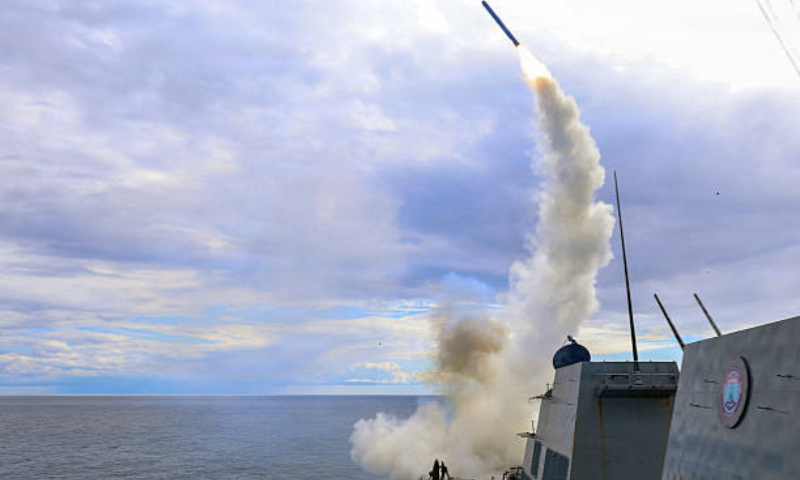
The US military’s Central Command had said its forces “successfully intercepted two Iranian ballistic missiles targeting American forces based in Kuwait”.
“These missiles were immediately defeated, and no American personnel were harmed”, it said in a post on X.
Earlier, on Wednesday, Iran and the United States traded competing claims after Tehran said it had launched missile and drone attacks against American military facilities in the Gulf, including the US Navy’s Fifth Fleet headquarters in Bahrain.
Footage showing the retaliation against the aggression by the US military, including strikes on the Fifth Fleet Naval Base, along with the air and helicopter bases of the terrorist, child-killing American army. pic.twitter.com/6GcdH5bPS0
— IRNA News Agency ☫ (@IrnaEnglish) June 3, 2026
While Iranian state media described the operation as a successful retaliatory strike, the US military said the attacks were intercepted or failed to reach their targets, denying any damage to American installations.
The denial from the United States Central Command (CENTCOM) came after Iranian state media reported that the IRGC had launched a series of missile and drone attacks against US military facilities in retaliation for what Tehran described as an American strike on a communications tower located south of Qeshm Island.
According to Iranian reports, the attacks were aimed at the US Fifth Fleet headquarters in Bahrain, as well as an air base and military helicopters stationed in a neighbouring regional country.
An additional wave of Iranian drones attempting to attack U.S. forces in Kuwait failed to impact intended targets tonight. U.S. Central Command air defenses successfully downed multiple drones and ensured no American personnel or assets were harmed.
— U.S. Central Command (@CENTCOM) June 3, 2026
The US military maintained that American forces remained fully operational and prepared to respond to any threat against personnel, facilities or regional partners. CENTCOM further described the IRGC’s assertions regarding successful strikes on US military installations as inaccurate.
Iranian media also reported that the IRGC Navy had targeted a vessel identified as Panaya near the strategically important Strait of Hormuz. The action was described as retaliation for an alleged US attack on an Iranian tanker that caused damage to its engine room.
In addition, Iranian officials claimed that the operation formed part of a broader response to what they characterised as American aggression in the region.
The reports suggested that missile and drone strikes were launched simultaneously against multiple targets associated with US military operations.
CENTCOM stated that several projectiles launched towards regional countries either failed to reach their targets or were intercepted by allied air defence systems