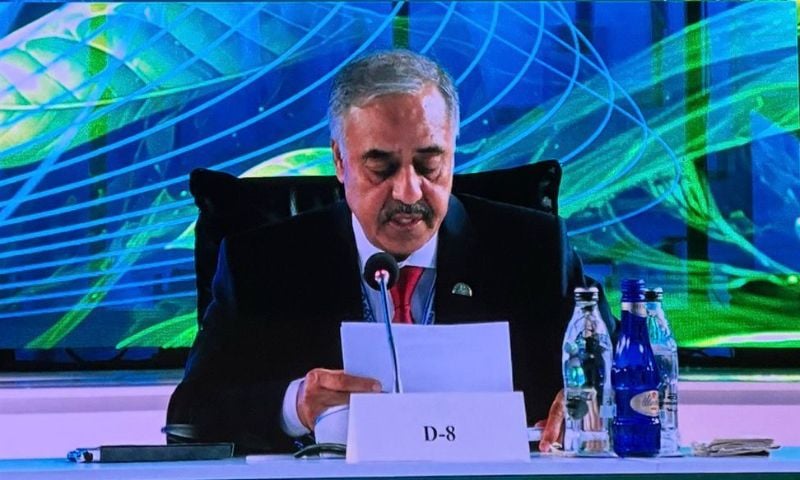



ANKARA, Turkiye: The Secretary-General of the Developing-8 Organisation for Economic Cooperation, Sohail Mahmood, has called for stronger international cooperation to address growing challenges related to energy efficiency, resource management, and environmental sustainability.
Speaking at the High-Level Ministerial Session on Energy in Turkiye, the D-8 Secretary-General stressed the importance of collective action, innovation, and knowledge-sharing to promote sustainable development and accelerate the transition toward a more resource-efficient global economy.
The session titled “Energy Efficiency and Resource Management for a Sustainable Future” was jointly organised by the Turkish Minister of Energy and Natural Resources and the Zero Waste Foundation, according to a press release issued by the D-8 Secretariat on Monday.
The D-8 is an international organisation that promotes economic cooperation and development among eight major developing Muslim-majority countries.
Sohail Mahmood commended the Government of Turkiye, the Ministry of Energy and Natural Resources, and the Zero Waste Foundation for organising the timely event.
He added that the D-8 is steadily integrating sustainability into its overall cooperation agenda – recognising that energy efficiency, circular economy practices, and sustainable resource management are essential for achieving long-term economic resilience and sustainable development.
Referring to the D-8 Energy and Climate Centre (D-8 ECC) being established in Baku, Secretary-General Sohail Mahmood noted that the Centre would serve as an important institutional platform for fostering dialogue and practical cooperation on matters related to energy efficiency, the mining sector, climate resilience, innovation, and sustainable development among D-8 Member States.
Looking ahead, the Secretary-General proposed three practical initiatives: (i) the establishment of a Global South Platform on Energy Efficiency and Resource Management; (ii) the launch of a Circular Economy and Zero-Waste Partnership Initiative; and (iii) the development of innovative financing mechanisms, including Green Sukuk and blended finance instruments, to support energy-efficiency, renewable energy, and circular economy projects.
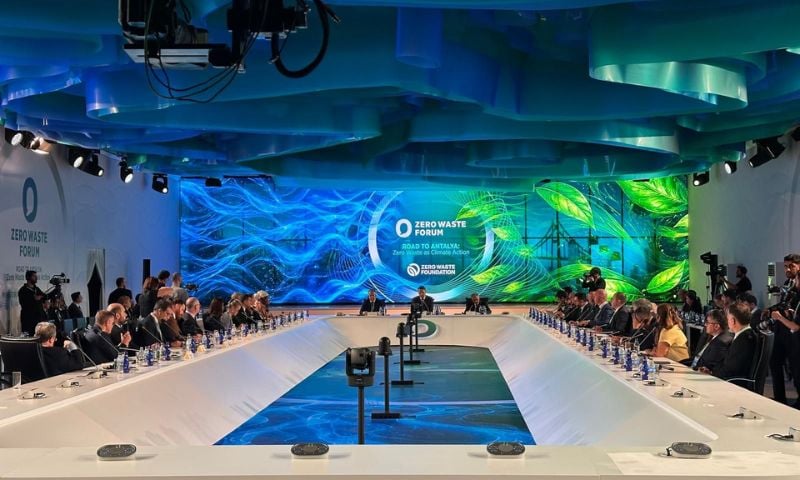
The Dialogue was chaired by Alparslan Bayraktar, Turkish Minister for Energy and Natural Resources. The event formed part of the broader Zero Waste Forum 2026, one of the world’s largest sustainability gatherings, which attracted more than 5,000 participants from over 180 countries, including more than 120 Ministers and hundreds of senior policymakers and stakeholders.
In his opening remarks, Minister Alparslan Bayraktar emphasised that energy efficiency and zero waste are inseparable pillars of sustainable development, both centred on preventing waste, ensuring responsible use of resources, and strengthening economic resilience.
Stressing that the world faces simultaneous energy, climate, and resource challenges, he highlighted Turkiye’s nationwide energy efficiency mobilisation across industry, transportation, agriculture, and buildings, supported by a USD 20 billion investment target under the country’s 2024–2030 Energy Efficiency Action Plan.
The Minister underscored the importance of raising awareness at all levels of society and reaffirmed Turkiye’s commitment to advancing international cooperation on energy efficiency, renewable energy, circular economy practices, resource security, and sustainable development. He also noted that the Forum would contribute to shaping practical solutions and a forward-looking roadmap ahead of COP31 in Antalya.
The other speakers and participants included ministers and senior representatives from Bangladesh Azerbaijan, Guinea, Moldova, the Turkish Republic of Northern Cyprus, and countries from the region as well as representatives of international and regional organizations, including the World Bank Group, International Renewable Energy Agency (IRENA), the Organisation of Turkic States (OTS), the Black Sea Economic Cooperation Organisation (BSEC), United Nations entities, academia, and leading private-sector institutions.