
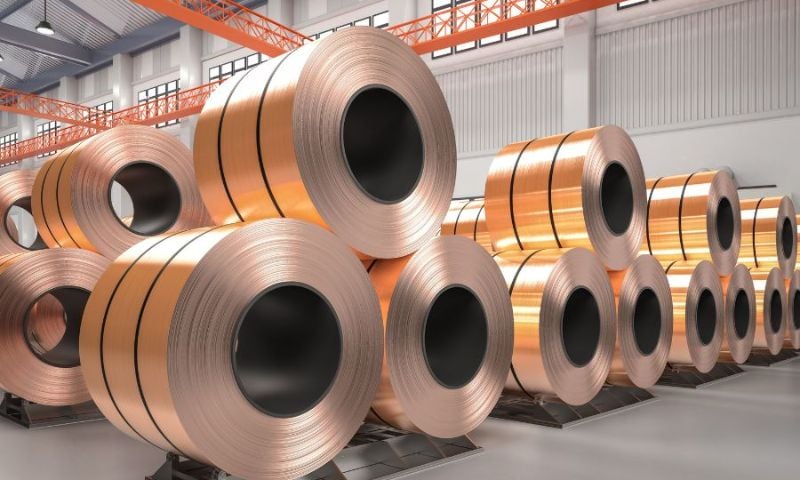
Key Points
- Refined unwrought copper exports to China rose 68.51 per cent in January-August 2026
- Pakistan’s total exports to China increased 40.51 per cent to $2.386 billion
- Domestic processing and manufacturing could help Pakistan retain more value from its mineral resources
ISLAMABAD: Pakistan’s rapidly growing copper exports to China are creating fresh opportunities for mineral trade under the second phase of the China-Pakistan Economic Corridor (CPEC 2.0), although the long-term economic benefits will depend on the country’s ability to expand domestic processing and manufacturing.
Pakistan’s exports to China reached $2.386 billion in the first eight months of 2026, up 40.51% from $1.698 billion in the corresponding period last year, according to data from China’s General Administration of Customs.
Refined unwrought copper exports rose 68.51 per cent, while exports of unrefined copper and copper anodes for electrolytic refining increased 44.14 per cent.
The figures highlight copper’s growing importance in bilateral commerce and raise a broader question for policymakers: how can Pakistan turn stronger demand for its minerals into sustainable industrial development, employment and greater export earnings?
Established market
China is already a major destination for Pakistani copper. World Bank trade data published through the World Integrated Trade Solution (WITS) show that Pakistan exported $791.5 million worth of refined unwrought copper products worldwide in 2024, of which $786.6 million went to China.
This concentration demonstrates the importance of Chinese buyers to Pakistan’s copper trade, while also exposing exporters to changes in demand, prices and trade conditions in a single major market.
Copper is essential for power transmission, electrical equipment, construction and electronics.
Its role in electrification and industrial manufacturing makes reliable supplies important for China’s extensive processing and manufacturing industries.
For Pakistan, the opportunity within the CPEC extends beyond increasing shipments. Greater domestic capacity to process copper and manufacture industrial-use products could allow local businesses to capture a larger share of the value generated along the supply chain.
Value addition
CPEC 2.0 places greater emphasis on productive sectors, including minerals, industry, agriculture, technology and private-sector investment. The CPEC Secretariat has identified these areas as priorities for the next phase of Pakistan-China economic cooperation.
READ ALSO: Free Trade Agreement Expansion to Boost Pakistan’s Exports to China
Copper fits these objectives because its supply chain connects mining with refining, engineering, transport, equipment production and manufacturing.
Investment in commercially viable processing facilities, mineral testing laboratories and specialised engineering services could strengthen Pakistan’s domestic capabilities.
Industries using processed copper could also create opportunities for local suppliers and skilled workers.
However, these outcomes are not automatic. They would require investment, reliable infrastructure, modern technology, skilled labour and predictable regulatory arrangements. Environmental protection, workplace safety and benefits for communities in mining regions would also be essential.
Beyond raw materials
Pakistan already exports refined copper, which has undergone processing and is further along the production chain than copper ore.
The latest growth in refined unwrought copper shipments suggests that the country has an established foothold in this market.
The next step is to identify additional processing and manufacturing activities that can compete commercially.
Pakistani companies also need opportunities to participate in supply chains rather than remaining confined to extraction and basic processing.
Export growth
Under CPEC 2.0, rising copper shipments boosted Pakistan’s exports to China. Associated Press of Pakistan (APP) reported that agricultural products and textiles also contributed to the export gains during January-August 2026.
Maintaining this momentum will require a broader export base.
Diversification into processed agricultural goods, engineering products, technology services and manufactured items could reduce dependence on a limited range of commodities and make export earnings more resilient to market fluctuations.
For CPEC 2.0, success should therefore extend beyond higher mineral shipments.
It should include investment in domestic industry, technology transfer, skilled employment and stronger participation by Pakistani businesses.
China’s demand has opened a significant commercial opportunity for Pakistan’s copper sector.