Key Point
- Ground transport and power supply networks disrupted
- Heavy rain keeps flood and landslide risks elevated
ISLAMABAD: Typhoon Dolphin weakened after battering eastern China, but the storm left more than 1.5 million people evacuated, brought record rainfall to Shanghai and disrupted air and rail services across the region.
The typhoon made landfall in Zhejiang province before weakening as it moved inland, but its rain bands continued to dump torrential rain across parts of eastern and central China.
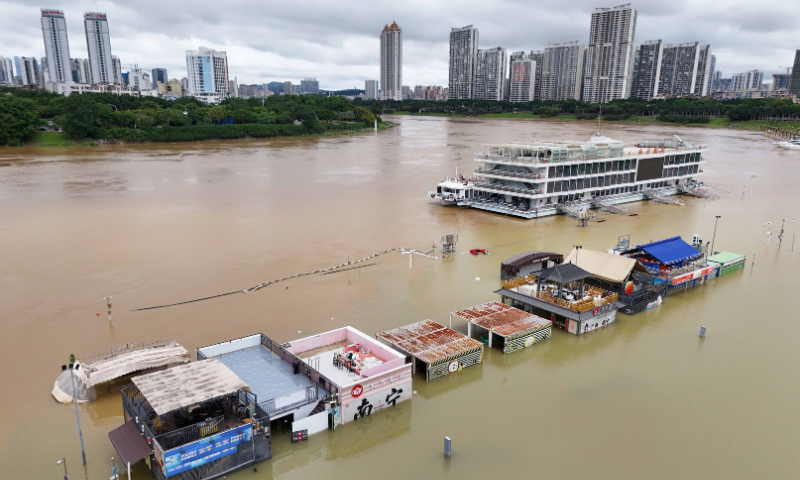
Authorities evacuated residents from low-lying and other vulnerable areas as rivers and water levels rose, and the risk of flooding and landslides remained high.
Shanghai bore the brunt of the storm’s rainfall. A weather station in the city recorded nearly 313 millimetres of rain in 24 hours, the heaviest such rainfall in about 150 years. Another station recorded close to 400 millimetres, underscoring the exceptional intensity of the downpour.
The rainfall caused widespread waterlogging and disrupted transport in one of China’s most important economic centres.
Hundreds of flights were cancelled at Shanghai’s airports, and rail services were also suspended or disrupted as authorities responded to the severe weather.
ALSO READ: Typhoon Dolphin Hits Eastern China, 1m Evacuated
More than 900,000 people were evacuated in Wenzhou, a coastal city in Zhejiang, with emergency shelters opened to accommodate those displaced.
Thousands more were moved from vulnerable areas in neighbouring Fujian province, and Shanghai authorities evacuated more than 200,000 people from high-risk areas.
The immediate threat has shifted from Dolphin’s powerful winds to the possibility of prolonged rainfall, river flooding and landslides as the storm system moves inland.
Forecasters warned that parts of central and eastern China could receive another 200 to 400 millimetres of rain, keeping flood risks elevated even after the typhoon weakened. The storm system was expected to bring heavy rain to provinces farther inland, including Hubei and Henan.
Authorities have stepped up flood-control and disaster-response measures, including evacuations, emergency shelter operations and monitoring of rivers and reservoirs.
Storm affects beyond mainland China
The storm’s effects have extended beyond mainland China. Before reaching the Chinese coast, Dolphin affected Japan’s southern Okinawa region, where people were injured, and power supplies were disrupted. Its circulation also contributed to extreme weather in Hong Kong.
Dolphin is the latest in a series of powerful weather systems to test China’s disaster-response infrastructure during the summer flood season.
Eastern China’s densely populated coastal provinces are particularly exposed to tropical cyclones. The risks extended well beyond the immediate landfall zone to heavy rain, river flooding and landslides.
The disruption in Shanghai is particularly significant because the city is a major global financial, manufacturing and transport hub.
Flight and rail cancellations can affect domestic travel, international connections and supply chains well beyond the areas directly hit by the storm.
Although Dolphin has lost strength, authorities remain focused on the storm’s aftermath.
The continuing rainfall means that the risk has not ended with landfall, with flooding and landslides potentially becoming more serious as saturated ground and swollen waterways absorb further rain.