WASHINGTON: China and Russia may be avoiding direct military involvement in the US-Israeli war with Iran, but analysts say both powers continue to support Tehran through complex economic and technological networks designed to bypass Western sanctions.
According to the Atlantic Council, a US-based think tank that researches global issues and influences policy on international affairs and security, experts describe this system as an “Axis of Evasion” — a web of supply chains, intermediaries, and financial mechanisms that allow Iran to sustain its military capabilities despite years of economic restrictions.
Supply Chains Bypass Sanctions
China plays a central role by importing sanctioned oil from Iran and Russia while supplying dual-use technologies, including components used in drones, missiles, and navigation systems.
Much of this trade occurs outside Western financial systems, making it harder to enforce export controls. Components often pass through Chinese intermediaries and front companies before reaching Iranian manufacturers.
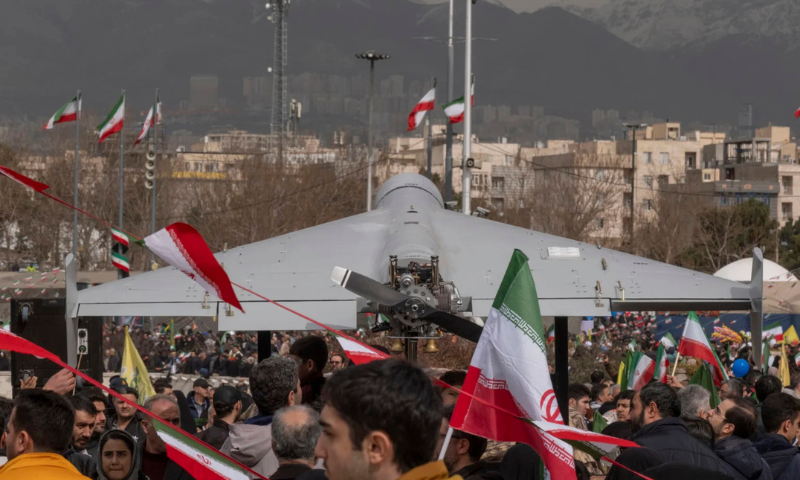
Drone Programme At Core
Iran’s drone programme highlights how these networks operate.
Unmanned aerial vehicles such as the Shahed series rely on imported electronics, engines, and semiconductors — many originally produced in Western countries but routed through Chinese supply channels.
Russia has deepened cooperation with Iran since 2022, helping expand drone production capacity and even establishing manufacturing facilities on its own territory. The partnership has since evolved into a self-sustaining system of shared technology and production.
Technology And Navigation Support
China and Russia also support Iran through advanced navigation systems and battlefield technologies.
Chinese intermediaries supply satellite navigation components and electronics, while Russia provides operational experience and technical modifications based on its war in Ukraine.
Iran has also gained access to China’s BeiDou satellite system, enhancing its ability to guide drones and obscure military movements.
Flow Of Critical Materials
Iran’s missile and explosives programmes rely on chemical precursors and industrial materials that are often sourced through indirect channels.
Chinese chemical firms have been linked to shipments of dual-use materials, while procurement networks use transshipment hubs and shell companies to evade detection and sanctions enforcement.
Pressure Mounts On Washington
Despite extensive sanctions, Iran continues to maintain and expand its military capabilities, supported by access to foreign components and technical cooperation with Beijing and Moscow.
The Atlantic Council reported Analysts as saying that Washington must tighten enforcement, target intermediary networks, and increase pressure on China and Russia to curb support for Tehran.
Despite extensive sanctions, Iran continues to maintain its military capabilities, supported in part by access to foreign components and technical cooperation. Analysts say the effectiveness of enforcement efforts will play a key role in shaping the conflict’s longer-term trajectory.