
Key Point
- Diesel prices also increased
- Global crude rebound cited
- Iran tensions support the oil market
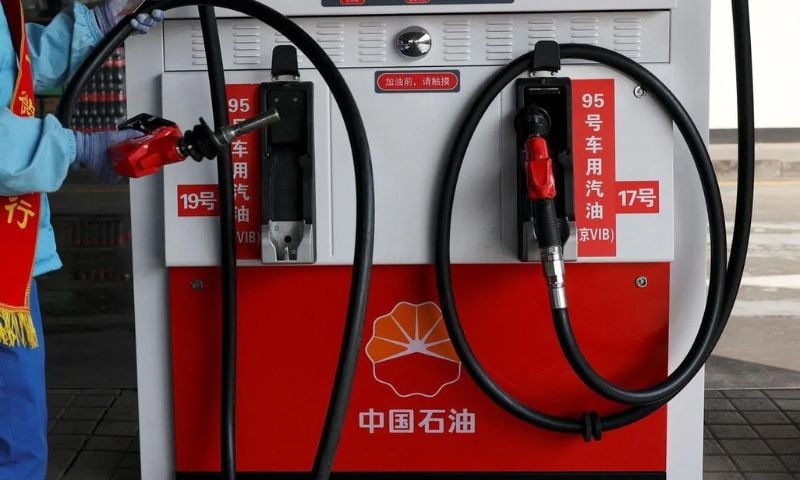
ISLAMABAD: China will raise its domestic retail prices for petrol and diesel from July 18 after higher international crude oil prices triggered an upward adjustment under the country’s fuel pricing mechanism, authorities announced on Friday.
The National Development and Reform Commission (NDRC), China’s top economic planner, said the ceiling retail prices for petrol and diesel would increase by 300 yuan (about $42) and 290 yuan per tonne, respectively, effective Saturday.
China adjusts domestic fuel prices in line with changes in international crude oil markets under a pricing system that is reviewed every 10 working days.
The latest increase follows a rebound in global oil prices amid concerns over potential disruptions to energy supplies and shipping routes linked to tensions involving the United States and Iran.
The adjustment marks a reversal from earlier this month, when Beijing implemented one of its largest fuel price cuts in years after crude prices retreated.
On July 4, authorities lowered petrol and diesel price caps by 950 yuan and 915 yuan per tonne, respectively, to reflect weaker international oil markets.
China is the world’s largest importer of crude oil and remains highly exposed to fluctuations in global energy prices despite maintaining strategic petroleum reserves and expanding renewable energy capacity.
Changes in domestic fuel prices can influence transportation costs, manufacturing expenses and consumer inflation across the broader economy.
Analysts said the latest increase reflects the renewed strength in oil markets, which have been supported by geopolitical uncertainty in the Middle East and concerns over the security of key energy transit routes.
Higher fuel costs may also add pressure on Chinese manufacturers and logistics operators facing elevated input costs.
Recent data showed producer prices in China have remained under pressure from rising commodity and energy costs, prompting policymakers to balance market-based fuel pricing with efforts to support economic growth and domestic demand.
China’s fuel pricing mechanism
China introduced its current fuel pricing mechanism in 2013 to better align domestic fuel prices with international crude oil movements.
Under the system, retail fuel prices are adjusted when changes in global crude benchmarks exceed a specified threshold over a 10-working-day period.
Authorities, however, retain the ability to moderate adjustments during periods of extreme volatility to shield consumers and businesses from sudden price shocks.
In recent years, fuel prices in China have undergone frequent revisions as global markets reacted to supply disruptions, geopolitical tensions and shifts in demand.
The country’s dependence on imported crude makes domestic fuel costs particularly sensitive to developments in major oil-producing regions, including the Middle East, which supplies a significant share of China’s energy imports.