
Key Points
- Toronto records world’s worst air quality
- Wildfire smoke spreads across the northeastern US
- Health alerts issued in Canada and New York
- World Cup-related events face disruption
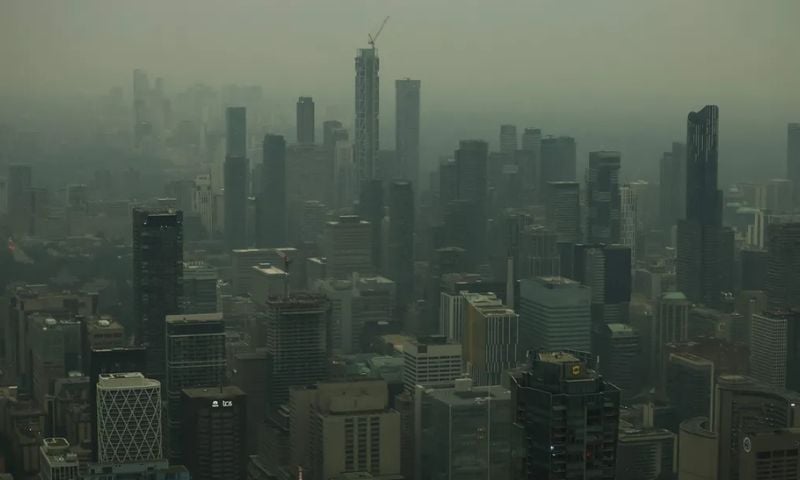
ISLAMABAD: Thick smoke from raging wildfires in northwestern Ontario blanketed Toronto on Wednesday, pushing the Canadian city to the top of global air pollution rankings and sending hazardous air across parts of the northeastern United States.
The smoke, driven southward by prevailing winds, also spread to major US population centres, including New York City.
The US authorities issued air quality alerts and advised New York residents, particularly those in vulnerable groups, to limit outdoor exposure. Forecasts indicate smoky conditions could persist through the end of the week, according to Reuters.
The deteriorating air quality prompted the cancellation of Toronto’s FIFA Fan Festival and a World Cup watch party.
Officials in the New York-New Jersey area monitored conditions ahead of this weekend’s FIFA World Cup final, expected to attract tens of thousands of spectators.
Canada battles wildfire
Canada is battling one of its most active wildfire seasons in recent years, with more than 800 fires burning across the country, including large blazes in Ontario, Manitoba and Saskatchewan.
Authorities said about 835 wildfires were active nationwide, with more than 100 considered out of control. Nearly 1.9 million hectares have already burned this year.
Meteorologists warned that smoke could continue to affect large parts of the US Midwest, the Great Lakes region and the Northeast, reviving memories of the severe cross-border smoke events that disrupted daily life across North America in 2023.
Scientists say hotter and drier conditions linked to climate change are increasing the frequency and intensity of wildfire seasons, according to The Guardian.
ALSO READ: At Least 11 Dead, 19 Missing in Devastating Wildfire in Spain
The latest smoke emergency is part of a growing pattern of increasingly severe wildfire seasons across Canada and the northern United States.
Canada, home to vast boreal forests stretching from British Columbia to Newfoundland, experiences thousands of wildfires every year, mostly because of lightning strikes or human activity.
Notwithstanding, fire is a natural part of the forest ecosystem; scientists say rising temperatures, prolonged droughts and changing precipitation patterns have significantly increased the frequency and intensity of large wildfires.
The country endured its worst wildfire season on record in 2023, when more than 18 million hectares of land burned—an area larger than England and Wales combined.
The fires forced tens of thousands of residents to evacuate and sent dense smoke across much of North America, turning skies orange in cities such as New York, Washington and Chicago. Air quality levels in several US cities briefly ranked among the worst in the world during that episode.
Western provinces, including British Columbia and Alberta, have historically been the most fire-prone regions. However, in recent years, major fire outbreaks have spread eastward into Ontario, Quebec and the Prairie provinces.
Northern Ontario, where the latest fires are burning, has experienced repeated large-scale wildfires amid unusually dry and warm conditions.
The United States also faces growing wildfire risks, particularly in western states such as California, Oregon and Washington.
However, smoke from Canadian fires has increasingly become a cross-border concern for the densely populated northeastern and Midwestern United States.
Weather systems can transport fine particulate matter hundreds or even thousands of kilometres, affecting air quality far from the source of the fires.
Climate researchers warn that longer fire seasons and more extreme wildfire behaviour are becoming a defining feature of North America’s changing climate.
According to Canadian government data, the country’s wildfire season now starts earlier, lasts longer and produces larger fires than in previous decades, increasing the likelihood of recurring smoke events across both Canada and the United States.