
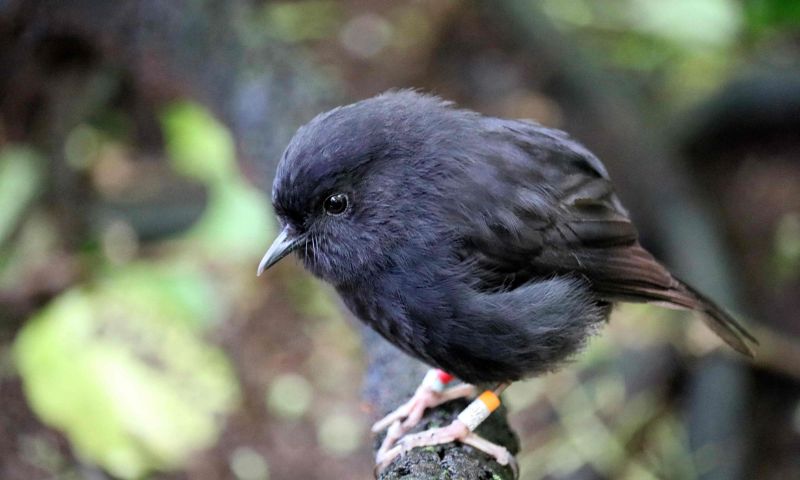
WELLINGTON, New Zealand: The critically endangered black robin has been named New Zealand’s Bird of the Year after a record 105,000 people took part in this year’s public vote.
The small native bird, which lives on the remote Chatham Islands about 800 kilometres (500 miles) east of New Zealand’s South Island, received more than 26,000 votes to win the annual competition.
The black robin was once on the brink of extinction. In 1980, only five birds remained, including just one breeding female. Its population has since recovered to around 350. The flightless kakapo finished second, while the native karearea, or New Zealand falcon, came third.
The annual competition is organised by independent conservation group Forest & Bird and has attracted controversy in previous years.
In 2019, organisers faced accusations of Russian interference after hundreds of votes were registered from Russian IP addresses. Forest & Bird said most of the votes were legitimate and did not affect the victory of the hoiho, or yellow-eyed penguin.
READ ALSO: Pakistan-New Zealand Ties Built on Shared History and Goodwill: PM Luxon
In 2023, the puteketeke won after receiving high-profile backing from Last Week Tonight comedian John Oliver, who encouraged viewers to vote for the native waterbird. Forest & Bird’s Rebecca Hatch said this year’s record turnout was not linked to foreign interference.
“This year has seen record numbers of votes with 105,000 people choosing their favourite,” Hatch said. “New Zealanders have really shown up for nature. Roughly one in every 50 Kiwis voted,” she added, referring to New Zealanders rather than the country’s native flightless birds.
The Chatham Islands Landscape Restoration Trust, which ran the black robin’s campaign, is seeking to establish a third habitat for the species as part of efforts to strengthen its long-term survival and biodiversity.