
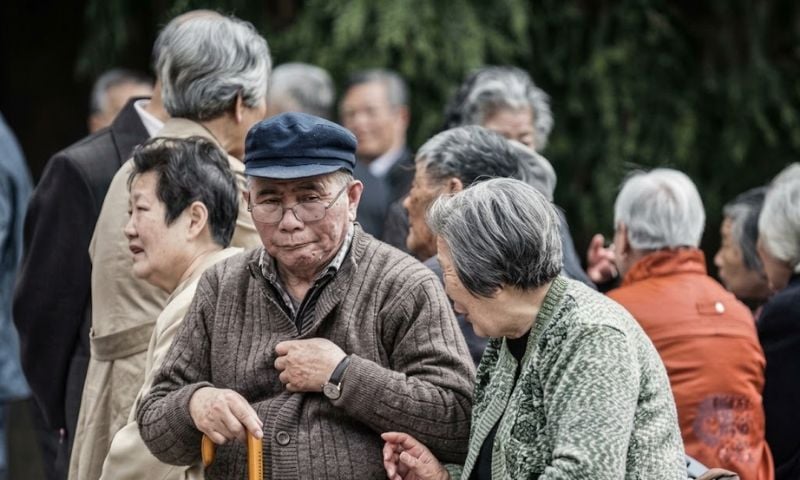
BEIJING, China: Nearly one in every three residents of Beijing is expected to be aged 60 or older by 2035, putting the Chinese capital on course to become a “super-aged” city as the country confronts a rapidly ageing population and declining birth rates.
The projection, reported by the official Beijing Daily newspaper, highlights the growing demographic challenges facing the world’s second-largest economy, where a shrinking workforce and rising elderly population are placing increasing pressure on public finances.
Beijing already had approximately 5.29 million permanent residents aged 60 and above at the end of 2025, accounting for nearly a quarter of the city’s population.
Within the next decade, that proportion is expected to increase to around one-third, significantly changing the capital’s demographic profile.
Growing Pressure on Pensions and Healthcare
The projected rise in Beijing’s elderly population is expected to increase demand for healthcare, retirement services and social welfare programmes.
Municipal authorities are strengthening support for older residents, including increases in basic pension payments, according to Beijing Daily.
However, the demographic transition presents broader economic challenges.
ALSO READ: China’s Economy Grows 4.5% as AI Exports Boost Recovery
As more people retire and fewer younger workers enter the labour market, China faces mounting pressure to finance pensions and maintain economic productivity.
The country’s population has been declining since 2022, reflecting persistently low birth rates and a rapidly ageing society.
Economists warn that the trend could weaken domestic consumption, complicate efforts to manage public debt and place additional strain on government budgets.
Beijing Steps Up Efforts to Address Demographic Challenges
Chinese policymakers have made population planning an important part of the country’s economic strategy, introducing measures intended to encourage families to have more children.
According to Reuters estimates, government initiatives aimed at supporting births could cost approximately 180 billion yuan ($26.92 billion) in 2026.
The measures form part of wider efforts to address demographic pressures that could affect China’s economic development for decades.
Demographers have warned that declining births may eventually lead to fewer households, reducing demand for housing, consumer goods and other services.
Meanwhile, hundreds of millions of Chinese workers are expected to reach retirement age in the coming years, further testing the sustainability of the country’s pension system.
Beijing’s projected transition towards a super-aged population illustrates the scale of the challenge facing China as it seeks to balance economic growth with the needs of an increasingly elderly society.