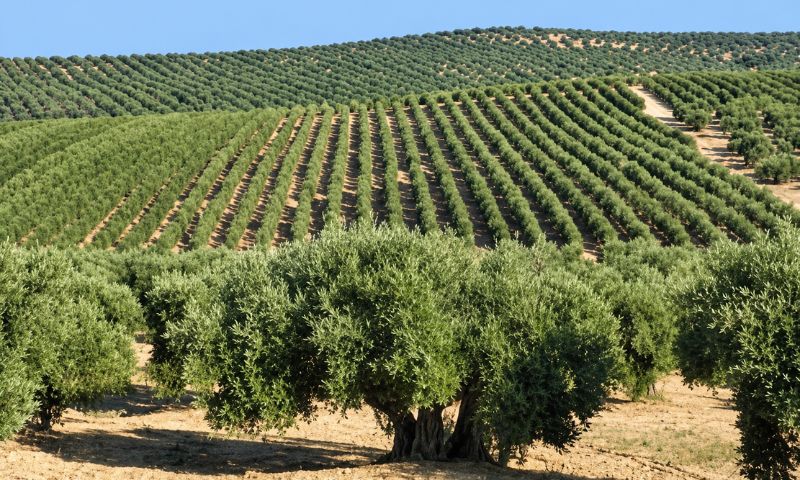
QUETTA: Balochistan is leading Pakistan’s olive plantation drive, with 3,199,393 olive plants spread across 24,620 acres in 31 districts, according to data covering 2012–2026.
Pakistan has planted approximately 7.64 million olive trees across 60,456 acres in 131 districts as part of a nationwide effort to promote commercial olive cultivation, according to documents available with Wealth Pakistan
According to documents, olive plantations have been established in Balochistan, Punjab, Khyber-Pakhtunkhwa, Azad Jammu and Kashmir (AJK), Sindh, Islamabad Capital Territory (ICT) and Gilgit-Baltistan.
Balochistan has the largest share of the country’s olive plantations, with 3,199,393 plants spread over 24,620 acres across 31 districts. Punjab ranks second, with 2,235,962 olive plants covering 17,000 acres in 31 districts.
Its plantation base has grown through several initiatives, including PIDSA, PSDP, Olive Valley, and private plantations. Khyber-Pakhtunkhwa has 1,656,499 olive plants across 14,690 acres in 32 districts. The province’s plantations include those established under PIDSA, PSDP, the 5 Million Olive initiative and private plantations.
The data show that AJK has 205,929 olive plants over 1,542 acres, while Sindh has 129,384 plants over 939 acres. Islamabad Capital Territory has 117,958 plants covering 976 acres, while Gilgit-Baltistan has 92,296 plants over 690 acres.
The figures, covering the period 2012-26, show that the PSDP component accounts for the largest share of plantations, with 5,029,010 olive plants spread over 37,854 acres.
Other initiatives have also contributed significantly to the expansion of olive cultivation. These include 1,320,116 plants under the Olive Valley initiative, 590,000 under the 5 Million Olive programme, 580,158 under PIDSA, 80,637 under Olives Expansion and 37,500 through private plantations.
The document estimates Pakistan’s potential olive-growing area at around four million hectares, while also highlighting the presence of millions of wild olive plants that could provide further scope for developing the sector.
READ ALSO: Pakistan Expands Olive Cultivation To Cut $4bn Edible Oil Import Bill
Alongside the expansion of plantations, Pakistan has also developed processing facilities to support the growing olive industry. A total of 51 olive oil extraction units have been installed across the country.
Balochistan has the most extraction units, with 23 facilities, followed by Khyber-Pakhtunkhwa with 16 and Punjab with nine. Islamabad has two units, while AJK has one.
The olive sector is also being supported by other infrastructure, including three value-addition laboratories, six fruit-processing units, five weather stations, five nursery tunnels and four national reference laboratories located in Islamabad, Chakwal, Tarnab and Quetta.
The figures indicate that Pakistan’s olive development programme is expanding beyond tree plantation to include oil extraction, processing, laboratory facilities, nurseries and weather monitoring, aimed at building the infrastructure needed to develop olive cultivation on a commercial scale.