Key Points
- Asian shares rebound after four sessions of losses
- Kospi and Taiex lead gains across major regional markets
- Oil remains above $108 as investors await the US Fed decision
ISLAMABAD: Asian stocks rose on Wednesday, recovering from four consecutive sessions of losses as a pullback in oil prices offered some relief to investors; markets awaited the US Federal Reserve’s interest-rate decision.
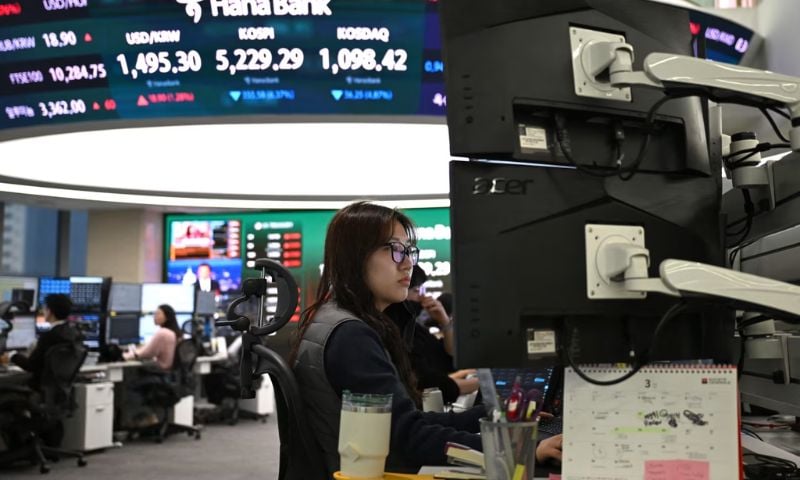
South Korea’s Kospi gained about 1.3 per cent, while Taiwan’s Taiex rose 1.1 per cent. Japan’s Nikkei 225 was up about 0.3 per cent.
The broader Topix gained around 0.5 per cent. Hong Kong’s Hang Seng Index edged higher, while mainland Chinese shares were more subdued.
The regional recovery oil prices eased from sharp gains in the previous session. Brent crude fell around 0.7 per cent to about $108 a barrel, while US West Texas Intermediate crude dropped about 1 per cent to below $105.
Elevated oil keeps Asian stocks volatile
Despite the decline, crude prices remain elevated because of continuing disruptions to Middle Eastern oil supplies and shipping through the Strait of Hormuz.
Saudi Arabia has suspended some crude loadings at its Red Sea export hub of Yanbu after damage to the East-West oil pipeline. Meanwhile, reduced shipping through the Strait of Hormuz has raised concerns about the movement of crude and other energy supplies.
The oil market remains particularly important for Asian economies, many of which depend heavily on imported energy. Sustained prices above $100 a barrel can raise fuel and production costs and add to inflationary pressures.
READ ALSO: Asian Stocks Fall Up To 2% as Oil Surge Revives Inflation Fears
Investors are also focused on the US Federal Reserve’s policy decision, with markets assessing the outlook for interest rates, inflation and economic growth.
Higher US interest rates can put pressure on Asian currencies and equities by increasing the appeal of dollar-denominated assets.
US Treasury yields have also remained elevated, adding another source of pressure for global stocks. Investors are watching whether the Federal Reserve’s decision and its guidance on future policy will alter expectations for borrowing costs.
Technology shares remained a major focus in Asian markets after recent concerns over the scale of investment in artificial intelligence had increased volatility in global equities. Chip-related companies were particularly active in South Korea, Taiwan and Japan.
The immediate direction of Asian markets remains tied to developments in oil supplies, the Strait of Hormuz and US monetary policy. A sustained decline in crude prices could ease inflation concerns, while further disruptions to Middle Eastern supplies could add pressure to energy-importing economies.