KEY POINTS
- Arbitration Court rules that the Indus Waters Treaty remains fully in force and binding on India
- The Court rejects India’s potential grounds to suspend or terminate the water-sharing treaty with Pakistan
- The Arbitration Court rules that the Treaty can only be modified or terminated jointly by Pakistan and India through another treaty
- On Ratle Hydro-Electric Plant, the Court grants three interim measures requested by Pakistan
- India is prohibited from concreting specified portions of the dam wall and power-intake structure beyond prescribed levels pending the Neutral Expert’s decision
- India must also report changes in the Ratle construction schedule
- These restrictions continue until 90 days after the Neutral Expert’s final decision, expected around July 2027
THE HAGUE: A Hague-based Permanent Court of Arbitration (PCA) on Monday rejected India’s unilateral act of holding the Indus Waters Treaty (IWT) in abeyance and unanimously ruled that the Treaty between Pakistan and India remains fully in force. The court ordered New Delhi to fully uphold the treaty and halt work on a controversial hydroelectric project in Indian Illegally Occupied Jammu and Kashmir.
The Permanent Court of Arbitration (PCA) on Monday issued an award on the status of the Indus Waters Treaty between Pakistan and India. In a unanimous decision, the Court found that none of the grounds presented by India could justify suspension or termination of the Treaty.
The Court of Arbitration unanimously ruled that India cannot unilaterally suspend, terminate or place the Indus Waters Treaty (IWT) “in abeyance.” The Court ruled that the Treaty remains fully in force and binding on India.
The Arbitration Court said India had no grounds to suspend or terminate the 1960 water-sharing treaty with Pakistan and must continue to fulfil its obligations under the agreement.
🔸 #PCA Press Release | The Indus Waters Western Rivers Arbitration (Islamic Republic of Pakistan v. Republic of India) 🔸
𝗧𝗵𝗲 𝗖𝗼𝘂𝗿𝘁 𝗼𝗳 𝗔𝗿𝗯𝗶𝘁𝗿𝗮𝘁𝗶𝗼𝗻 𝗜𝘀𝘀𝘂𝗲𝘀 𝗔𝘄𝗮𝗿𝗱 𝗼𝗻 𝘁𝗵𝗲 𝗦𝘁𝗮𝘁𝘂𝘀 𝗼𝗳 𝘁𝗵𝗲 𝗜𝗻𝗱𝘂𝘀 𝗪𝗮𝘁𝗲𝗿𝘀 𝗧𝗿𝗲𝗮𝘁𝘆 𝗮𝗻𝗱… pic.twitter.com/0QWASt85Cw
— Permanent Court of Arbitration (@PCA_CPA) August 31, 2026
In April 2025, India unilaterally held the Indus Waters Treaty in abeyance.
Following India’s move, Pakistan termed any attempt to suspend its water share an “act of war”, noting the Indus Waters Treaty had no provision for unilateral suspension. Pakistan later argued that New Delhi’s action was a violation of the 1969 Vienna Convention on the Law of Treaties.
Arbitration Court Backs Pakistan’s Stance
In its ruling, the Arbitration Court backed Pakistan’s stance, declaring that the Indus Waters Treaty between the two countries remained fully in force, as India had no justification for ending or suspending the agreement.
The Hague-based court issued an award on the status of the Indus Waters Treaty “in respect of India’s decision on abeyance” and an order on Pakistan’s application dated March 4 regarding “interim measures” concerning the Ratle hydro-electric plant.
The Arbitration Court rejected India’s potential grounds, including sovereignty, alleged Pakistani material breach, terrorism, changed circumstances, armed conflict and countermeasures.
“In a unanimous decision, the court found that none of these grounds could justify suspension or termination of the treaty.”
The Court held that the Treaty can only be modified or terminated jointly by Pakistan and India through another treaty.
In its ruling, the Permanent Court of Arbitration said it “examined the potential grounds upon which India could suspend or terminate the treaty, including the grounds cited by India in its public statements”.
PCA rules that Indus Waters Treaty ‘Remains Fully in Force’
The Arbitration Court declared that the IWT “remains fully in force, and India must observe its obligations under the treaty, including those relating to the design and operation of its hydro-electric projects on the Western Rivers”.
The Indus Waters Treaty allocates the eastern rivers — Ravi, Beas and Sutlej — to India, while the western rivers — Indus, Jhelum and Chenab — are allocated to Pakistan. The 1960 water-sharing agreement has also established mechanisms for data-sharing and dispute resolution.
Also Read: India Must Respect Indus Waters Treaty
During the proceedings, Pakistan requested the Arbitration Court to address the “design of certain components of the run-of-river hydro-electric projects that India is permitted by the IWT to construct on the Indus, Jhelum, and Chenab rivers and their tributaries (“western rivers”), before those rivers flow into Pakistan”, the PCA statement said.
The proceedings in the interim measures’ application concerned India’s Kishenganga Hydro-Electric Plant (KHEP) and the Ratle Hydro-Electric Plant (RHEP).
On Ratle Hydro-Electric Plant, the Court granted three interim measures requested by Pakistan.
India is prohibited from concreting specified portions of the dam wall and power-intake structure beyond prescribed levels pending the Neutral Expert’s decision. India must also report changes in the Ratle construction schedule.
These restrictions continue until 90 days after the Neutral Expert’s final decision, expected around July 2027.
Two additional Pakistani requests were declined as unnecessary, rather than rejected on the underlying legal principle.
The court noted that the Kishenganga and Ratle plants were “also the subject of proceedings” before a World Bank-appointed neutral expert, who is expected to issue a final decision in July 2027 on whether they were in line with the IWT.
Arbitration Court’s Unanimous Decision
In its order, the Arbitration Court unanimously decided to “impose measures prohibiting India from concreting the RHEP dam wall and power intake structure above certain levels until 90 days after the neutral expert’s final decision”.
The court also imposed a reporting measure relating to the RHEP Construction Schedule until shortly after the neutral expert’s final decision.
The Arbitration Court noted that the Indus Waters Treaty “does not provide for one party to terminate or suspend the operation of the treaty, or for ‘abeyance’”. The IWT provides that it will remain in force unless modified or terminated by India and Pakistan acting together through adoption of a further treaty.
The court examined possible grounds for India’s action outside the treaty — i.e. under customary international law rules — but found that “there is no rule allowing a state to unilaterally terminate or suspend the operation of a treaty based on its ‘sovereignty’”, as argued by India.
The Court of Arbitration was chaired by Professor Sean D. Murphy of the United States. The other members were Professor Wouter Buytaert of Belgium, Professor Jeffrey P. Minear of the United States, Judge Awn Shawkat Al-Khasawneh of Jordan, and Dr Donald Blackmore of Australia.
Also Read: Pakistan Warns India: Indus Waters Treaty Suspension Unacceptable
Pakistan had initiated the arbitration proceedings regarding the western rivers in August 2016, the PCA press release recalled.
However, in December that year, the World Bank decided to “pause” the process of appointing the chairman of the Court of Arbitration and the neutral expert. This pause was lifted in 2022, following which a neutral expert was appointed.
India’s Unilateral Abeyance of Indus Waters Treaty
After India unilaterally held the IWT in abeyance in April 2025, the PCA considered its effect on the court’s competence in a “Supplemental Award on Competence” issued on June 27 that year.
The court held that “India’s decision on the ‘abeyance’ of the treaty cannot limit the competence of the Court over this dispute”. “However, the court did not go further in determining whether the Indus Waters Treaty remained in force,” it added.
On March 4, Pakistan filed an application before the court to “determine the present status of the Treaty in light of India’s decision on ‘abeyance’”.
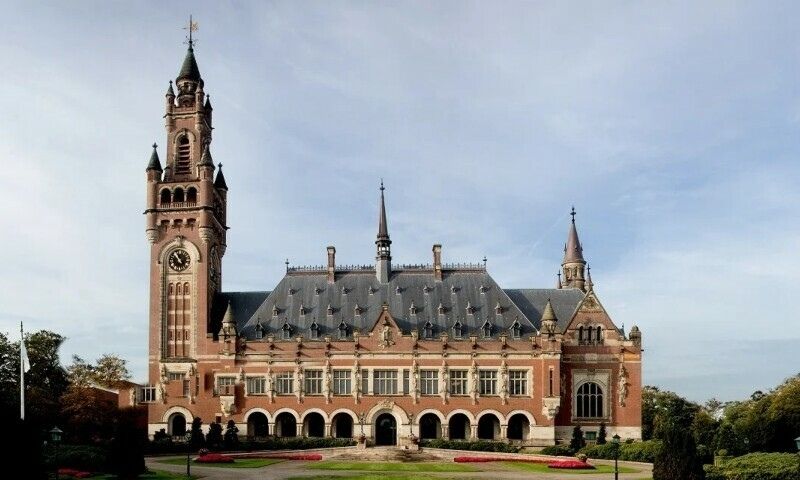
The PCA noted that India was invited to indicate whether it would participate in the proceedings but received “no response”. The court then directed Pakistan to “file a written memorial further detailing its application and held a hearing at the Peace Palace in The Hague” from April 26 to 28.
While India did not participate by making written or oral submissions in response to Pakistan’s application, the PCA sought to consider India’s positions on the matters “to the extent they could be discerned from India’s statements and conduct outside of these proceedings (including Indian government communications to Pakistan and to the neutral expert, and public statements made by Indian officials)”.