RIYADH: Eight Arab and Islamic countries, including Saudi Arabia, have condemned Israel’s restrictions on freedom of worship in Jerusalem, the Saudi Press Agency reported.
The foreign ministers of Saudi Arabia, Egypt, Jordan, Pakistan, Indonesia, Türkiye, Qatar, and the United Arab Emirates strongly denounced measures limiting access for Muslims and Christians to key holy sites in occupied Jerusalem.
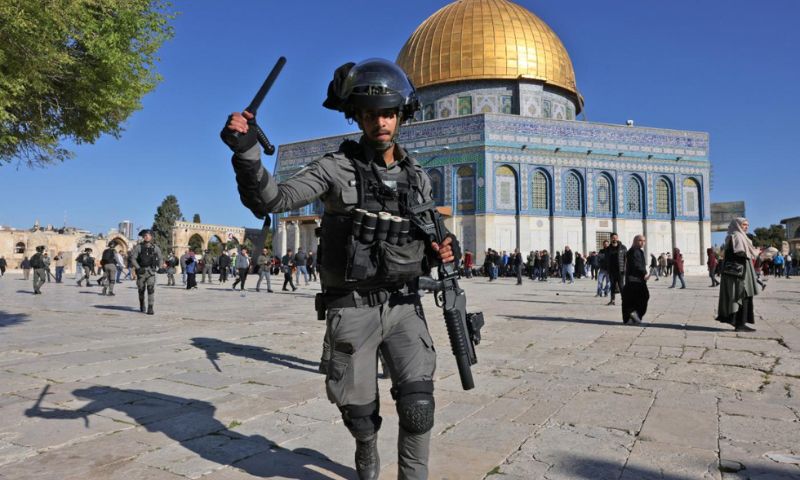
The restrictions included preventing Muslim worshippers from entering Al-Aqsa Mosque, also known as Al-Haram Al-Sharif, and blocking senior Christian clergy from accessing the Church of the Holy Sepulchre to conduct Palm Sunday services.
They also rejected what they called Israeli attempts to alter the character of holy sites, warning that such actions undermine religious freedoms and risk further escalating tensions.
The statement described the continued closure of Al-Aqsa Mosque’s gates for extended periods — including during Ramadan — as a “serious violation” of international obligations.
The ministers stressed that Israel, as the occupying power, holds no sovereignty over occupied Jerusalem and must ensure unhindered access to places of worship.
They also warned that ongoing restrictions could threaten regional and international peace and security.
The key Arab and Islamic countries reaffirmed that the Al-Aqsa Mosque compound, spanning 144 dunams, is an Islamic site under the administration of the Jerusalem Endowments Authority affiliated with Jordan’s Ministry of Awqaf.
Calling for immediate action, the ministers urged Israel to lift restrictions, reopen access to holy sites, and refrain from obstructing worshippers.
They also called on the international community to take a firm stance against what they termed ongoing violations.
The move triggered international criticism, prompting Israeli Prime Minister Benjamin Netanyahu to reverse the ban for the remainder of Holy Week.
The Latin Patriarchate of Jerusalem said Israeli police had barred Cardinal Pierbattista Pizzaballa and Friar Francesco Ielpo from entering the church, built on a site revered by Christians as the place of Jesus Christ’s crucifixion and resurrection.
Police cited security concerns linked to the ongoing conflict with Iran for imposing the restrictions.
“As a result, and for the first time in centuries, the Heads of the Church were prevented from celebrating the Palm Sunday Mass,” the Patriarchate said in a statement.
Netanyahu later posted on the social media platform X that he had ordered authorities to grant “full and immediate access” to the cardinal.
“Even though I understand the concern, as soon as I learned about the incident, I instructed the authorities to enable the Patriarch to hold services as he wishes,” he said.
The Vatican said its Secretary of State, Cardinal Pietro Parolin, and foreign minister Archbishop Paul Gallagher met Israel’s ambassador Yaron Sideman, during which “regrets were expressed” and clarifications provided.
Israeli police said access to holy sites in Jerusalem’s Old City had been restricted since the start of the US-Israeli war on Iran, particularly at locations lacking bomb shelters.