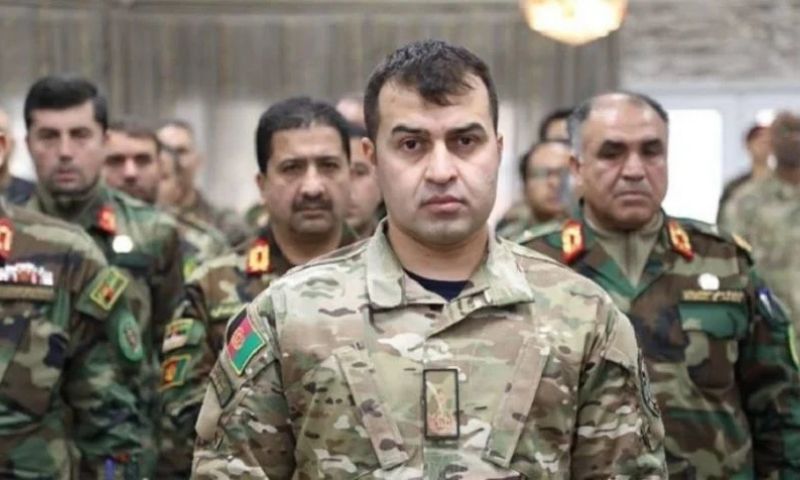
KABUL, Afghanistan: Afghanistan United Front leader Sami Sadat has said his forces do not need foreign troops to fight the Taliban regime, but are seeking support from the international community.
In a video message on Friday, marking the 25th anniversary of the September 11 attacks, Sami Sadat said Afghans had fought terrorism alongside US forces for 20 years after 9/11.
Today We Remember Americans lost in terrorist attacks in 2001. We honor their lives and we thank those veterans who fought for justice and freedom. This war is not over We are back at them now and we will not stop until Taliban and Al-Qaeda are defeated and Afghanistan is free.…
— Afghanistan United Front (@afgunitedfront) September 11, 2026
The United Front leader said that during this period, institutions and infrastructure were developed and young Afghans gained access to education and global opportunities.
Sadat added that these achievements came at a heavy price for the Afghan people. He referred to the assassination of Ahmad Shah Massoud by al-Qaeda operatives on 9 September 2001 and the killing of former president Burhanuddin Rabbani.
The Afghanistan United Front leader said Afghans continue to suffer at the hands of the Taliban and terrorist groups, but that the struggle for freedom and against the Taliban, al-Qaeda and other terrorist organisations would continue.
United Front operations against Taliban
He said the United Front began military operations against the Taliban on 1 August and had carried out 54 operations by Friday. Sadat claimed that more than 128 Taliban regime fighters had been killed or wounded in those attacks.
Sadat also said that the Taliban regime continued repression, torture and killings in Afghanistan.
He blamed the Taliban for the situation and said that, by contrast, members of terrorist groups from different countries were finding refuge in Afghanistan.
Sadat said the Taliban had established thousands of religious schools over the past five years, where around two million Afghan children were now studying.
He claimed that children in these schools were being taught violence, hatred and the destruction of others in the name of religion.
The Afghanistan United Front leader also said al-Qaeda had become more organised and better equipped.
He described the US agreement with the Taliban as a mistake by American leaders and said the Taliban and al-Qaeda had not achieved victory on the battlefield.
Addressing countries in the region that maintain close relations with the Taliban regime, Sadat said the group would not bring peace and stability to the region.
He stressed that his forces would continue fighting the Taliban on their own.
Earlier today, the United Front said its forces had carried out another targeted operation in Lashkargah, the capital of Helmand province, killing two Taliban members.
In a statement posted on X, the anti-Taliban group said the killed Taliban members were involved in oppression and violence against local residents. The group said its armed struggle against the Taliban would continue in pursuit of freedom, justice and dignity for Afghans.
باشندگان هلمند از ظلم ملیشه های رژیم طاغوتی رها می شوند.
روز گذشته، نیروهای دلیر جبهه متحد افغانستان طی یک عملیاتی هدفمند دیگر در شهر لشکرگاه ولایت هلمند، دو ملیشه ظالم رژیم را روانه دوزخ کردند.
یاد کسان د اسلام د سپېڅلي دین په نامه د سیمې د خلکو پر وړاندې په ظلم، وحشت او… pic.twitter.com/0tD3sCBoo0
— Afghanistan United Front (@afgunitedfront) September 11, 2026
The Afghanistan United Front has significantly escalated its armed resistance against the Taliban. Led by former Afghan National Army Lieutenant General Sami Sadat, the AUF formally transitioned into its active military phase on August 1, 2026, under the banner of “Operation Muharib”.
By mid-September 2026, the front claimed to have conducted 54 military operations against the Taliban regime.
Unlike some other resistance movements, the AUF stands out by operating directly within the Taliban’s traditional southern heartland—such as Kandahar and Helmand—while simultaneously spreading its operations across 14 different provinces.