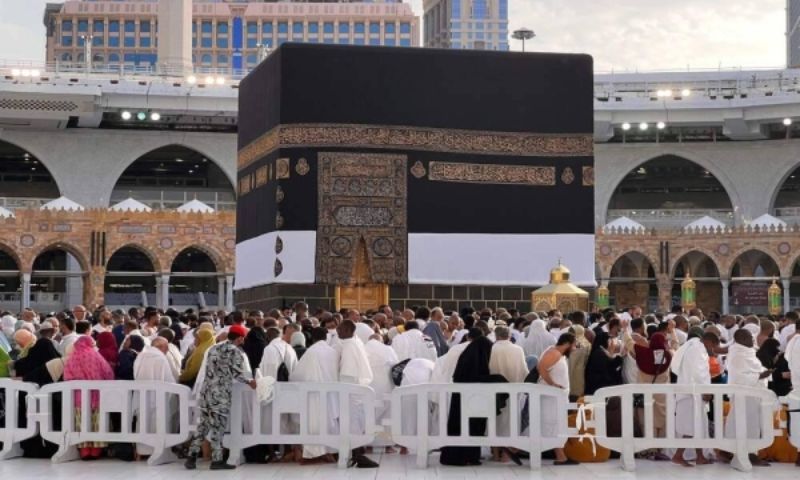
MAKKAH, June 25 (APP)::Saudi Arabian authorities have designed and implemented a number of new services for pilgrims to assist them in performing the rites in comfort and ease.
The Hajj services provided this season were notable for keeping up with global innovations that improve life’s convenience, such as artificial intelligence and others.
The relaxation of limitations established three years ago to combat the spread of the COVID-19 pandemic was the most anticipated statement by Muslims around the world this season. Saudi authorities have previously indicated that this year’s Hajj will be free of constraints and restrictions.
“Saudi Arabia will welcome pilgrims to perform Hajj this year in the same numbers as before the COVID pandemic,” a senior official confirmed…
More than 2 million Hajj pilgrims from 160 nations would visit Saudi Arabia. This year, the number of Umrah performers climbed by 30% over prior years…
Furthermore, the Kingdom this year permitted Hajj missions from throughout the world to enter into contracts with any authorized company of their choice to provide pilgrimage services in Saudi Arabia.
According to the Saudi Gazette, a news portal, the cost of insurance for Hajj pilgrims has dropped by 73 percent this year. Insurance for Hajj travelers was decreased from SR 109 to SR 29, while Umrah insurance was reduced from SR 235 to SR 88, a 63 percent reduction.
This year’s Hajj season has seen a significant shift in terms of service expansion. This season, some of these services were introduced for the first time. The revelation of these facilities, including convenient payment choices for Hajj packages, tremendously aided the pilgrimage.
Domestic pilgrims will be able to pay the Hajj package charges in three payments, rather than the whole amount in one go, as was the case in past years, according to the Ministry of Hajj and Umrah.
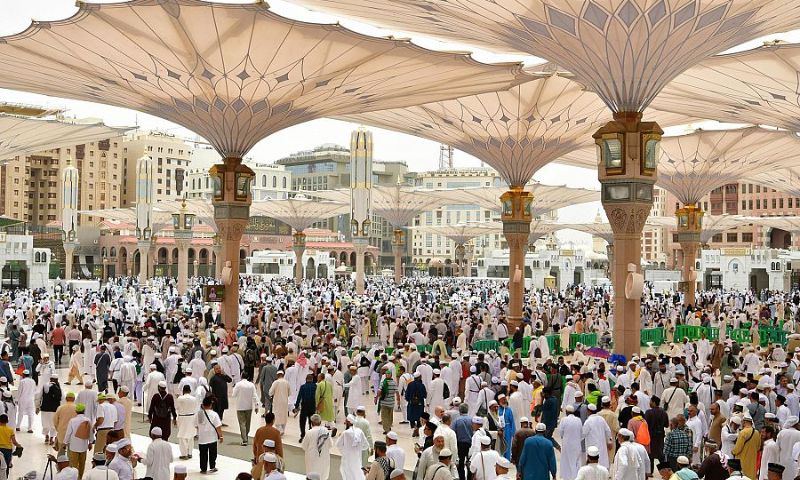
The Makkah Route Initiative, one of the Interior Ministry’s programmes aimed at providing high-quality services in Hajj and assisting pilgrims in completing their immigration procedures from their countries of origin, has been expanded to include Turkey and Ivory Coast. The project, which was launched for the first time in 2019, now works in seven countries, including Pakistan, Malaysia, Indonesia, Morocco, and Bangladesh, in addition to Turkey and the Ivory Coast.
To serve the pilgrims and meet all of their demands, the General Presidency for the Affairs of the Two Holy Mosques has given a service system in Hajj this year with the greatest and largest cadre in its history. The overall workforce in the Two Holy Mosques amounted to 14,000 fully qualified male and female workers.
This year, Saudi Arabia did not halt training Hajj cadres within the Kingdom, but instead expanded the training program to include foreign volunteers for the first time. Before departing from their respective countries, a training session was held to qualify professionals to service pilgrims from outside Saudi Arabia during the Hajj.
Before the start of the Hajj season, the Ministry of Hajj and Umrah, represented by the center for licensing and training workers who serve pilgrims and Umrah performers, trained leaders of pilgrims groups in their own countries, which also included a detailed explanation of the pilgrims’ journey.
Preparations for welcome pilgrims this season included not only technology and training, but also methods to keep religious ceremonies and sanctuaries from being exploited, as well as safeguarding pilgrims’ legal rights.
This year also saw new breakthroughs in environmental services. The National Center for Environmental Compliance certified the availability of national cadres and innovative technology to safeguard the safety of pilgrims in Makkah, the holy sites, Madinah, airports, and highways.
This season, the center stated that 1,350 inspection visits will be undertaken at all Hajj-related sites to maintain air quality, protect and monitor water sources, and prevent land from pollution.
Noise levels will be monitored and managed for the first time this season in order to maintain and ensure a tranquil and comfortable environment for pilgrims during the Hajj period.
This year’s Hajj will be more enjoyable for pilgrims thanks to a variety of transportation choices that will make it easier for them to navigate about the holy sites. The Transport General Authority (TGA) donated 1,000 electric scooters to Hajj pilgrims to help them get around the holy sites.
To ensure the safety of pilgrims, the administration has designated a separate route for e-scooters, separating them from other cars and pedestrians. The track is 2 kilometers long and consists of two lanes back and forth, beginning at Kadana station and terminating at the Mahbas Al-Jin tunnel, which leads to Bab Ali station in the Grand Mosque.
A trial run of self-driving electric buses to serve pilgrims this season has been launched for the first time, with the goal of providing new modern technologies for sustainable and environmentally friendly transportation.
The self-driving buses use artificial intelligence, cameras, and surrounding sensors to travel autonomously along a predetermined path. They collect information during movement and evaluate it to make required decisions, with the goal of improving passenger experience and ensuring safety. Each bus has 11 seats, can travel for 6 hours on a single charge, and can achieve speeds of up to 30 kilometers per hour.
Saudi Arabia places a high priority on providing information to pilgrims of various ethnicities and languages. In this regard, the General Presidency for the Affairs of the Two Holy Mosques announced the start of 185 projects and initiatives presented during this year’s Hajj season in Makkah and Madinah.
The projects intend to invest in artificial intelligence, digitize programs, and harness electronic applications in a variety of industries to serve pilgrims and communicate with them in other languages in order to facilitate Hajj rituals.
To enhance people’s Hajj experiences, the General Presidency of the Affairs of the Two Holy Mosques organized 20 separate and varied exhibitions this year for the first time in its history.
Exhibitions are being held in a variety of settings. Some are located within the Grand Mosque, while others are mobile exhibitions that visit the holy sites. Others can be found in Makkah and Jeddah. The exhibition is organized with the goal of allowing as many tourists and pilgrims as possible to observe the history and stages of development of the Two Holy Mosques, as well as to reflect Saudi Arabia’s vision in developing services in Hajj seasons over the years.