
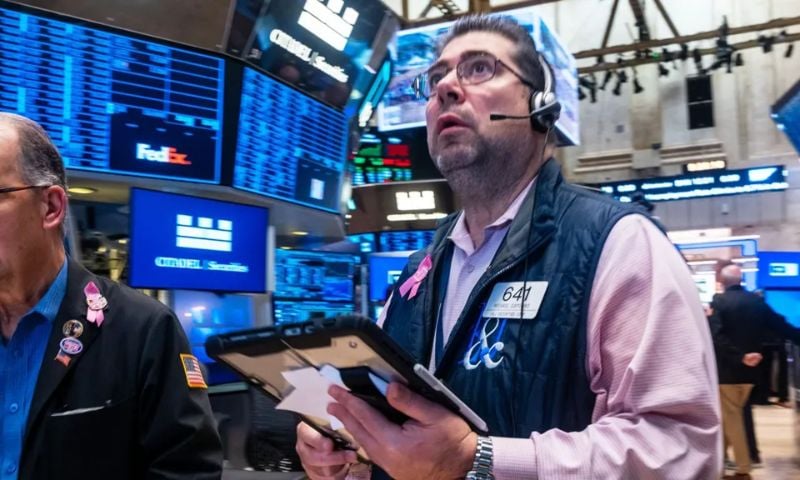
NEW YORK: Global technology stocks have suffered sharp losses following the US midterm elections, as Democratic gains in Congress raised concerns about the future of artificial intelligence (AI) investment and the expansion of data centres.
The sell-off was particularly severe on Thursday, with the technology-heavy Nasdaq recording significant losses as investors reassessed the prospects of an industry that has attracted unprecedented investment.
Political Shift Raises AI Concerns
Democrats secured control of both chambers of Congress after campaigning on concerns about the rapid expansion of data centres and their impact on local communities.
Several Democratic candidates called for stronger oversight of the AI industry, citing the facilities’ enormous electricity and water consumption, rising household bills and environmental impact.
A Gallup poll published in May found that 71 per cent of Americans opposed building a data centre in their community.
Texas governor-elect Gina Hinojosa also campaigned against new data centre construction, promising a moratorium on additional facilities.
Investors fear that stronger regulations could delay infrastructure projects and increase costs for technology companies.
Billions Invested, But Where Are the Returns?
The concerns come amid an extraordinary investment boom that began following the launch of ChatGPT in late 2022.
Technology companies have committed enormous sums to developing AI models, manufacturing advanced chips and constructing data centres.
Research by Goldman Sachs estimates that AI investment could reach $1 trillion in 2026 alone.
ALSO READ: European Union Raises Concerns Over TikTok’s Content Algorithm
However, investors are increasingly questioning whether future revenues will justify the scale of spending.
Companies involved in AI infrastructure have attracted substantial market valuations based largely on expectations of continued growth and future profitability.
Is the AI Bubble Losing Momentum?
The recent market turbulence has also intensified concerns about whether technology stocks have become overvalued.
Tudor Brown, co-founder of British technology company Arm Holdings, said share prices reflected expectations of future earnings rather than current performance.
He suggested that some valuations had been inflated by expectations of almost unlimited AI growth.
Nandini Roy Choudhury of Future Market Insights said investors would increasingly assess companies’ financial strength and exposure to potential regulatory restrictions.
The latest sell-off does not necessarily signal the end of the AI boom. However, it highlights growing pressure on technology companies to demonstrate that their enormous investments can generate sustainable profits.