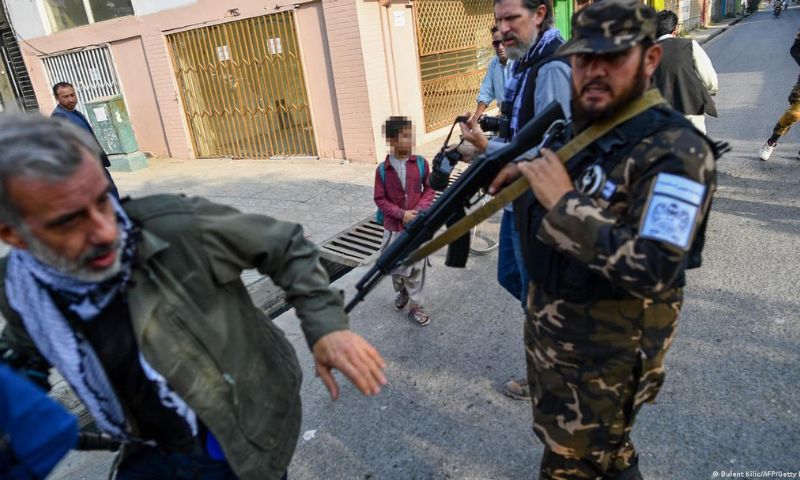
KABUL, Afghanistan: Reporters Without Borders (RSF) has warned that the Taliban has established an extensive system of surveillance, intimidation and repression to silence Afghan journalists as part of a campaign to suppress independent media.
The media watchdog group said the Taliban regime’s intelligence agency had created a feared unit known as 015 to target journalists.
According to RSF, the Taliban’s intelligence agency established the unit five years ago to arrest and torture journalists, impose censorship and shut down media outlets.
In a report, Reporters Without Borders said the Taliban had pursued a strategy of media repression and censorship, arbitrary convictions of journalists and the closure of critical media outlets over the five years since returning to power.
The organisation stressed that the Taliban regime regarded journalists as enemies of the government simply for carrying out their professional duties.
According to the report, Unit 015 of the Taliban’s intelligence agency is responsible for conducting online propaganda campaigns and managing media activities. Several Afghan journalists told RSF that officers from the unit had arbitrarily arrested, threatened, interrogated and tortured them.
The report said Unit 015, which is deeply feared by Afghan journalists, was established within the Taliban regime’s intelligence agency after the group’s return to power in August 2021.
The unit has officers stationed in Kabul and other provinces. They monitor Afghan media content and take action against material they consider problematic.
Taliban forces have reportedly assaulted a French journalist in Kabul simply for covering a protest by Afghan women demanding their rights.
When journalists are beaten for documenting peaceful protests, it exposes the reality of press freedom under Taliban rule. The Taliban want to silence not only Afghan women, but also those who dare to tell their stories.
— Kabul International کابل انٹرنیشنل (@Kabulintlnews) November 5, 2026
According to the report, officers summon and threaten journalists whose reporting is considered critical of the Taliban. The unit’s operational personnel, working alongside officials from the ministry for the promotion of virtue and prevention of vice, raid media offices, arrest individuals and confiscate media equipment.
Reporters Without Borders stated that these measures formed part of a broader strategy to suppress journalism entirely and reinforce the position of Taliban leader Hibatullah Akhundzada as an enemy of press freedom.
Reporters Without Borders said the Taliban had obtained more than 20 nationwide directives and a growing number of provincial orders aimed at eliminating press freedom.
The organisation also examined audio messages in which members of Unit 015 threatened journalists.
In the recordings, officers instructed journalists not to provide airtime to individuals they considered provocative or who questioned the Taliban regime’s policies.
Unit 015 also operates a studio where videos of detainees’ forced confessions are recorded.