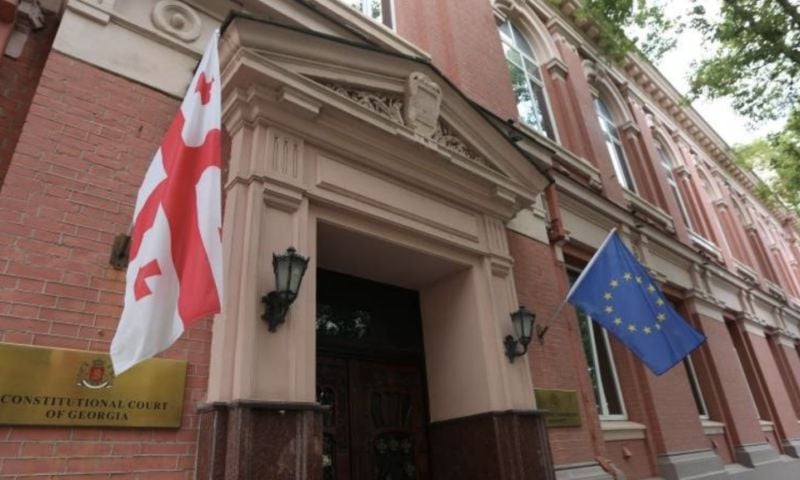
TBILISI: Georgia’s Constitutional Court on Wednesday began hearing a case brought by the ruling Georgian Dream party seeking to ban five pro-European opposition parties, a move critics warn could further undermine democracy in the South Caucasus country.
The proceedings opened in the Black Sea city of Batumi, where the court is based, according to a live broadcast on its YouTube channel. The court has until June 2027 to deliver its ruling.
The lawsuit, filed by 88 lawmakers from Georgian Dream, accuses the opposition parties of seeking to “overthrow the constitutional order and undermine Georgia’s independence”. The opposition has rejected the allegations.
The case targets five major opposition groups: the United National Movement (UNM), led by supporters of jailed former president Mikheil Saakashvili; Coalition for Change; Lelo-Strong Georgia; the Federalists; and For Georgia, led by former prime minister Giorgi Gakharia.
Georgia’s Constitutional Court has begun hearing a case filed by 88 Georgian Dream MPs seeking to ban five opposition coalitions and parties—United National Movement, Coalition for Change, Strong Georgia-Lelo, Gakharia for Georgia, and Federalists.
The MPs claim these parties aim to violently overthrow Georgia’s constitutional order, undermine its independence, and violate its territorial integrity. Their arguments include: past human rights violations, refusal to recognize election results, attempts to change power by force, the five parties acting as a single political force, and “foreign pressure” against the state.
📷 Publika
— Rusudan Djakeli 🇬🇪🇺🇦 (@rusudanjakeli) October 21, 2026
Prime Minister Irakli Kobakhidze defended the legal action ahead of the hearing, saying the government would demonstrate that the targeted parties were unconstitutional.
“They are… infecting our political system with an unconstitutional spirit. This must change,” he said, describing opposition leaders as “liberal fascists”. Opposition leaders condemned the case, accusing the government of attempting to suppress political competition.
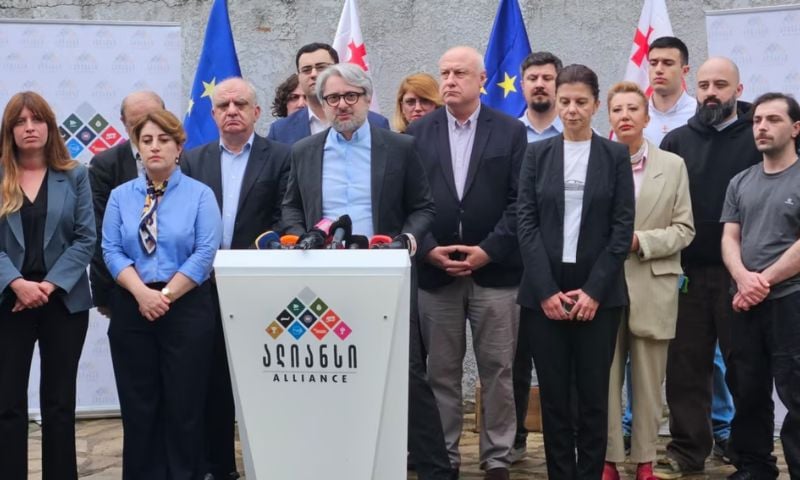
UNM leader Ana Tsitlidze told journalists outside the court that the lawsuit was directed against Georgia’s sovereignty and freedom, alleging that it had been “drafted in the Kremlin”. “Will they ban us? We will keep fighting anyway,” she said.
READ ALSO: Georgia Charges Opposition Leaders With ‘Attempted Overthrow’ After Clashes in Tbilisi
Levan Tsitskiridze, a leader of the opposition Freedom Square party, described the proceedings as an attack on the country’s democratic and constitutional order.
The case comes amid a prolonged political crisis following Georgia’s disputed parliamentary elections in 2024 and the government’s decision in November that year to suspend efforts to advance European Union membership talks until at least 2028.
The announcement triggered mass protests, which authorities responded to with a crackdown that drew criticism from rights groups and international observers.
Since then, opposition figures and activists have faced arrests, while new laws have tightened restrictions on protests, civil society organisations and independent media.
The European Union has said democratic backsliding under Georgian Dream has brought Georgia’s accession process to an effective halt. The government rejects the criticism, arguing that its political opponents are seeking to destabilise the country.