Pakistan’s appointment to chair the Boards of Governors of the World Bank Group and the International Monetary Fund (IMF) in 2027 offers an opportunity to strengthen its international standing and advance development finance priorities.
However, the position carries no automatic financial benefits or unilateral control over either institution.
The chairmanship, announced at the 2026 World Bank-IMF Annual Meetings in Bangkok, will put Pakistan’s representative in a prominent position.
Pakistan gets this opportunity when developing economies face high borrowing costs, rising investment needs and pressure to finance climate resilience and sustainable growth.
The real value will depend on how effectively Islamabad uses its procedural authority, diplomatic access and ability to facilitate discussions among member countries.
It should not be mistaken for a mandate to secure preferential loans or dictate institutions’ policies.
What powers will the chair have?
The Boards of Governors are the highest decision-making bodies of the World Bank Group and the IMF. Each member country appoints a governor to represent its interests, usually a finance minister or central bank governor.
The boards consider major institutional questions, including membership, capital and financial resources, and other matters reserved for governors under the institutions’ governing rules.
Many of the powers are delegated to the respective executive boards, which oversee day-to-day institutional business, including financing operations and country programmes.
The chair’s role is different. It principally involves presiding over meetings, facilitating discussions and helping proceedings run in accordance with the applicable rules.
Under the World Bank’s meeting arrangements, the chair works with the institution’s president on meetings and other related matters.
At Annual Meetings, the chair also has procedural responsibilities, including establishing the order of speakers.
These functions can influence how discussions unfold and help ensure that different member countries’ concerns receive attention. The chair can encourage consensus, identify common ground and give prominence to issues that might otherwise struggle to gain sufficient support.
However, the chair cannot independently order the World Bank to approve a project, compel the IMF to provide a loan, waive the conditions of a lending programme or direct funds to Pakistan.
Nor does the appointment increase Pakistan’s voting share or give it a special veto over institutional decisions.
The distinction is fundamental: the chair can facilitate collective decision-making but cannot substitute discretion.
Any substantive change in institutional policy or financing arrangements must follow the relevant procedures and obtain the support required under the institutions’ rules.
Where Pakistan can gain
Pakistan’s first opportunity lies in shaping the international conversation on development finance.
Many developing economies struggle to reconcile debt repayments with spending on infrastructure, education, healthcare, energy and climate adaptation.
Islamabad can use the chairmanship to encourage practical discussions on affordable long-term financing, debt sustainability, and climate resilience. The chair can also push reforms that improve developing countries’ representation in international financial institutions.
Its diplomatic task should be to build an environment conducive to collective proposals with broad support rather than focus exclusively on Pakistan’s own financing requirements.
A chair who can bridge differences among member countries may help move discussions towards workable compromises, although the outcome will depend on collective agreement.
The second opportunity is to strengthen Pakistan’s engagement with development partners and private investors.
The country needs substantial investment to improve energy supply, water management, transport infrastructure, agricultural productivity and digital connectivity.
The chairmanship can address these needs and create opportunities for dialogue with international financial institutions and potential investment partners.
The chairmanship cannot guarantee financing. Projects will still need to meet institutional eligibility requirements, demonstrate economic viability and satisfy applicable financial, environmental and governance standards.
Pakistan should therefore prepare a pipeline of credible projects before its term begins.
Clear feasibility studies, transparent procurement, predictable regulations and sound financial planning would make it easier to turn international engagement into investment opportunities.
Mobilising private investment
Multilateral loans alone cannot meet Pakistan’s development requirements. Attracting private capital will be essential to expand infrastructure, create jobs and raise productivity without placing excessive pressure on public finances.
Pakistan can use its international standing to support wider use of investment guarantees, blended finance and public-private partnerships that help viable projects attract private investors.
It can also promote stronger coordination between multilateral development banks and national governments to reduce duplication and improve the effectiveness of development spending.
But international advocacy must be matched by domestic action. Investors will continue to examine policy consistency, contract enforcement, taxation, energy-sector performance and macroeconomic stability.
A high-profile international appointment cannot compensate for weaknesses in these areas.
A platform for developing countries
Pakistan can also use its position to advance concerns shared by low-and middle-income countries. These include limited access to affordable finance, vulnerability to external shocks, climate-related losses and the need to invest in human development.
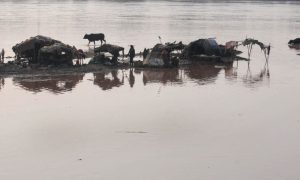
Climate finance offers a particularly relevant area for engagement. Countries exposed to floods, droughts and water scarcity need resources not only to recover from disasters but also to strengthen infrastructure and reduce future losses.
Pakistan’s experience can inform discussions on financing arrangements that support resilience without creating unsustainable debt burdens.
Similarly, Islamabad can encourage closer coordination between development financing and economic stabilisation.
Restoring financial stability is very important, but countries also need sustained investment to create employment, expand productive capacity and improve living standards.
The chairmanship will not give Pakistan authority to impose these priorities. Its influence will depend on the quality of its proposals, the strength of its arguments and its ability to secure support from other members.
Preparation will determine the outcome
Pakistan should establish a coordinated government team to prepare for the 2027 term.
The agenda should include development financing, private investment, climate resilience, debt sustainability and a stronger voice for developing economies.
Progress should be assessed against concrete outcomes, such as initiatives advanced, partnerships established and proposals adopted through the institutions’ formal processes.
Pakistan must also recognise the office’s limitations. It cannot use the chairmanship to bypass lending criteria, secure automatic debt relief or obtain preferential treatment without meeting the applicable requirements.
The appointment is therefore best understood as an opportunity to influence discussions rather than control decisions.
Its value will rest on Pakistan’s ability to bring countries together around practical reforms and use its enhanced diplomatic visibility to support a credible development agenda.
If Islamabad prepares carefully, the chairmanship could strengthen its international engagement and help advance financing priorities shared by developing economies.
The ultimate measure of success will not be the prestige, but the proposals it helps advance, the partnerships it builds and the lasting contribution it makes to international economic cooperation.