
Key Points
- The World Bank says more than two billion people remained offline worldwide in 2025
- Internet use reached only 23 per cent in low-income countries, compared with 94 per cent in high-income economies
- The World Bank Group says 1.2 billion young people will reach working age in developing countries over the next 10 to 15 years
ISLAMABAD: The World Bank Group has launched its first digital strategy to expand affordable internet access, improve digital services and support job creation in developing countries.
The World Bank is seeking to bridge the digital divide and help economies generate employment opportunities.
Announced in Seoul on Tuesday, the strategy brings together the institution’s public- and private-sector capabilities to expand connectivity.
The WBG’s strategy would reduce the cost of digital devices and data, strengthen digital skills and help countries benefit from artificial intelligence (AI).
“Digital technology can help countries create jobs and make scarce resources go further,” World Bank Group President Ajay Banga said.
He added that realising this potential required reliable connectivity, affordable devices, digital skills and useful services.
Developing economies face mounting pressure to employ a growing young population.
The World Bank Group estimates that 1.2 billion young people will reach working age in these countries over the next 10 to 15 years, while their economies are projected to generate about 420 million jobs.
Digital technology could improve productivity, enable businesses to reach new customers and expand access to finance.
It could also improve the delivery of public services and create opportunities across agriculture, healthcare, tourism, manufacturing, infrastructure and energy.
Bridging the digital divide
Despite advances in telecommunications, billions of people remain without internet access.
READ ALSO: Islamic Development Bank, World Bank Sign Agreements to Expand Joint Development Financing
The World Bank Group said more than two billion people were offline globally in 2025, with the gap particularly pronounced between low-and high-income economies.
Only 23 per cent of people in low-income countries used the internet, compared with 94 per cent in high-income countries.
The strategy identifies four priorities: expanding reliable connectivity, making devices and data more affordable, strengthening digital services and skills, and preparing countries to benefit from AI.
To improve connectivity, the World Bank Group plans to help countries address infrastructure gaps extending from international cables and national networks to connections serving households, businesses, schools and healthcare facilities.
The approach includes supporting shared infrastructure, encouraging competition and using public financing and guarantees to attract private investment into underserved markets.
Where communities lack both electricity and internet access, the strategy also supports coordinated infrastructure planning.
Affordability is another major concern. Many people live within mobile network coverage but cannot afford smartphones or internet data.
The institution intends to support partnerships involving manufacturers, mobile operators, financial institutions and other businesses to reduce the cost of entry-level devices and broadband services.
The strategy also seeks to strengthen digital identification systems, payment infrastructure and secure information-sharing platforms.
These services can help people and businesses access government services, financial products and online markets more efficiently.
AI and employment opportunities
The World Bank Group has also announced an AI Infrastructure and Readiness Initiative to help emerging economies access affordable computing capacity through shared, pay-as-you-go infrastructure.
The initiative will initially focus on Africa and Latin America.
It is intended to offer governments a practical alternative to building expensive standalone computing facilities needed to develop and operate AI applications.
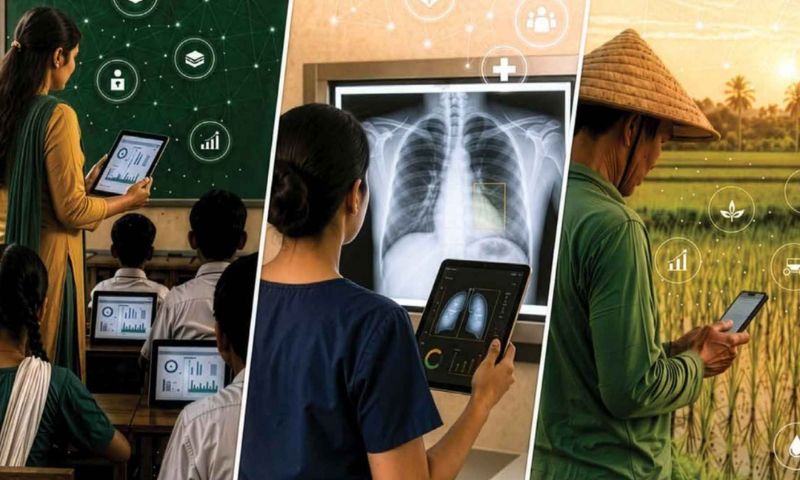
The strategy emphasises practical, task-specific AI tools, described as “small AI”, that can address local needs.
Examples include helping farmers identify crop diseases, supporting healthcare workers and enabling businesses to manage inventories more efficiently.
The World Bank said privacy protection, cybersecurity and safeguards against fraud would remain essential as countries expanded digital access and adopted new technologies.
The strategy brings together the World Bank Group’s financing, policy advice, private investment and guarantees to help countries translate digital access into higher productivity, better public services and employment opportunities.