
BEIJING, China: China’s economy expanded by 4.5% in the third quarter of 2026, accelerating from the previous three months as rising exports of artificial intelligence-related technology helped offset sluggish domestic demand, official data showed on Monday.
The latest growth figure, released by China’s National Bureau of Statistics (NBS), improved from 4.3% in the second quarter, when expansion slowed to a three-year low.
However, growth remained below the 5% recorded during the first three months of the year.
Third-quarter performance was at the lower end of Beijing’s annual economic growth target of 4.5% to 5%, giving policymakers some flexibility to address persistent economic challenges.
Technology Exports Support Growth
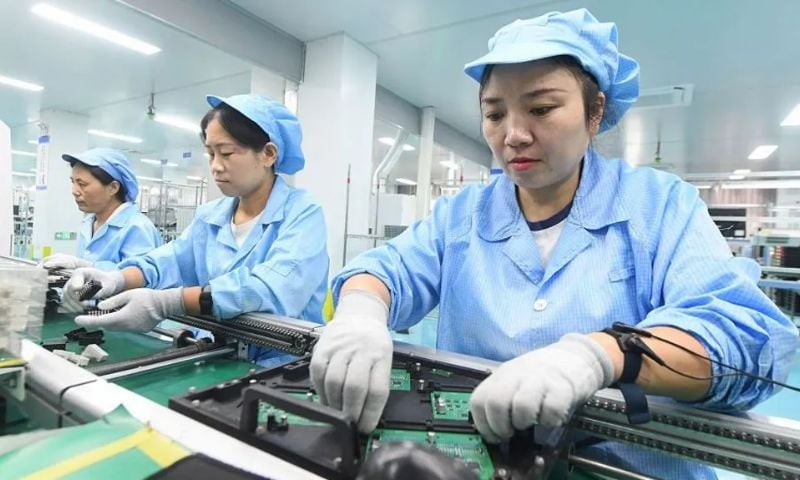
Strong international demand for semiconductors, computer components and equipment used in artificial intelligence data centres has supported China’s manufacturing sector.
Exports have become an important source of economic strength as domestic consumption remains subdued.
China’s trade surplus is also on course to exceed last year’s record $1.2 trillion, reflecting the country’s continued reliance on overseas markets.
ALSO READ: Pakistan’s First Astronaut to Embark on Space Mission on Nov 25: Planning Minister
The NBS said the economy had maintained steady development despite external pressures, supported by emerging industries and structural improvements.
Oxford Economics researcher Sheana Yue said manufacturing and high-technology exports were helping sustain economic expansion despite weak domestic investment and spending.
Property Downturn Remains a Concern
China’s property sector continued to face significant difficulties, with investment declining by more than 20% during the first nine months of 2026 compared with the corresponding period last year.
The prolonged housing downturn, alongside subdued wage growth and high youth unemployment, has weighed on consumer confidence.
Yue warned that there were few indications of an imminent recovery in the property market, while trade uncertainty and geopolitical tensions continued to discourage household spending.
Beijing introduced additional economic support measures in September, including reduced borrowing costs for certain businesses and subsidies for homebuyers.
Despite the stronger third-quarter performance, analysts remain cautious about China’s economic outlook, citing continued dependence on exports and uncertainty surrounding global demand for AI-related technology.