Key Points
- Khawaja Asif says governor’s rule was a last resort after failed negotiations.
- As many as 3,900 fatalities under Sohail Afridi against 2,900 under PTI’s previous three years.
- No mining concessions have been awarded to the United States.
- The minister denies plans for governor’s rule in Sindh or control of its water.
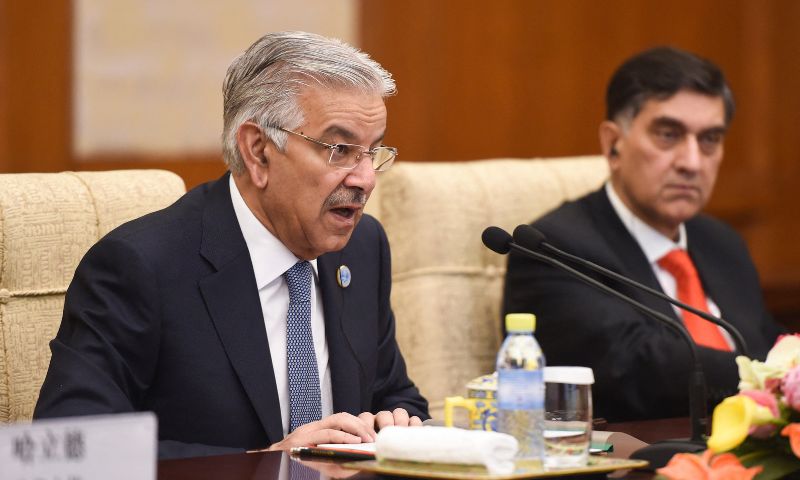
ISLAMABAD: Pakistan’s Defence Minister Khawaja Asif has linked Jamiat Ulema-e-Islam-Fazl (JUI-F) chief Maulana Fazlur Rehman’s opposition to governor’s rule in Khyber Pakhtunkhwa to his “disappointment” over not being given a role in the new administrative set-up, claiming that neither he nor his nominees were offered key positions.
Asif said political considerations should not overshadow efforts to restore peace in the province, adding that some leaders were opposing the move because their expectations of securing important responsibilities had not been met.
He defended the imposition of governor’s rule in Khyber Pakhtunkhwa, saying the decision followed failed negotiations and was not part of a pre-planned move, while accusing the Pakistan Tehreek-e-Insaf (PTI) of failing to prioritise counterterrorism.
In an interview with a private television channel, Asif said 3,900 people had been killed during Chief Minister Sohail Afridi’s approximately 18-month tenure, compared with 2,900 fatalities during the PTI government’s preceding three years. He cited the figures to question the party’s performance in the fight against terrorism.
Asif said the federal government and the Khyber Pakhtunkhwa administration were now aligned on the objective of eliminating terrorism, adding that restoring peace and protecting the public must take precedence over political differences.
Governor’s rule as last resort
Asif said governor’s rule had not been planned in advance and was considered only after other options, particularly negotiations, failed to produce an agreement. He said the federal government had continued efforts to resolve the dispute through dialogue until the final hours. Interior Minister Mohsin Naqvi, he added, remained engaged in attempts to secure a positive response until midnight.
“The situation might have been different had the provincial government agreed to cooperate with the federal government in combating terrorism,” Asif said.
Asif said the federal government’s primary concern was national security, not the PTI’s long march or its political confrontation with the Centre. He maintained that the federal government would have had no reason to treat the PTI as an adversary if the party had cooperated fully in the fight against terrorism.
The minister said that the PTI’s political priorities had contributed to deteriorating conditions in Khyber Pakhtunkhwa, arguing that the party’s approach had remained centred on Imran Khan.
Security operations need follow-up
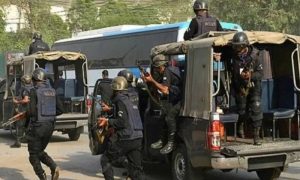
The defence minister said military operations and counterterrorism campaigns could not, by themselves, ensure lasting peace. He argued that once the army, police and other security agencies cleared an area of terrorists, the provincial administration had to establish effective governance and prevent the terrorists from returning. Without stabilisation and a sustained government presence, he said, terrorists could re-emerge in areas cleared during security operations.
Asif also referred to the sacrifices of the armed forces, paramilitary personnel and police, asking whether all political parties had supported them adequately. He said the sacrifices of security personnel demanded a united political response to terrorism, rather than disagreements that could undermine counterterrorism efforts.
Mineral-resource allegations rejected
Asif rejected allegations that governor’s rule had been imposed to gain control of Khyber Pakhtunkhwa’s mineral resources. He challenged those making the allegations to identify the mines or mining concessions they believed were held by relatives of PTI leaders or were being targeted through the administrative change.
The minister also rejected rumours that the military was involved in a plan to take control of the province’s mineral wealth, saying the claims should be tested against verifiable facts. He said the ownership of mining concessions could be independently examined and called for evidence-based debate rather than unsubstantiated allegations.
Asif acknowledged discussions with the United States about Pakistan’s mineral resources but denied that any mining contract had been awarded to Washington or that any mine or mineral resource had been handed over to it. He said the United States, Canada, Australia and China had shown interest in Pakistan’s mineral potential.
Pakistan needed foreign investment to develop these resources effectively, he added, arguing that cooperation with international partners could help unlock their economic value. However, he insisted that discussions about investment should not be confused with transferring ownership of mines or granting concessions that had not been awarded.
No plan for Sindh
Asked whether a similar move could be considered in Sindh over disputes concerning water and canals, Asif said there was no plan to impose governor’s rule in the province or seize control of its water resources. He warned against rhetoric suggesting that Pakistan could break apart or that its water and canals were being targeted, describing such statements as irresponsible.
The minister urged political leaders to avoid language that could undermine national cohesion and said political differences should not be allowed to threaten the country’s unity.