Key Points
- Pakistan outlines plans to diversify external financing through Sukuk and Panda bonds.
- Talks cover IMF reforms, energy security and export-led growth.
- Islamabad discussed privatisation, airport outsourcing and potential US EXIM Bank financing.
ISLAMABAD: Pakistan has discussed its economic outlook, reform programme and external financing options with a senior US Treasury official, highlighting a $3 billion Eurobond issuance in September and foreign exchange reserves above $21.6 billion.
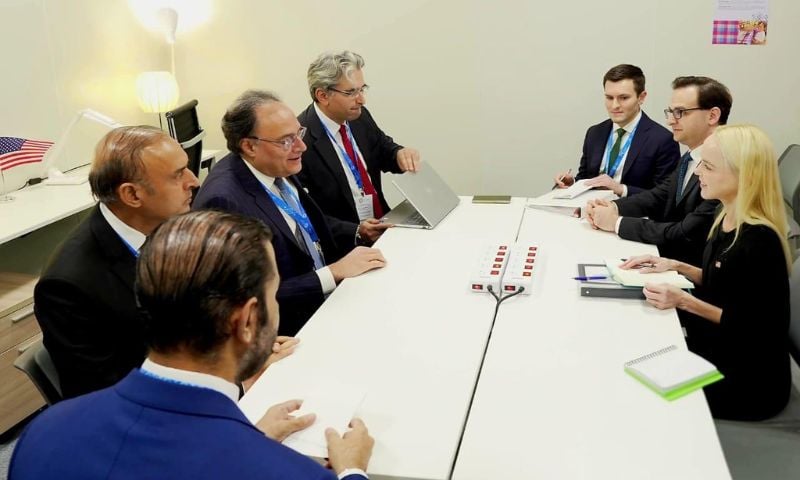
Finance Minister Muhammad Aurangzeb met Erin Browne, US Treasury Under Secretary for International Affairs, on the sidelines of the World Bank Group–International Monetary Fund (IMF) Annual Meetings in Bangkok on Friday.
The Governor of the State Bank of Pakistan (SBP) accompanied the Finance Minister during the meeting.
Aurangzeb outlined Pakistan’s plans to diversify its financing sources through Islamic bonds called Sukuk, Panda bonds issued in China’s domestic market, and other instruments.
He also highlighted progress under the IMF programme, tax reforms and three consecutive years of primary budget surpluses.
The discussions covered the implications of the regional conflict for energy supplies, inflation and food security. The two sides also discussed measures to maintain supplies and prepare for higher energy demand during winter.
The finance minister emphasised export-led growth, stronger information technology (IT) exports and improved competitiveness of Pakistani goods to support sustainable economic growth and strengthen the country’s external position.
He also outlined Pakistan’s ambition to secure a sovereign credit rating in the BB category, linking the objective to continued reforms, debt sustainability and improvements in economic fundamentals.
The meeting also covered privatisation, airport outsourcing and engagement with Boeing, the US aircraft manufacturer, as well as potential financing from the US Export-Import Bank (EXIM Bank). Aurangzeb expressed appreciation for continued US support.
Pakistan has plans to diversify its access to international capital markets and reduce reliance on conventional borrowing.
Its September Eurobond issuance marked a return to the international debt market, while planned Sukuk and Panda bond issues form part of efforts to expand funding sources.
The government is also pursuing tax and structural reforms under its IMF-supported programme while seeking to increase exports and attract investment.
Progress on these fronts is important for strengthening foreign exchange reserves, managing external financing requirements and reducing vulnerabilities to energy-price shocks.
The meeting took place against a backdrop of regional conflict and uncertainty over energy supplies, which pose risks to import-dependent economies such as Pakistan through higher fuel costs, inflationary pressure and increased demand for foreign currency.
Pakistan’s Sukuk and Panda Bonds
Sukuk are structured to comply with Islamic finance principles, and Panda bonds, issued by foreign borrowers in China’s onshore renminbi market, could help Pakistan diversify its investor base.
The cost and terms of any future issuance would depend on market conditions, investor demand and available credit support.
Pakistan’s pursuit of a BB-category sovereign rating would require sustained improvements in fiscal and external indicators, alongside progress on reforms and debt management. The Finance Division statement did not disclose any new financing commitment or agreement resulting from the meeting.