Key Points
- The World Bank Group plans to increase financing for critical minerals fivefold to $19 billion over five years by 2030
- Pakistan’s mineral wealth offers potential for investment and local processing
- Reko Diq stands among the country’s major mining projects
ISLAMABAD: Pakistan can attract over $2 billion from the World Bank Group’s plan to increase financing for critical minerals fivefold to $19 billion over five years.
This was independent economists’ assessment after World Bank President Ajay Banga announced the Bank’s plan to increase financing for critical minerals fivefold globally in five years.
The World Bank’s announcement marks new openings for resource-rich developing countries, including Pakistan.
The target covers 2026–2030, compared with $3.6 billion in financing during 2021–2025.
Banga announced the objective during the International Monetary Fund (IMF) and World Bank Group Annual Meetings in Bangkok. The World Bank has already stepped up efforts to help developing economies turn mineral resources into investment, industrial activity and jobs.
“If Pakistan attracts around $2 billion out of the $19 billion the World Bank has earmarked for critical minerals across the world, it would be a great achievement,” said Dr Alia Hashmi, a senior economist.
“The challenge is not to attract investment or financing for exploration and production of critical and other minerals,” she pointed out, adding, ” the real challenge is to ensure that the locals get the benefits of explorations in the first place.
Dr Nadeemul Haq, a renowned economist, also shared concerns, echoing Dr Alia’s point that people from mineral-producing areas must not be deprived of their benefits.
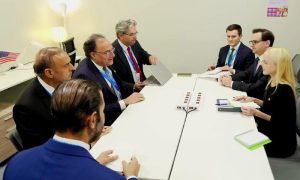
Earlier, Federal Minister for Finance and Revenue Senator Muhammad Aurangzeb met Banga at a dinner hosted by Thailand’s prime minister on the sidelines of the annual meetings.
The gathering provided an opportunity for informal interaction alongside official engagements in Bangkok.
The World Bank’s critical minerals initiative aims to help countries move beyond extracting and exporting raw materials to local processing and value addition.
The initiative also targets industries that can generate more value, employment and economic activity.
Such development requires investment not only in mining but also in energy, transport, water supplies, processing facilities and the skills needed to sustain industrial operations.
READ ALSO: Pakistan Seeks Longer-Term Financing, Reaffirms Commitment to IMF Programme
For Pakistan, the initiative reinforces the government’s efforts to lure foreign investment to develop its mineral resources.
The Reko Diq copper and gold project in Balochistan is among the country’s major mining developments, with the potential to support exports, employment and associated infrastructure investment.
Pakistan has also been pursuing international cooperation on critical minerals.
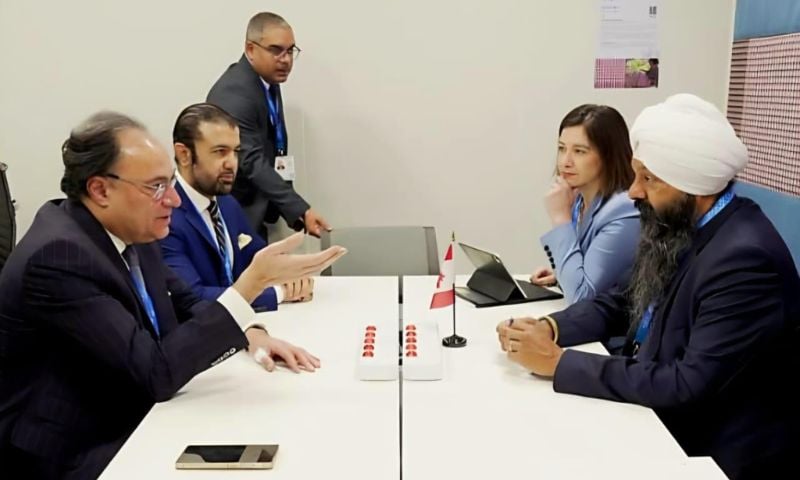
During the Bangkok meetings, Aurangzeb discussed investment financing and strategic minerals with US officials. His discussions spanned opportunities to mobilise private capital for projects such as Reko Diq.
Critical minerals have gained strategic importance because they are used in electricity networks, renewable energy systems, electric vehicles, batteries and advanced manufacturing.
Countries are seeking more reliable supplies as demand for these technologies grows and governments look to diversify supply chains.
The World Bank approach
The World Bank’s approach aims to combine financing with improved governance, infrastructure and measures to attract private investment.
Clear regulations, transparent licensing and commercially viable projects are important to reducing investment risks, particularly in countries where mining development requires substantial upfront capital.
However, the fivefold financing target does not guarantee that Pakistan will receive a particular share of the proposed funding.
Any support would depend on project preparation, economic viability, environmental and social safeguards, infrastructure requirements and financing arrangements agreed with the bank and other investors.
Transforming mineral resources into sustained economic gains rather than relying solely on raw material exports would be the key challenge for Pakistan.
Higher local processing, stronger links with domestic industries, skilled employment and transparent management of mineral revenues could help increase the benefits.
The World Bank’s target offers a potential avenue for expanding international investment in the sector.