Key Points
- Entrepreneurs’ fund planned to strengthen Pakistan’s start-up ecosystem
- Agricultural financing to use storage and electronic warehouse receipts
- Talks cover local-currency funding and infrastructure partnerships
ISLAMABAD: Pakistan and the International Finance Corporation (IFC) on Tuesday discussed new financing mechanisms to channel more private capital into the economy, including an entrepreneurs’ fund, affordable housing, agricultural finance and infrastructure projects.
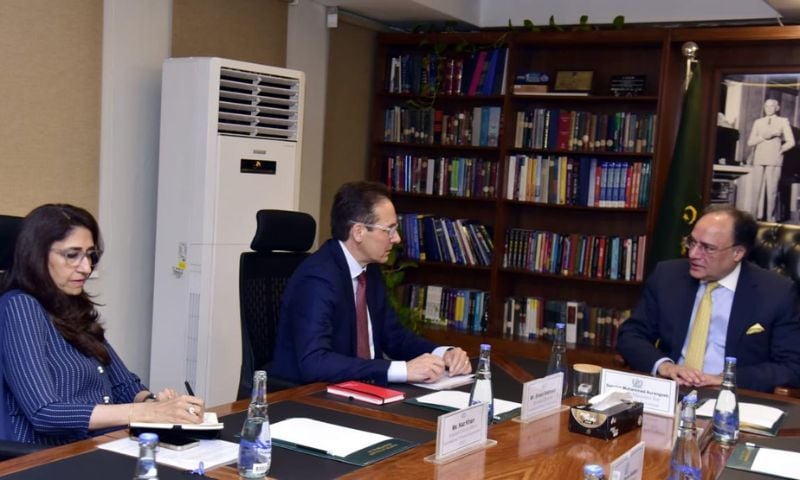
Finance Minister Muhammad Aurangzeb met with Simon Andrews, IFC Director for Pakistan, Afghanistan, Kyrgyz Republic, Tajikistan and Turkmenistan, and Principal Country Officer Naz Khan on expanding private-sector financing and investment in Pakistan.
The finance minister said improving macroeconomic stability and investor confidence needed to translate into higher investment, capital formation and private-sector-led growth.
He stressed that a conducive environment could attract both domestic and international private capital.
Private financing
IFC officials briefed Aurangzeb on progress towards establishing a fund for entrepreneurs in collaboration with relevant stakeholders.
The proposed fund is to strengthen Pakistan’s start-up and entrepreneurial ecosystem by improving access to private financing.
The two sides also discussed affordable housing, including potential financing models for developers to help address supply-side constraints.
Better developer financing could support housing supply and encourage private-sector participation.
The two sides also discussed agricultural finance. The IFC highlighted its AgriConnect initiative, particularly opportunities to mobilise private financing through improved storage infrastructure and the effective use of electronic warehouse receipts as collateral.
Electronic warehouse receipts can allow agricultural commodities held in storage to serve as collateral for loans, potentially giving farmers and businesses greater access to financing while reducing pressure to sell produce immediately after harvest.
Aurangzeb stressed the importance of addressing supply-side constraints and creating greater certainty for lenders and farmers to expand agricultural financing.
Long-term infrastructure finance
The IFC briefed the finance minister on its engagement with provincial governments on projects in the water and power sectors through public-private partnerships.
The projects include initiatives aimed at improving water quality and safety and advancing metering infrastructure across electricity distribution companies.
The discussions focused on the potential of public-private partnerships to improve service delivery, reduce losses and mobilise private capital for infrastructure development.
The finance minister and IFC representatives also exchanged views on expanding local-currency financing and strengthening mechanisms for longer-term funding for private-sector projects.
Aurangzeb said international development finance could complement domestic financial resources and help channel more capital into productive investment.
He emphasised the need to expand financing opportunities for small and medium-sized enterprises, entrepreneurs, agriculture and housing, saying greater access to affordable, long-term capital would help unlock private investment, support business expansion and strengthen productive activity.
The finance minister appreciated the IFC’s role in developing innovative financing solutions and mobilising private capital across these sectors.
The meeting comes as Pakistan seeks to convert improved macroeconomic stability into stronger investment and private-sector growth.
Expanding access to finance remains important for businesses, which face limited availability of long-term capital, while infrastructure and housing require financing beyond the capacity of traditional public-sector resources.
Both sides reaffirmed their commitment to strengthening cooperation on private-sector financing, investment and infrastructure development.
Discussions also focused on expanding access to finance and mobilising greater domestic and international capital for Pakistan’s sustainable, investment-led growth.