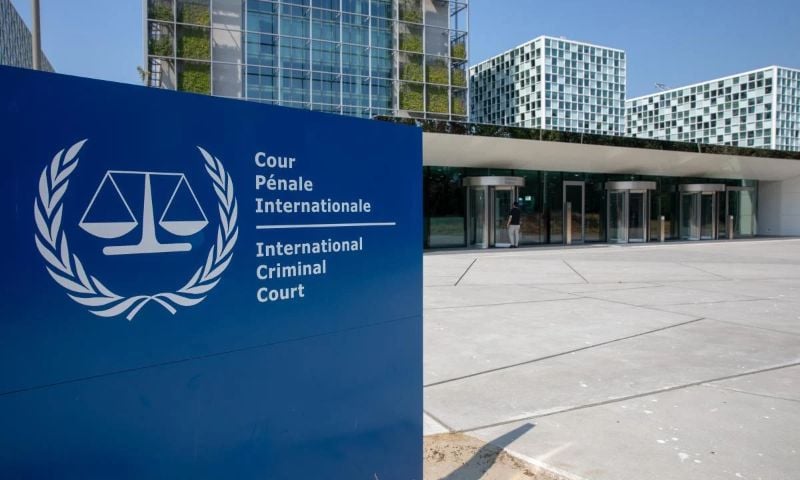
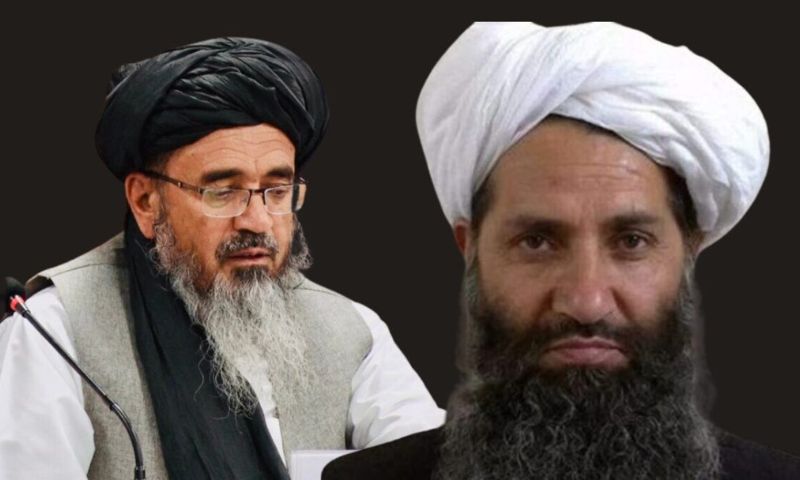
THE HAGUE: The International Criminal Court on Monday unsealed arrest warrants for senior Taliban leaders in Afghanistan, including the group’s Supreme Leader, Haibatullah Akhundzada, saying there are reasonable grounds to believe they are responsible for the persecution of women, a crime against humanity.
The UN top court issued four arrest warrants on 8 July 2025 and 9 September 2025 against Haibatullah Akhundzada and Abdul Hakim Haqqani, as well as against Habibullah Agha and Neda Mohammad Nadim. The existence of the first two warrants was made public on 8 July 2025.
In the warrants, the Court, in line with international law, found that the definition of ‘gender’ in the Rome Statute necessitates an interpretation that goes beyond a purely biological conception of sex.
It considered that the definition requires acknowledging the socially constructed roles, behaviours, expectations and hierarchies traditionally associated with individuals on the basis of their sex.
#ICC Pre-Trial Chamber II unseals four warrants of arrest issued in the #Afghanistan situation against Mr Haibatullah Akhundzada, Mr Abdul Hakim Haqqani, Mr Habibullah Agha and Mr Neda Mohammad Nadim⤵️ https://t.co/LKmot06bf6
— Int’l Criminal Court (@IntlCrimCourt) October 5, 2026
The Pre-Trial Chamber II considered that these societal constructs, commonly referred to as ‘gender norms’, form part of the contextual lens through which acts amounting to gender-based persecution under Article 7(1)(h) must be assessed.
ICC expands definition of gender-based persecution
It found that there are reasonable grounds to believe that the four suspects are criminally responsible for having ordered, induced or solicited the crime against humanity of persecution, under Article 7(1)(h) of the Rome Statute, on gender grounds against girls, women and other persons non-conforming with the Taliban’s policy on gender, gender identity or expression; and on political grounds against persons perceived as “allies of girls and women”.
These crimes are believed to have been committed on the territory of Afghanistan since the Taliban seized power on 15 August 2021, and have continued until at least 20 January 2025.
Pre-Trial Chamber II considered that the suspects, acting on behalf of the Taliban, have implemented a governmental policy that resulted in severe violations of fundamental rights and freedoms of the civilian population of Afghanistan, in connection with acts of murder, imprisonment, torture, rape and enforced disappearance.
Women and girls targeted under Taliban policies
While the Taliban have imposed certain rules and prohibitions on the population as a whole, they have specifically targeted girls and women by reason of their gender, depriving them of fundamental rights and freedoms.
Specifically, the Taliban severely deprived, through decrees and edicts, girls and women of the rights to education, privacy, and family life and the freedoms of movement, expression, thought, conscience, and religion.
In addition, other persons were targeted because certain expressions of sexuality and/or gender identity were regarded as inconsistent with the Taliban’s policy on gender.
ICC details scope of persecution
In assessing the evidence before it, the Chamber took into account the object and purpose of Article 7(1)(h) of the Rome Statute. The provision reflects the Statute’s broader aim of protecting civilian populations from serious and systemic violations of fundamental rights, particularly those targeting vulnerable groups.
In this context, the Chamber considered that protecting victims of such crimes – especially women and girls, who are often disproportionately affected by gender-based persecution – is central to the provision’s purpose.
ALSO READ: UN Rights Council Slams Taliban’s ‘Oppression’ of Afghan Women
The Chamber found that gender persecution encompasses not only direct acts of violence but also systemic and institutionalised forms of harm, including the imposition of discriminatory societal norms.
Furthermore, the Chamber found that individuals perceived as opposing these policies, even passively or through omission, were also targeted by the Taliban. This included those described as “allies of girls and women”, who were viewed as political opponents.
Taliban restrictions on women
Since taking power in 2021, the Taliban government has imposed several restrictions on women, which the United Nations has described as a form of “gender apartheid.”
The Taliban has also permitted the public flogging of women for alleged offences.
In December 2024, the Taliban announced the closure of all national and international non-governmental organisations (NGOs) operating in Afghanistan that employ Afghan women.
This decision, which further tightens the group’s restrictions on women, comes just over two years after the Taliban initially ordered NGOs to suspend employing Afghan women, citing alleged violations of dress codes.