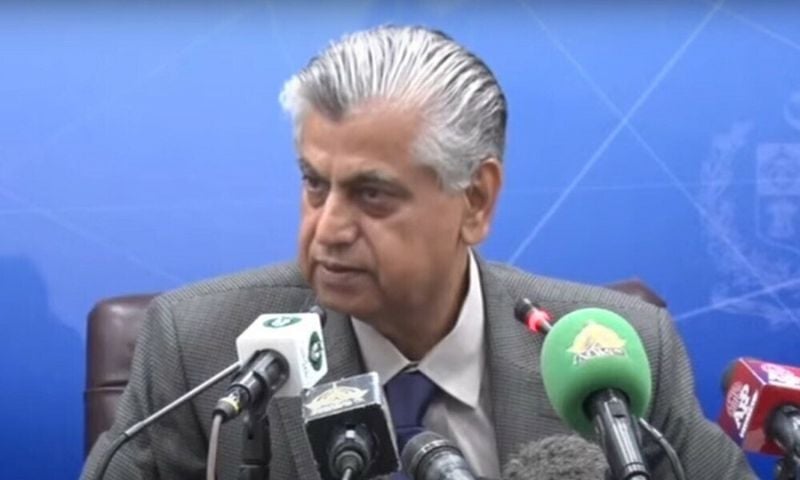
ISLAMABAD: Spokesperson to Pakistan’s President Murtaza Solangi on Monday criticised representatives of the Afghan Taliban regime for questioning Pakistan’s democratic credentials, saying a regime that came to power through force had no standing to lecture a state established through the popular will of millions of people.
Solangi said the Afghan Taliban regime had violated its commitments under the Doha Agreement, curtailed the fundamental freedoms of Afghan women and girls and continued to persecute ethnic and religious minorities.
He also accused the Taliban regime of having seized power after years of bombings, improvised explosive device attacks and suicide terrorism.
“The representatives of an illegitimate Afghan Taliban regime—a regime that violated its commitments under the Doha Agreement, erased the fundamental freedoms of Afghan women and girls, continues to persecute ethnic and religious minorities, and seized power after years of bombings, IED attacks and suicide terrorism—have the gall to lecture Pakistan on democracy,” Solangi stated.
The representatives of an illegitimate Afghan Taliban regime—a regime that violated its commitments under the Doha Agreement, erased the fundamental freedoms of Afghan women and girls, continues to persecute ethnic and religious minorities, and seized power after years of bombings, IED attacks and suicide terrorism—have the gall to lecture Pakistan on democracy. The irony is staggering. A regime that derives its authority from the gun has the audacity to question the democratic credentials of a state born of the popular will of millions of its people.
— Murtaza Solangi (@murtazasolangi) October 5, 2026
Pakistan has repeatedly highlighted the Afghan Taliban regime’s support for terrorist groups to operate from Afghan territory and use bases and sanctuaries there to plan and launch attacks against Pakistan.
Islamabad has repeatedly asked the Taliban regime to take concrete and verifiable action against terrorist groups operating from Afghanistan. However, the Taliban regime failed to take any action against the terrorist groups and instead continued its support for the terrorist group.
In its latest report, issued in August 2026, the UN Security Council’s Analytical Support and Sanctions Monitoring Team said the Taliban regime had continued their support to the TTP, while attacks by the terrorist group against Pakistan had escalated.
An earlier UN report issued in February said the TTP had been accorded greater liberty and support by the Afghan regime and noted that some advanced weapons and equipment used by the terrorist group had been provided by the Taliban regime in Afghanistan.
The Taliban regime is also maintaining a permissive environment for other terrorist organisations, including the Balochistan Liberation Army (BLA) and Islamic State Khorasan Province (ISKP). The presence and activities of the terrorist groups in Afghanistan pose a threat to regional peace and security. Terrorist organisations had access to bases and sanctuaries on Afghan soil and were able to recruit, finance and carry out cross-border attacks.
Meanwhile, international concern continued over the Taliban regime’s treatment of Afghan women and girls. In September, a senior UN official said there had been no progress on the severe restrictions imposed on women and girls, while terrorist groups continued to pose a threat to Afghanistan, the region and international peace and security.
UN reporting has documented restrictions affecting women’s education, employment, freedom of movement and participation in public life. The UN said in June that women and girls faced growing restrictions.
Five years after the Taliban returned to power, the UN has described Afghanistan as facing a continuing humanitarian, human rights and socio-economic crisis. A UN assessment in September said women and girls were living under more than 200 laws and decrees that restricted their access to education and public life, with more than 2.6 million girls denied access to secondary education.