Key Points
- Pakistan outlines six economic reform priorities
- UK backs stronger institutions and private-sector investment
- Both sides discuss trade, aviation and public-private projects
ISLAMABAD: Pakistan and the United Kingdom on Friday discussed economic reforms, trade and investment cooperation, with London offering continued technical support to Islamabad to achieve economic stability and sustainable, investment- and export-led growth.
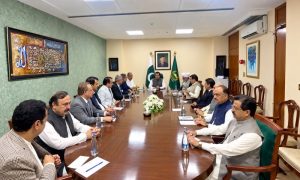
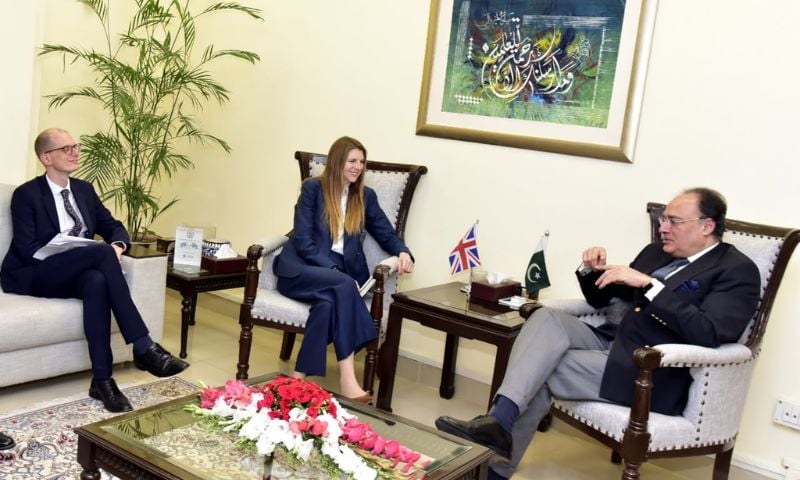
The discussions took place during a meeting between Finance Minister Muhammad Aurangzeb and British High Commissioner to Pakistan Jane Marriott. British Development Director Sam Waldock and Senior Economist Louis Dean also attended.
Finance Minister Muhammad Aurangzeb and British High Commissioner Jane Marriott discussed Pakistan’s economic reform priorities and ways to deepen bilateral trade and investment cooperation. The meeting focused on fiscal management, digitalisation, regulatory reforms,… pic.twitter.com/ifQj8yKNde
— Pakistan TV (@PakTVGlobal) October 2, 2026
Aurangzeb said Pakistan had moved from economic stabilisation to a focus on sustainable, inclusive and responsible growth, with greater emphasis on productivity, investment, exports and employment.
He outlined six government priorities: sustaining economic stability; moving from stabilisation to sustainable growth; continuing structural reforms; shifting from aid towards trade and investment; expanding access to finance; and preparing Pakistan for the new economy.
The talks covered public financial management, taxation, digital systems, improved government spending, trade and investment promotion, public investment and public-private partnerships.
Aurangzeb stressed the need for consistent implementation of reforms and stronger coordination among institutions to create a more predictable environment for businesses and investors.
Marriott said Britain was interested in continuing to support Pakistan’s economic transformation through technical assistance aimed at strengthening institutions and policy frameworks for investment, trade and private-sector development.
She welcomed Pakistan’s successful issuance of a $3 billion dual-tranche sovereign Eurobond, describing it as important for investor confidence and access to international capital markets.
The two sides also discussed regulatory reforms and measures to improve the investment climate, including investor facilitation, post-investment support, investment promotion mechanisms and stronger performance by key regulatory institutions.
READ ALSO: Pakistan and UK Agree to Deepen Economic Ties Amid Evolving Geopolitics
They discussed public-private partnerships as a way to mobilise private capital for development projects. Aurangzeb stressed the importance of preparing commercially viable projects and strengthening institutional capacity, while the British side expressed interest in providing technical expertise, including at the provincial level.
The finance minister also highlighted progress in economic stabilisation, capital markets and the government’s privatisation programme, saying the reforms were intended to create greater space for domestic and foreign investment and support investment- and export-led growth.
Pakistan to expand bilateral trade with UK
The meeting also focused on expanding bilateral trade and investment and encouraging greater participation by British businesses in Pakistan. Marriott highlighted the potential role of British companies and overseas Pakistani networks in developing the private sector, including helping small and medium-sized businesses expand internationally.
Aviation-sector opportunities, potential financing and investment were also discussed, with the British side highlighting the possible role of international financial institutions and development partners.
Aurangzeb briefed the British delegation on Islamabad’s strategy to secure external financing, including strengthening access to international capital markets, improving the quality and sustainability of financing, reducing refinancing pressures and expanding access to longer-term and more competitive sources of capital.
Both sides reaffirmed their commitment to continued cooperation on economic reforms, institutional strengthening, trade and investment, with a focus on sustainable growth and greater private-sector participation.