Key Points
- Starbucks opened its first two Xinjiang cafes in Urumqi on Sept 29
- The outlets feature local food, art and cultural designs
- Rights groups and US lawmakers criticised the expansion over Xinjiang’s rights record
ISLAMABAD: For Urumqi customers, Starbucks’ arrival is about coffee, food and a new place to meet. For the company, it marks entry into one of China’s most culturally distinctive regions.
Starbucks opened two cafes in Urumqi, the regional capital, on September 29, 2026. One is located at the city’s Grand Bazaar, a major tourist destination, while the other is at Urumqi Tianshan International Airport.
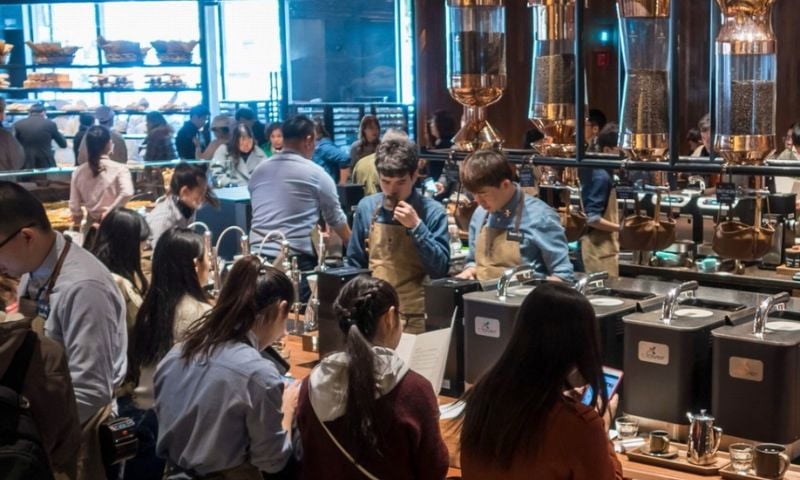
The Grand Bazaar outlet incorporates local cultural elements, including traditional designs, textiles and musical instruments. The company has also introduced food and drinks inspired by local flavours.
The opening gives residents and visitors access to one of the world’s best-known coffee brands while reflecting Starbucks’ strategy of adapting its stores to local cultures.
Xinjiang is China’s largest provincial-level region, spanning mountains, deserts and oases along the historic Silk Road. Chinese authorities portray it as a multi-ethnic region experiencing rapid economic development, improved infrastructure and a growing tourism industry.

Official figures show Xinjiang attracted a record 323 million visitors in 2025, with tourism spending reaching 370 billion yuan ($51 billion). Authorities are promoting the region for its natural landscapes, cultural heritage, cuisine and growing range of tourism activities.
For many consumers, the arrival of an international coffee chain is therefore part of a broader expansion of modern retail, tourism and dining options in Urumqi.
The opening has nevertheless triggered criticism in the United States.
READ ALSO: China Sends Two Giant Pandas to US Zoo, Revives Panda Diplomacy
The opening illustrates the very different ways Xinjiang is viewed inside and outside China. Chinese authorities are promoting the region as a place for tourism, investment and modern consumption.
Starbucks’ expansion
Starbucks’ expansion comes as it seeks to strengthen its position in China, its second-largest market after the United States. The company recently formed a joint venture with Boyu Capital, giving the Chinese investment firm a controlling stake in Starbucks’ retail operations in China.
The two Urumqi stores thus represent more than the arrival of another international coffee brand. They place an everyday consumer experience — a cup of coffee in a busy bazaar or airport — at the intersection of local culture, China’s expanding consumer economy and an unresolved international debate over Xinjiang.
China and the United States remain engaged in intense economic and technological competition, with trade, semiconductors, artificial intelligence and supply chains at the centre of the relationship.
Washington has imposed tariffs and trade restrictions on Chinese goods and has tightened controls on exports of advanced chips and semiconductor manufacturing equipment to China.
Beijing has responded with measures targeting selected US products and companies while accelerating efforts to reduce its reliance on American technology.
The rivalry has spread to electric vehicles, batteries, critical minerals, telecommunications equipment and artificial intelligence.
Both countries are also seeking greater control over strategic supply chains, encouraging companies to diversify production and reduce dependence on the other market.
Despite the tensions, China and the US remain deeply connected economically, with substantial trade and investment links.
Businesses in both countries continue to navigate tariffs, export controls and changing regulations while seeking access to the world’s two largest economies.
The competition has therefore become a defining feature of global trade and technology markets.