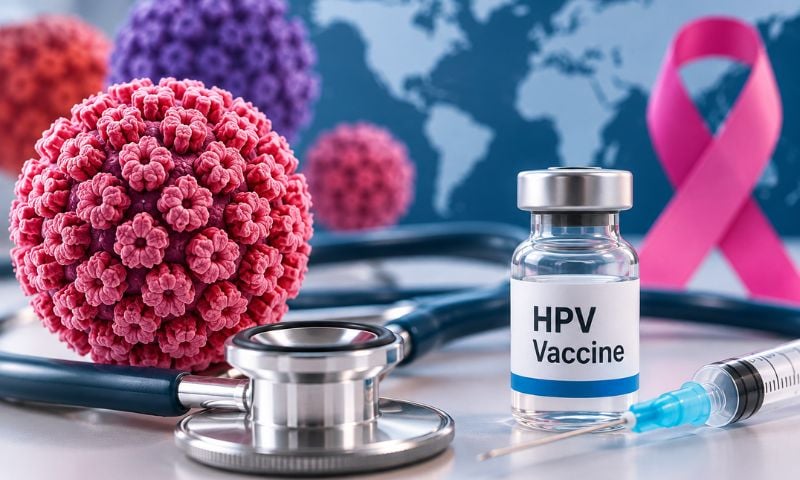
LONDON: About one in eight cancer cases worldwide may be linked to infections, many of which can be prevented or controlled through vaccination and other public health measures, according to a study by scientists at the International Agency for Research on Cancer (IARC).
The researchers estimated that infections were associated with about 2.3 million of the 19.2 million new cancer cases recorded worldwide in 2024.
Most of these cases were linked to five types of infectious agents: Helicobacter pylori (H. pylori), human papillomavirus (HPV), hepatitis B, hepatitis C and Epstein-Barr virus, which is commonly associated with glandular fever.
H. pylori is a bacterium that affects the stomach and can spread through contaminated food and water. HPV is linked to several cancers, while hepatitis B and C can cause liver cancer. Epstein-Barr virus has also been associated with certain cancers.
Global Burden
Low- and middle-income countries carried the greatest burden of infection-related cancers, accounting for about 77 per cent of cases worldwide, according to the study.
East Asia recorded the highest number, with approximately 900,000 cases, representing 42 per cent of the global total. H. pylori and hepatitis B were among the main contributors in the region.
Published in the medical journal The Lancet Oncology, the research highlights the importance of preventing and controlling infections as part of efforts to reduce cancer rates.
The researchers said many effective prevention strategies were already available and could be implemented at relatively low cost. They stressed that investment in developing new preventive vaccines remained important, but existing interventions were not being used sufficiently.
These measures include expanding HPV vaccination, promoting safe injection practices, improving access to condoms and HIV-prevention medicines, and ensuring the early detection and treatment of cervical and anal cancers.
HPV Vaccination
In Western Europe, approximately 24,000 cancers linked to HPV were recorded in 2024, making the virus the leading cause of infection-related cancer in the region.
About 14 HPV types are considered high-risk because they can increase the likelihood of cancer. Over time, these types can cause changes in the DNA of cells, potentially leading to uncontrolled cell growth.
Almost all cervical cancer cases are caused by HPV. The virus is also associated with cancers of the throat, mouth, anus, vulva and vagina.
HPV vaccination and cervical screening are therefore central to the World Health Organization’s strategy to eliminate cervical cancer as a public health problem.
The vaccine, routinely offered to children around the ages of 12 and 13 in some countries, can substantially reduce the risk of HPV-related cancers. Catch-up vaccination may also be available to people who missed it during their school years.
H. Pylori Risk
H. pylori was the leading cause of infection-related cancer worldwide in 2024, accounting for an estimated 760,000 cases, most of them stomach cancers, the study found.
The research also reported that people with a history of H. pylori infection may face an approximately 60 per cent higher risk of colorectal cancer, which affects the colon and rectum.
Progress towards developing a vaccine against H. pylori has been slow. Researchers say a successful vaccine could help reduce the global burden of stomach cancer.
The findings underline the potential of vaccination, infection control, screening and early treatment to prevent a significant number of cancer cases worldwide.