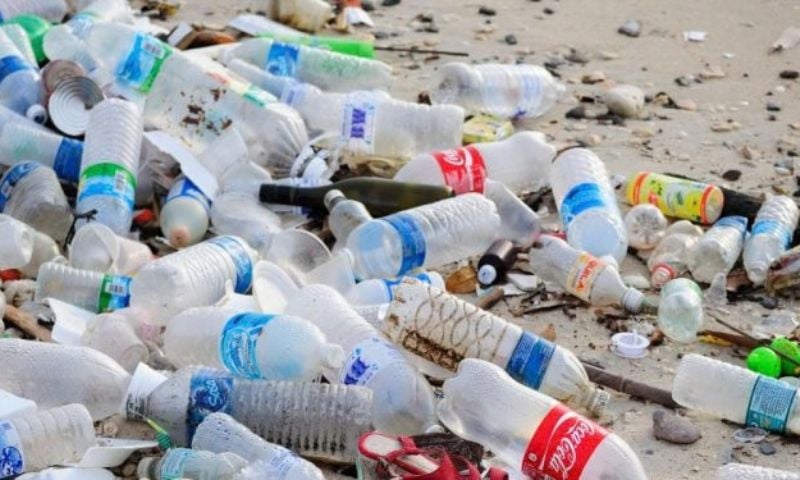
ISLAMABAD: Pakistan generates around 2 million tonnes of plastic waste annually, representing about 0.5 per cent of the roughly 400 million tonnes of plastic waste generated globally each year, while the country’s 15–18 per cent recycling rate is higher than the global rate of around 9 per cent.
According to this United Nations Environment Programme (UNEP) report, the comparison puts Pakistan’s plastic-waste challenge into a broader international context. Although plastic pollution remains an important domestic environmental issue, Pakistan contributes only a small share of the worldwide plastic-waste stream and has an opportunity to strengthen its existing recycling capacity.
Plastic pollution can amplify disaster risk:
🌊 Blocked drains can worsen flooding
🌱 Plastic can weaken mangrove protection
🎣 Impacts can ripple through livelihoodsReducing plastic pollution means reducing risk.
➡️ https://t.co/gpTmDrrYMF #BeatPlasticPollution pic.twitter.com/wfcoyheGM8
— UNDRR (@UNDRR) September 29, 2026
The 2-million-tonne estimate and 15–18 per cent recycling figure were reported by SDPI in 2026, which also projected that Pakistan’s annual plastic waste could rise to 12 million tonnes by 2040 without urgent intervention.
A separate June 2026 United Nations/ILO update estimated Pakistan’s annual plastic waste at 3.12 million tonnes, underscoring the need for improved national data and consistent measurement of the country’s plastic-waste stream.
Pakistan’s recycling sector offers a positive starting point
Pakistan’s reported 15–18 per cent recycling rate compares favourably with the approximately 9 per cent global rate cited by international organisations.
The figures come from different sources and methodologies and should therefore be treated as a broad comparison rather than a precise international ranking. Nevertheless, they indicate that Pakistan already has a significant recycling base that can be expanded.
The country’s informal recycling sector plays an important role by recovering bottles, packaging and other recyclable materials that might otherwise end up in landfills, drains and waterways.
Bringing more informal waste workers into organised recycling systems could increase material recovery while improving safety, working conditions and livelihoods.
Read Also: Plastic Production and Waste Drive Rising Global Health Risks
Global plastic waste reaches hundreds of millions of tonnes
The worldwide plastic challenge is considerably larger in scale.
The United Nations Environment Programme (UNEP) estimates that around 400 million tonnes of plastic waste are generated globally each year, while only about 9 per cent of plastics are recycled.
UNEP also estimates that global plastic consumption has exceeded 500 million tonnes annually, demonstrating the enormous volume of material entering the global economy and subsequently becoming waste.
The figures show that plastic pollution is a worldwide challenge affecting both developed and developing economies.
Read Also: Pakistan’s Lahore City Launches Eco-Friendly Initiative to Fight Plastic Pollution
Pakistan can strengthen its circular economy
Pakistan’s existing recycling activity provides a foundation for moving from a traditional “produce, use and discard” model towards a circular economy.
A circular approach would keep plastic materials in productive use for longer through reduction, reuse, collection and recycling.
The United Nations is already supporting such efforts in Pakistan. In 2026, UNOPS and the International Labour Organization launched a pilot project focused on the PET recycling value chain, supported by $500,000 from The Coca-Cola Foundation.
The initiative aims to strengthen PET recycling systems, advance Extended Producer Responsibility (EPR) and improve occupational safety and livelihoods for informal waste workers.
The project also highlights the importance of linking environmental protection with employment and economic opportunities within the recycling sector.
Plastic pollution is more than what we see on the beach.
From the invention and design of plastic containers to how long we use them, what happens after disposal, and whether alternatives truly break down where they end up, every part of the journey matters.
The question isn’t… pic.twitter.com/Y7Mh5cTPkm
— #PLASTICPUNCH (@PlasticPunchGH) September 28, 2026
Plastic waste remains a local challenge
Despite its relatively small global share, plastic waste can have significant environmental effects inside Pakistan.
Discarded shopping bags, bottles, food packaging and other plastic products can accumulate in streets, drains and waterways. During heavy rainfall, blocked drainage channels can put additional pressure on urban infrastructure and increase flooding risks.
Plastic carried through rivers can eventually reach coastal areas and the Arabian Sea, while larger plastic items can break down into microplastics and spread through water, soil and ecosystems.
The Indus River system is particularly important because it connects a large part of the country with the Arabian Sea, making improved waste collection and disposal essential for reducing plastic leakage.
Plastic pollution is more than just a waste management issue.
➡️ It’s a climate issue.
➡️ It’s a nature issue.
➡️ It’s a health issue.#BeatPlasticPollution! pic.twitter.com/6ywi87lm6C— SDG2030 (@SDG2030) September 25, 2026
Pakistan faces a future growth challenge
The encouraging comparison with global figures should not obscure the potential increase in Pakistan’s plastic waste.
According to the 2026 report, the country’s annual plastic waste could rise from around 2 million tonnes to 12 million tonnes by 2040 without urgent intervention.
Preventing such growth will require action before plastic becomes waste.
Reducing unnecessary single-use plastics, promoting reusable products, expanding affordable alternatives and encouraging recyclable packaging can help reduce the volume entering the waste stream.
Producer responsibility can improve recycling
Extended Producer Responsibility could provide another mechanism for strengthening Pakistan’s plastic-management system.
Under an effective EPR framework, companies placing plastic packaging on the market would have greater responsibility for its collection, recovery and recycling after use.
Such a system could encourage manufacturers to design packaging that is easier to collect and recycle while helping finance waste-management and recycling infrastructure.
Pakistan also needs more reliable national data covering plastic production, imports, consumption, collection, recycling and disposal. Consistent data would enable policymakers to measure the problem accurately and assess the effectiveness of interventions.
.
A New Plastics Economy is Needed to Protect the ClimateScientific research confirms that we have a very limited window of #ClimateAction to avoid the worst of #ClimateChange!
https://t.co/kogWFedV4d
via @UNFCCC 🌎🌍🌏 pic.twitter.com/qk7gpFivIN— My Zero Carbon #ClimateAction (@MyZeroCarbon) September 28, 2026
Global projections underline need for action
The international outlook shows why recycling must be combined with measures to reduce unnecessary plastic production and consumption.
The OECD has projected that, without stronger policies, global plastics production and use could increase by 70 per cent between 2020 and 2040, from 435 million tonnes to 736 million tonnes.
UNEP has also warned that global plastic waste could almost triple to around 1.2 billion tonnes by 2060 without major changes.
These projections demonstrate that recycling alone cannot solve the problem. Reducing unnecessary plastic use, improving product design, expanding reuse and strengthening collection and recycling systems all have a role to play.
Sherry Rehman calls for stronger enforcement
Pakistan Senator Sherry Rehman, chairperson of the Senate Standing Committee on Climate Change and Environmental Coordination, has also called for stronger implementation of Pakistan’s plastic laws.
اسلام آباد، آئی سی ای پی پی پارلیمانی فورم برائے ایکسچینج آن پلاسٹک پولوشن سے نائب صدر پیپلز پارٹی سینیٹر شیری رحمان کا زوم پر خطاب
دنیا بھر میں 9 ارب ٹن سے زائد پلاسٹک پیدا ہو چکا ہے، شیری رحمان
پلاسٹک آلودگی کو صرف کچرے کا مسئلہ سمجھنا درست نہیں، شیری رحمان
پلاسٹک کی… pic.twitter.com/pLMNPM4zdE
— Pakistan Peoples Party – PPP (@PPP_Org) September 30, 2026
At a committee meeting, she stressed that legislation must be followed by effective enforcement, particularly regarding the Islamabad Capital Territory (Prohibition of Plastic Book Covers) Act, 2026. She also highlighted the need to scrutinise claims that products are recyclable or biodegradable and noted that alternatives must be practical and affordable for ordinary consumers.
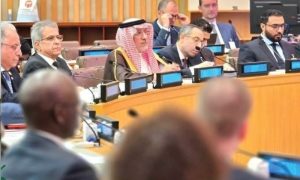
Speaking at the ICEPP Parliamentary Exchange on Plastic Pollution, Rehman said the scale of the global plastics crisis was still not being taken seriously enough, warning that plastic should no longer be viewed merely as a waste-management issue.
“Plastic production is not disconnected from the climate crisis. It is deeply embedded in the fossil-fuel economy,” she said, adding that continued production could not be offset simply through recycling.
Rehman stressed the need for credible and independently verifiable data covering the entire plastics lifecycle, from production and imports to consumption, collection, recycling and disposal.
“The formal sector has allowed a myth to develop that recycling is happening at scale. But if our recycling rate is around 1%, we have to be honest about what is actually happening to the other 99%,” she said.
She called for a transparent national accounting system to track plastic production, imports, consumption, collection, recycling, disposal and environmental leakage.
“If we do not know where the plastic is going, we cannot regulate it. If we cannot measure recycling, we cannot enforce circularity. And if we cannot transparently report the numbers, we cannot hold governments or producers accountable,” she said.
Her comments add another dimension to the policy debate: reducing plastic pollution requires not only legislation but also enforcement, credible standards, affordable alternatives and stronger participation across the waste-management chain.
In 2010, the world produced 275 million tonnes of plastic. By 2030 that number is set to double.
We have the solutions. It’s time to end plastic pollution.#ActOnClimate #oceans #useless #buyless #wasteless pic.twitter.com/0eR0uCBG42
— Mike Hudema (@MikeHudema) September 27, 2026
Pakistan can turn plastic waste into a resource
Pakistan’s available statistics present both a challenge and an opportunity.
The country’s estimated 2 million tonnes of annual plastic waste is a small share of the global burden, while its reported 15–18 per cent recycling rate is above the approximately 9 per cent global rate. At the same time, differing national estimates underline the need for more reliable and consistent data.
The priority is therefore to build on the country’s existing recycling activity through modern recycling facilities, stronger collection systems, EPR, better municipal waste management and greater integration of informal recyclers.
Read Also: Pakistan’s Capital Bans Plastic Book Wraps in Eco-Friendly Push
For Pakistan, the plastic challenge can become an opportunity to recover more valuable materials, create safer green jobs and reduce the amount of waste entering landfills, drains, rivers and the sea.
With sustained investment and effective implementation, Pakistan can strengthen its recycling capacity and move towards a cleaner, more resource-efficient and circular plastic economy, while addressing its share of a much larger global environmental challenge.