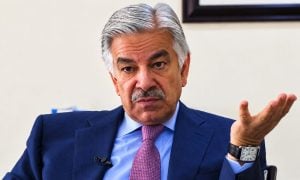
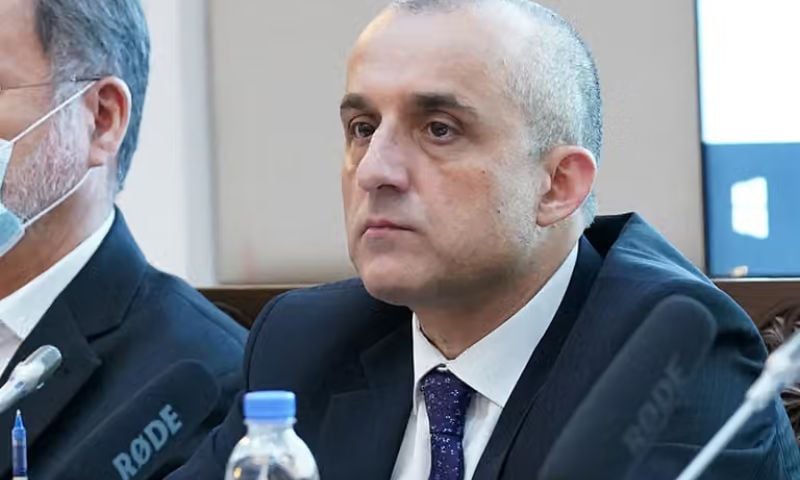
Former Afghan Vice President Amrullah Saleh has said Afghanistan has entered a civil war under Taliban’s illegitimate rule, arguing that opposition to the regime is taking different forms, with armed attacks representing its most visible expression.
In an interview, Saleh described the Taliban’s rule as “illegitimate” and said Afghanistan under the group lacked national sovereignty and a legitimate state system.
He said the situation had serious consequences across the country, particularly in northern Afghanistan, Kabul and other major cities.
Saleh acknowledged that anti-Taliban forces posed a “real” challenge to the regime but said their attacks had so far not been sufficiently widespread, intense or “loud” to constitute a major confrontation.
He warned that authoritarian regimes often underestimate their opponents, public anger and organised opposition.
On relations between the Afghan Taliban and Tehreek-e-Taliban Pakistan (TTP), Saleh rejected reports of a serious rift between the two groups, saying he had not observed growing differences between them.
He argued that the Afghan Taliban were “indebted” to the Pakistani Taliban and said their cooperation was driven more by necessity than favour.
Saleh also stated that the Taliban had maintained relations with anti-government groups operating in the region, claiming that some global powers had supported or facilitated such ties.
He called for the publication of what he described as secret annexes to the Doha Agreement, saying this would help explain the Taliban’s conduct.
READ ALSO: 2,500 Militants from Syria Moved to Afghanistan During Taliban Rule: Pakistan Military
“If the secret annexes to the Doha deal are made public, we can decode the Taliban’s conduct more easily. Afghanistan was handed over to them for a purpose,” he said.
Describing the Taliban’s character, Saleh said: “A scorpion without venom is not a scorpion.”
He rejected assessments that the Taliban had changed or reformed since returning to power, arguing that the group retained what he called an “anti-national, anti-civilisation, anti-inclusivity, misogynistic” character.
Saleh said the Taliban viewed themselves as having a mandate to force others into submission, including through torture.
Addressing reports of differences between the Taliban leadership in Kandahar and Kabul, he said Afghans were ultimately experiencing cruelty, exclusion and repression.
Saleh also said there was no longer a single, unified international policy towards Afghanistan, with major powers and neighbouring countries pursuing different approaches to the Taliban regime.
His comments come amid continuing debate over Afghanistan’s political future, the legitimacy of Taliban rule and the growing challenges facing the regime from armed opposition and regional security concerns.
Taliban regime’s grip exposed
Armed resistance across Kamdesh in Nuristan and Gurdash in Kunar is exposing growing weaknesses in the Taliban regime’s security architecture.
According to the reports, ongoing clashes have left nine Taliban personnel killed, 11 wounded and nine missing, while fighting has expanded from Kamdesh towards Kunar.
On September 26, around 50 Freedom Front fighters attacked Taliban regime positions in Kamdesh. As fighting intensified, the Taliban regime moved heavy reinforcements from Kunar to Kamdesh.
While increased movement of tanks, Ranger vehicles, personnel and military trucks around Jalalabad reflected a broader security mobilisation.
More significant is the growing involvement of local residents frustrated by Taliban regime’s repression and harsh rule. Their reported participation in armed resistance is adding a local dimension to the confrontation.
Freedom Front and local fighters have also used rockets and ammunition against Taliban positions, increasing pressure on Taliban forces.
Meanwhile, ISIS activity is gaining momentum, with claims that Taliban-weary locals are also joining its ranks. This compounds the Taliban regime’s security challenges, placing resistance groups, local armed mobilisation and ISIS activity within an increasingly volatile eastern security environment.
The developments expose a widening failure of the Taliban regime to establish durable and uncontested security control.
Instead of consolidating authority, the Taliban regime is being forced to reinforce contested areas, move additional forces and intensify military mobilisation.
From Kamdesh to Kunar, expanding resistance, local discontent and heightened ISIS activity are converging into a broader challenge for the Taliban regime.
The growing requirement for reinforcements and military assets underscores the widening gap between the Taliban regime’s claims of consolidated control and the security realities unfolding on the ground.