
Key Points
- Brent rises above $103 while WTI trades near $90
- Trump rules out easing sanctions on Iran
- Gulf oil flows recover, but fuel markets remain tight
LONDON: Oil prices rose on Wednesday after US President Donald Trump rejected reports that Washington was prepared to ease sanctions on Iran, keeping uncertainty over future Iranian oil supplies despite a recovery in Gulf crude exports.
Brent crude rose to about $103 a barrel, while US West Texas Intermediate (WTI) crude traded around $90. OilPrice.com reported Brent at $103.10 and WTI at $90.00 during Wednesday trading.
The latest increase followed a sharp decline of more than 2 per cent on Tuesday, with signs of recovering Middle East exports reducing some of the supply fears that had driven oil higher during the prolonged conflict involving Iran.
Trump’s rejection of possible sanctions relief for Tehran renewed those concerns. He denied reports that the United States was considering easing sanctions on Iran, reducing expectations of a near-term increase in Iranian crude exports and price corrections.
The development helped Brent regain ground above $103 during Wednesday trading.
The market is, nevertheless, facing conflicting supply signals.
Oil flows through the Strait of Hormuz recover
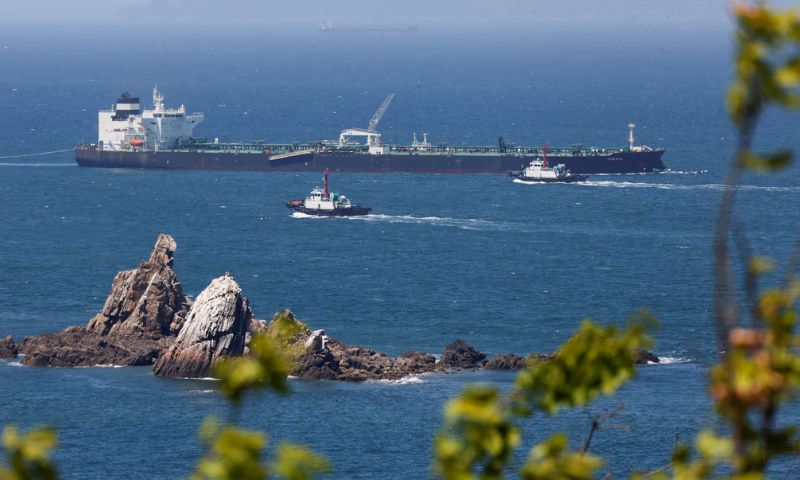
Oil flows through the Strait of Hormuz have recovered significantly, with major Gulf producers restoring export routes and tanker movements.
Saudi Arabia has also resumed crude loadings from Yanbu after its East-West Pipeline provided an alternative route to the Strait of Hormuz.
Market estimates indicate Gulf crude exports have moved closer to pre-war levels. However, estimates from major banks differ on the precise volume still moving through the Strait of Hormuz.
This recovery has eased fears of an immediate global crude shortage but has not removed the geopolitical risk premium from prices.
READ ALSO: Oil Prices Rise For Second Day As Hormuz Disruption Stokes Supply Fears
The distinction between crude and refined products is increasingly important. While crude shipments have recovered, supplies of diesel and other refined fuels remain tighter in several markets, keeping pressure on fuel prices.
The United States is also watching domestic inventories for signs of changing market conditions.
Recent inventory data showed mixed movements in crude, gasoline and distillate stocks, leaving traders focused on whether higher Gulf exports will eventually translate into a broader improvement in global supply.
Oil prices have consequently remained highly sensitive to developments between Washington and Tehran.
A breakthrough in US-Iran diplomacy that leads to sanctions relief could eventually allow more Iranian crude to reach international markets and put downward pressure on prices.
By contrast, continued restrictions would keep Iranian supplies constrained and leave geopolitical risks around Gulf shipping as a major factor for traders.
Brent’s November contract has been trading around $103 a barrel. Later Brent contracts have been considerably lower.
Trading Economics showed Brent near $97 and WTI around $90 on Wednesday, highlighting the substantial difference between the front-month contract and later deliveries.
The price structure suggests traders expect some easing of the immediate supply disruption even though near-term risks remain high.
For now, the oil market is balancing two opposing developments: Gulf crude exports are recovering to normal levels; the absence of US sanctions relief for Iran keeps a major source of concern, keeping potential supply off the international market.
Oil price direction in the coming sessions will depend heavily on US-Iran diplomatic contacts, the stability of Gulf shipping routes and whether recovering crude exports are sustained into October.
Oil prices have followed a sharply volatile path in 2026, rising from relatively moderate levels early in the year before surging after the US-Israel war with Iran disrupted Gulf production, exports and shipping.
Brent later crossed $100 a barrel, while improving Gulf supplies have recently eased some pressure, leaving prices highly sensitive to geopolitical developments.