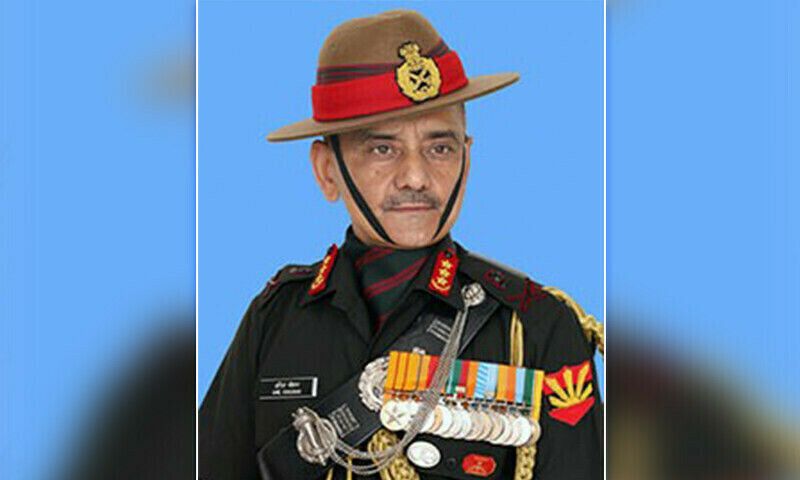
NEW DELHI: Former Indian Chief of Defence Staff General Anil Chauhan has been appointed Director of the Vivekananda International Foundation (VIF), with the appointment set to take effect from October 5. This is a post-retirement appointment, not a military posting.
The Vivekananda International Foundation is widely regarded as being closely aligned with India’s Hindu nationalist ecosystem and broadly supportive of the strategic outlook of Prime Minister Narendra Modi’s government. Its publications and policy positions are therefore often viewed through that political and ideological lens rather than as those of a politically neutral think tank.
VIF grew out of the Vivekananda Kendra network, a Hindu spiritual and service organisation. It is generally seen as closely aligned with the Hindu nationalist ecosystem and with the Modi government’s strategic outlook, so its output is better read as a partisan-leaning source than a neutral one.
Another indication of what critics describe as the increasing “saffronisation” of India’s military, the appointment comes after General Anil Chauhan served as the country’s second Chief of Defence Staff from September 30, 2022, to May 30, 2026.
During his tenure, he also served as Chairman of the Chiefs of Staff Committee and Secretary of the Department of Military Affairs, and was the principal military adviser to the Indian government on tri-service military matters.
The appointment places a recently retired senior military commander at the helm of a New Delhi-based think tank that focuses on national security, foreign policy, defence and strategic affairs.
The VIF describes itself as a New Delhi-based think tank established with the involvement of security experts, diplomats and philanthropists under the aegis of the Vivekananda Kendra. It says its objective is to develop ideas relating to a stronger, secure and prosperous India and its role in global affairs.
The foundation was established in 2009 and has maintained a strong focus on strategic affairs, defence policy and India’s national security. Its research team includes former diplomats, military officers and academics, while its advisory and executive bodies include several former senior government and security officials.
Doval’s association with VIF
Ajit Doval, who later became India’s National Security Adviser, was associated with the foundation in its early years and served as its founding director before joining the government as NSA in 2014.
The VIF’s leadership has included several figures with backgrounds in India’s defence, intelligence, diplomatic and national-security establishments. Its current executive committee, for example, includes former Army chief General NC Vij and former diplomats.
General Chauhan has also previously been associated with the foundation’s activities. In August 2026, he spoke at a VIF event on Operation Sindoor and its aftermath.
From military command to strategic research
General Chauhan joined the Indian Army in 1981 and held a series of command and senior staff positions before becoming Director General of Military Operations and Eastern Army Commander.
After he retired from the Army, he served as Military Adviser in India’s National Security Council Secretariat before becoming CDS in 2022.
As CDS, he was involved in India’s attempts towards greater integration among the three armed services, military restructuring, capability development and the proposed Integrated Theatre Commands framework, according to his VIF biography.
READ ALSO: Former RAW Chief Admits India Failed to Diplomatically Isolate Pakistan
His appointment to the VIF therefore extends his involvement in India’s strategic and national-security discourse from the military establishment into a policy research organisation.
The appointment also comes against the backdrop of the VIF’s longstanding links with India’s security and strategic-policy community.
Its research and events regularly address defence policy, geopolitics, emerging technologies, regional security and India’s foreign-policy interests.
The development is likely to attract attention because of the movement of senior military and security officials between India’s state institutions and influential strategic-policy organisations.